
William Edward Barclay
Manager · Liverpool 1892–1895
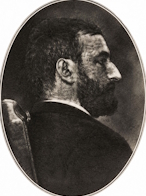
Personal
- Born
- 14 June 1857
- Place of birth
- Dublin, Ireland
- Died
- 30 January 1917
- Other clubs managed
- Everton
At Liverpool
- Appointed
- 15 March 1892
- First match
- 3 September 1892
- Final match
- 27 April 1895
Liverpool record
- 58 league games · First match 3 September 1892 · Final match 27 April 1895
Season by season
Full season record →Final league position for seasons he finished; position at the end of his spell for seasons he didn't.
Honours
2 trophiesTrophy count excludes the Charity/Community Shield.
Manager profile
Even though William Edward Morton Barclay, the former Secretary and Vice-Chairman of Everton, had the title Secretary at Liverpool, that was essentially the team manager at the time, the first eleven were chosen by the board. Irishman John McKenna, who was the most prominent of board members, had more influence over who played than the secretary. Barclay was responsible for all kinds of paperwork relating to the running of the team; signing contracts and keeping deadlines. When John Houlding gave his board £500 to bring in new players Barclay went on a number of scouting missions to Scotland. However, as would be the case until the late 50s, the board of the club chose the starting line-up and signed new players, so Barclay had very little say in those matters though the role of Secretary was a rough precursor to that of the team manager’s role. At that time Barclay was more of a regular administrator. It wasn’t until the arrival of Tom Watson in 1896 that a sole man was considered responsible for the success or the failure of the team. McKenna was pulling the strings and was the club’s outward face. Neither Barclay or McKenna were hands-on with the team during training as trainers Alec Dick and Wally Richardson were responsible for keeping the players in shape and as no one was allowed along the touchline during games change of tactics were very much in the hands of the captain, who was Andrew Hannah at the time.
Barclay was so described at the time: “A great enthusiast in football management. Is a most successful organiser, a fine judge of the great game, and knows everybody in the football world. Few men have travelled so much to football matches as he. One of Mr John Houlding’s staunchest supporters. He is the successful Head Master of the Industrial Schools, Everton Crescent, and is, further, widely known and everywhere esteemed. An able man all-round.”
In 1893 at the General Meeting of the Football League it was decided to increase the number of League clubs, but Liverpool's request for a First Division place was turned down. McKenna jumped the gun and sent an unauthorized telegram in the name of Barclay, for the club to be admitted into the Second Division. Later that night a telegram arrived from the Football League, saying: "Liverpool elected. Come to London to decide fixture list tomorrow at three o'clock", to Barclay's bemusement. Liverpool were admitted following the demise of their more illustrious neighbours, Bootle. Houlding's aspiring club was also victorious in the Second Division as in the Lancashire League the season previous. Liverpool finished bottom of the First Division in the 1894/95 season and Barclay quit as secretary. McKenna took over as secretary, winning the Second Division for a second time. It is difficult to establish whether McKenna lost faith in Barclay or that he quit on his own. Barclay left the club in August 1895 and seemed to have fallen on hard times as the Lancashire Association agreed in January 1901 to contribute five guineas to a fund being raised on his behalf. When Liverpool lost the FA Cup final to Burnley in 1914 Barclay sent the following letter to the Liverpool Echo, clearly keeping an eye out on the progress of his old club. ‘Let me sympathise with Liverpool in just missing winning the Cup, and also sincerely and heartily congratulate the Liverpool club on the silver, nay the golden lining, to the cloud. May they have better luck from a playing point of view next season is my wish.’
Sadly in late January 1917 the following was reported in the Echo:
‘A Liverpool jury to-day returned a verdict of “Suicide during temporary insanity” in the case of William Edward Morton Barclay (60), a munitions storekeeper, who lodged at 45, Upper Beau-street. Barclay, who was a B.A. and B.Sc., and who had previously been in a better position, was in the habit of taking a drug for pains in the head. On Monday he was found dead, from loss of blood, in his bedroom. There were gashes on his forearm from a razor found beside him, and a letter to a friend indicated that he intended to commit suicide.’
A sad end to the life of a man who was committed to making Liverpool a force to be reckoned with.
More on William Edward Barclay
Record
| Competition | Total | Won | Draw | Lost | Goals for | Goals against |
|---|---|---|---|---|---|---|
| Grand totals | 91 | 52 | 17 | 22 | 221 | 118 |
| League | 58 | 29 | 14 | 15 | 128 | 88 |
| FA Cup | 9 | 5 | 1 | 3 | 25 | 10 |
| Other | 24 | 18 | 2 | 4 | 68 | 20 |
Related Articles
1893-1896: Liverpool rocking between 2nd and 1st division
After winning the Lancashire league Liverpool's climb up the league ladder started in 2nd division. A real fairytale season was ahead and the club's biggest game to date against the most famous club in England in the FA Cup.
1892-1893: Liverpool go Scottish!
We trace the beginnings of Liverpool FC, focusing now on the club's very first season in 1892-1893.
1891-1892: A new perspective on the birth of Liverpool FC
It's pretty obvious that a website called LFChistory has to, sooner or later, tell the historic details of how the club was formed.