
Gerry Byrne
Left-back · Liverpool 1957–1969
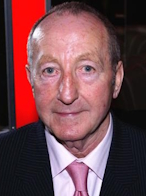
Personal
- Born
- 29 August 1938
- Place of birth
- Liverpool, England
- Died
- 28 November 2015
- International
- 2/0 - 29.06.1966 Debut 06.04.1963 vs. Scotland
- Other clubs
- None
At Liverpool
- Positions
- Left-back, Right-back
- Signed from
- Local
- Joined
- 1953 - Professional 30 August 1955
- Debut
- 28 September 1957
- First goal
- 3 February 1962
- Last goal
- 15 January 1966
- Last appearance
- 5 April 1969
- Contract expiry
- December 1969
Liverpool career
- League 274 apps · 2 goals · 9 assists
- Win ratio 52.25% — W 174 · D 75 · L 84
Honours
Player profile
Liverpool-born Gerry Byrne signed professional forms at the age of 17 after progressing through the junior ranks at Anfield. He had been spotted by the chain-smoking Liverpool scout Tosh Moore at the age of 15 while playing for the Liverpool Catholic Schoolboys in Dublin. Byrne made his league debut away to Charlton Athletic on 28 September 1957, but that proved to be his only appearance of the season. Liverpool lost 5–1, and the young defender had the misfortune of scoring an own goal. He later recalled the embarrassment of the incident: “I wish the ground would swallow me up when you score a goal like that. I just passed it back to Tommy Lawrence and he wasn't there. I got terrible abuse from the crowd.” The experienced full-back pairing of John Molyneux and Ronnie Moran prevented Byrne from making more than a handful of appearances over the following two years.
Byrne was on the transfer list when Bill Shankly arrived as manager in late 1959. Shankly's appointment transformed his prospects, as the new manager recognised qualities that had previously gone unrewarded. Byrne initially played at right-back, with Moran occupying the left-back position. When Moran was sidelined through injury in the autumn of 1960, Byrne moved across to the left and seized his opportunity, playing in Liverpool's remaining 33 league matches of the 1960/61 season. The switch proved decisive: Byrne established himself as Liverpool's regular left-back, while Chris Lawler later made the right-back position his own. Byrne's growing reputation was evident in a contemporary report following Liverpool's 3–0 victory over Rotherham United on 18 April 1960. The News Chronicle and Daily Dispatch carried the headline “Liverpool new boys star turns”, praising the contributions of Byrne and the young Ian Callaghan. The report stated: “Local boy Gerry Byrne, at right back, again proved himself as a scientific defender of the Cresswell type, and latest sensation Ian Callaghan, 17-year-old, has solved the outside-right problem.” The description of Byrne as a “scientific defender” suggests that his game was about more than hard tackling; he was also recognised for his reading of the game and his ability to anticipate danger. Byrne himself later explained: “I cut a lot of balls out. I could read the game well.”
Byrne became known as “The Crunch”, a nickname that reflected his uncompromising approach to challenges. He was a formidable opponent, but he was keen to distinguish toughness from unfair play. In an exclusive interview with LFChistory in 2008, he explained: “I was a clean player. I was hard, but fair. I used to wait for the ball to come and then I was on my way. You hit someone when the ball was there and that was it. That's how I got the crunch. I didn't go after players intentionally. I was never sent off in my life.” Byrne’s former teammate Ian Callaghan described him as a player who rarely needed to shout or argue. Callaghan said: “They talk about these hard men, but he was quiet natured and never got involved with the talking and the shouting. He used to tackle them and that was it. They stayed tackled.” Byrne's toughness became part of Liverpool folklore. Tommy Smith, himself renowned for his physical approach, recalled an incident during a five-a-side game at Melwood when he nutmegged Byrne and scored. Smith was delighted with his achievement, but a few minutes later the pair challenged for a loose ball and Smith suffered a gashed eye. According to Smith, Shankly looked down at him and remarked: “Lesson number one, never nutmeg Gerry Byrne, son, and think you can get away with it.”
Although Byrne was naturally right-footed, he played mainly at left-back. His ability to operate on either side of the defence, together with his tackling and positional awareness, made him a valuable member of Shankly's team. His courage, however, was never demonstrated more dramatically than in the 1965 FA Cup final against Leeds United, when Liverpool won the trophy for the first time in the club's history. Byrne was injured in the opening minutes following a collision with Leeds captain Bobby Collins. In an era when substitutes were not permitted, losing a defender would have left Liverpool at a serious disadvantage. Bob Paisley, Liverpool's trainer, ran onto the pitch to assess the injury and quickly realised that Byrne had broken his collarbone. Paisley later recalled: “Gerry had clattered into the chunky Bobby Collins. As soon as I reached him I knew that my initial touchline diagnosis had been painfully accurate. He had broken his collar bone.” Byrne asked Paisley not to reveal the injury and insisted on continuing. As Paisley recalled, Byrne told him: “I can get by.” He did far more than simply remain on the pitch. Despite the pain, he played through the 90 minutes and extra time, completing the final with a broken collarbone. The extent of the injury was not revealed until after the match, by which time Byrne had a winners' medal in his pocket and had helped Liverpool make history. His contribution was decisive in the match itself. Early in extra time, Byrne made an overlapping run and delivered the cross from which Roger Hunt scored Liverpool's opening goal. Liverpool eventually won 2–1, with Ian St John heading the winner. Shankly was in awe of Byrne's performance, describing it as “a performance of raw courage from the boy”.
The broken collar bone at Wembley was not the only occasion on which Byrne played through a serious injury. According to Bob Paisley, he dislocated his elbow during Liverpool’s European Cup Winners’ Cup match against Celtic at Parkhead in 1966. Despite being in considerable pain, Byrne stayed on the pitch until around ten minutes from the end. Paisley took him to hospital the following day, where Byrne’s arm was found to be black from the wrist to the shoulder. There was no fracture, and remarkably, he played against Stoke City two days later.
Byrne's reward for a career spent entirely at Liverpool was a testimonial match on 8 April 1970. Despite torrential rain and miserable conditions, around 40,000 supporters came to Anfield to pay tribute to a player who had been integral to Shankly's success. Byrne later admitted that, when he saw the weather that evening, he had doubted whether anybody would turn up. The crowd's response demonstrated the affection in which he was held. He made 333 first-team appearances for Liverpool, scoring four goals, and won two League Championships, the FA Cup and the Second Division title.
Byrne was included in England’s World Cup-winning squad in 1966 alongside Liverpool teammates Roger Hunt and Ian Callaghan, although he did not feature in the finals, with Everton’s Ray Wilson preferred at left-back. In 2009, Byrne finally received his World Cup winners’ medal at a special ceremony in London, recognising his place in England’s victorious squad. Unfortunately, the period following the World Cup marked the beginning of the end of Byrne’s Liverpool career. In the opening league game of the 1966/67 season against Leicester City at Anfield, he suffered a serious knee injury. Recalling the incident to LFChistory, he explained: “I got injured after the World Cup. There was nobody near me. I twisted and my studs stayed in the ground.” The injury kept him out for more than half of the 1966/67 season, and the knee continued to trouble him in the years that followed. Byrne turned 30 just days into the 1968/69 season and was by no means past his best, but persistent injury problems ultimately brought his career to a premature end. His final Liverpool appearance came against Wolverhampton Wanderers in April 1969, ending a distinguished Anfield career cut short by injury rather than a decline in his ability.
Away from the pitch, Byrne was generally regarded as a quiet man who kept himself to himself. Bob Paisley described him as “a bit of a loner”, explaining that he rarely mixed with the other players in Liverpool's cup-winning side, although “he never shirked anything and was tough as they come”. Byrne acknowledged his own reticence, admitting: “I was quiet, I never spoke up very often.” Yet his reputation as a quiet, unassuming man did not tell the whole story. When LFChistory had the honour of interviewing the Liverpool legend, he proved to be a quiet but charming gentleman, dressed in a smart suit and sporting sparkling diamond rings on his fingers. His jewellery caught the attention of his old teammate Ian Callaghan, who was also present at the interview. Cally jokingly asked him: “Where are you going, Gerry?”
Shankly held Byrne in exceptionally high regard. Reflecting on the defender's departure from Liverpool, he said: “When Gerry went, it took a big chunk out of Liverpool. Something special was missing.” In 1975, Shankly singled Byrne out as the best professional he had worked with, explaining: “He wasn't flashy and he wouldn't score you goals. But he was hard and skilful and gave you everything he had. More than that he was totally honest. Which is the greatest quality of all.” Shankly added that Byrne was “a true Liverpudlian who couldn't look his fellow Scousers in the face after a game unless he'd given everything he had for 90 minutes”.
Gerry Byrne died on 28 November 2015 at a nursing home in Wrexham, following a long battle with Alzheimer's disease.
Appearances per season
| Season | League | FA | LC | Europe | Other | Total |
|---|---|---|---|---|---|---|
| 1957-1958 | 1 | 0 | 0 | 0 | 0 | 1 |
| 1958-1959 | 1 | 0 | 0 | 0 | 0 | 1 |
| 1959-1960 | 5 | 0 | 0 | 0 | 0 | 5 |
| 1960-1961 | 33 | 2 | 3 | 0 | 0 | 38 |
| 1961-1962 | 42 | 5 | 0 | 0 | 0 | 47 |
| 1962-1963 | 38 | 6 | 0 | 0 | 0 | 44 |
| 1963-1964 | 33 | 4 | 0 | 0 | 0 | 37 |
| 1964-1965 | 40 | 8 | 0 | 7 | 1 | 56 |
| 1965-1966 | 42 | 1 | 0 | 9 | 1 | 53 |
| 1966-1967 | 9 | 2 | 0 | 0 | 1 | 12 |
| 1967-1968 | 27 | 1 | 2 | 6 | 0 | 36 |
| 1968-1969 | 3 | 0 | 0 | 0 | 0 | 3 |
| Totals | 274 | 29 | 5 | 22 | 3 | 333 |
A more detailed look at the player's appearances
| Total | Started/substitutions |
|---|---|
| 332 | Started |
| 1 | Substituted |
| 1 | Substitute |
| 6 | On bench |
| Total | Venue |
|---|---|
| 164 | Home |
| 163 | Away |
| 6 | Neutral |
| Total | Competition |
|---|---|
| 274 | League |
| 29 | FA Cup |
| 9 | European Cup Winners Cup |
| 7 | European Cup |
| 6 | European Fairs Cup |
| 5 | League Cup |
| 3 | Charity Shield |
| Total | W | D | L | Win% | Manager |
|---|---|---|---|---|---|
| 331 | 173 | 75 | 83 | 52.3% | Bill Shankly |
| 2 | 1 | 0 | 1 | 50.0% | Phil Taylor |
Goals per season
| Season | League | FA | LC | Europe | Other | Total |
|---|---|---|---|---|---|---|
| 1961-1962 | 1 | 0 | 0 | 0 | 0 | 1 |
| 1964-1965 | 0 | 0 | 0 | 1 | 1 | 2 |
| 1965-1966 | 1 | 0 | 0 | 0 | 0 | 1 |
| Totals | 2 | 0 | 0 | 1 | 1 | 4 |
The player scored 4 goals in 4 different matches.
A more detailed look at the player's goals
| Total | Opponent |
|---|---|
| 1 | Brighton & Hove Albion |
| 1 | Knattspyrnufélag Reykjavíkur |
| 1 | West Bromwich Albion |
| 1 | West Ham United |
| Total | Started/substitutions |
|---|---|
| 4 | Started |
| Total | Competition |
|---|---|
| 2 | League |
| 1 | Charity Shield |
| 1 | European Cup |
| Total | Goal minute period |
|---|---|
| 1 | 1-15 minutes |
| 1 | 31-45 minutes |
| 2 | 46-60 minutes |
| Total | Goal origin |
|---|---|
| 4 | Open play |
| Total | Assisted by |
|---|---|
| 1 | Ian Callaghan |
Assists per season
| Season | League | FA | LC | Europe | Other | Total |
|---|---|---|---|---|---|---|
| 1959-1960 | 1 | 0 | 0 | 0 | 0 | 1 |
| 1960-1961 | 2 | 0 | 0 | 0 | 0 | 2 |
| 1962-1963 | 1 | 0 | 0 | 0 | 0 | 1 |
| 1963-1964 | 2 | 2 | 0 | 0 | 0 | 4 |
| 1964-1965 | 0 | 1 | 0 | 0 | 0 | 1 |
| 1965-1966 | 3 | 0 | 0 | 0 | 0 | 3 |
| 1967-1968 | 0 | 0 | 0 | 1 | 0 | 1 |
| Totals | 9 | 3 | 0 | 1 | 0 | 13 |
A more detailed look at the player's assists
| Total | Opponent |
|---|---|
| 2 | Manchester United |
| 2 | Swansea City |
| 1 | Chelsea |
| 1 | Everton |
| 1 | Leeds United |
| 1 | Leyton Orient |
| 1 | Nottingham Forest |
| 1 | Port Vale |
| 1 | Sheffield United |
| 1 | Stoke City |
| 1 | TSV Munich |
| Total | Competition |
|---|---|
| 9 | League |
| 3 | FA Cup |
| 1 | European Fairs Cup |
| Total | For player |
|---|---|
| 4 | Roger Hunt |
| 1 | Alf Arrowsmith |
| 1 | Dave Hickson |
| 1 | Gordon Milne |
| 1 | Ian Callaghan |
| 1 | Ian St John |
| 1 | Kevin Lewis |
| 1 | Peter Thompson |
| 1 | Tommy Leishman |
| 1 | Tommy Smith |
Related Articles
Gerry Byrne - The toughest of them all!
"The Crunch" was tough as nails and shares a special place in Liverpool supporters' hearts. An exclusive interview by LFChistory.net.
Gerry Byrne played through the pain
Bob Paisley admired Gerry Byrne's courage in the FA Cup final when Liverpool triumphed over Leeds.
Liverpool new boys star turns
News Chronicle and Daily Dispatch report on Liverpool - Rotherham United on 18.04.1960.
The first European night at Anfield
Forty years ago Liverpool played their first European game at Anfield Road.
European debut in Iceland
Forty years ago today Liverpool played their first European game in Iceland of all places.