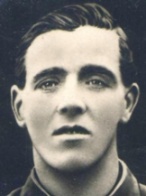
When Tom Bromilow arrived at Anfield seeking a trial in 1919, he had only recently been demobilised following service during the First World War. The West Derby-born half-back was given an opportunity by Liverpool's coaching staff and quickly impressed. Looking back on the signing years later, club secretary George Patterson remarked: "I should think that it is one of the luckiest signings I have made." Liverpool were enduring a difficult season when Bromilow broke into the first team. The club had fallen as low as eighteenth place in the First Division by December 1919, but results improved dramatically following his introduction at left-half. A club programme published on 18 February 1920 highlighted his remarkable start, noting that Bromilow had yet to appear on the losing side in a Liverpool shirt. In fourteen matches, including two FA Cup ties, Liverpool had recorded ten victories and four draws, scoring 23 goals while conceding just five. The same article concluded that Bromilow's arrival, combined with Donald McKinlay's switch to full-back, had proved "a most judicious move in the re-arrangement of the club's resources." Although that unbeaten run eventually came to an end, Bromilow had already established himself as a key figure in the side. He appeared 28 times during his first season and would miss only five league matches over the next three campaigns as Liverpool emerged as one of the strongest teams in the country.
Operating mainly at left-half, Bromilow formed a formidable half-back line alongside Jock McNab and Walter Wadsworth. The trio became the foundation of Liverpool's back-to-back League Championship-winning sides of 1921/22 and 1922/23, securing the club's third and fourth league titles. While McNab and Wadsworth were often noted for their strength and industry, Bromilow was regarded as the stylist of the partnership. Contemporary observers described him as "more dainty and artistic than either of his two colleagues, but eminently efficient none the less," a tribute to his intelligent distribution, positional awareness and ability to control a match from the half-back line. His performances soon attracted national recognition. Renowned for his footballing intelligence and neat use of possession, Bromilow was frequently described as the brains of Liverpool's side. Within two years of turning professional, he had earned international honours with England and would go on to win five caps between 1921 and 1925.
For much of the 1920s Bromilow remained one of Liverpool's most dependable performers and a natural leader within the team. His consistency, durability and tactical understanding made him one of the outstanding half-backs of his generation. By the latter years of the decade he was among the senior figures at Anfield and had earned widespread admiration from supporters and journalists alike. Bromilow's final Liverpool appearance came against Blackburn Rovers on the last day of the 1929/30 season, bringing an eleven-year playing career with the club to a close. He departed having played a central role in Liverpool's post-war revival and championship successes, while establishing himself as one of the finest half-backs in the club's history. The affection in which he was held by supporters endured long after his retirement. In a 1939 poll asking fans to name Liverpool's greatest-ever player, Bromilow finished fifth, ahead of many other distinguished names from the club's early history. For a player who walked into Anfield looking for a trial after leaving the Army, it was fitting recognition of an extraordinary Liverpool career.
Bromilow started his coaching career in the summer of 1930 in Amsterdam, Holland, which was an unusual place to start. In October 1932 he was appointed manager of Burnley who had been relegated to the Second Division two years earlier. The highlight of his time there being when the Clarets reached the semi-finals of the FA Cup in the 1933/34 season. Bromilow left in July 1936 for third division south's Crystal Palace after a series of mid-table finishes in the second tier of League football. Liverpool was never far from his thoughts and when the role of manager at Liverpool became vacant he applied with 51 others but George Kay was appointed in August 1936. Bromilow left the Eagles after only one season taking charge of Newport County in 1936/37, then returning to Palace, finishing runners-up in Third Division South before the outbreak of World War II. He managed Leicester City during the war, winning the League South title and Midland Cup. He returned to Newport for a couple of years, before joining Leicester again, this time as scout. Bromilow died suddenly on a train in Nuneaton on 4 March 1959 while scouting a cup game between Wrexham and Merthyr Tydfil for Leicester.