
Jack Balmer
Forward · Liverpool 1935–1952
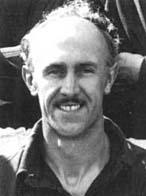
Personal
- Born
- 6 February 1916
- Place of birth
- West Derby, Liverpool, England
- Died
- 25 December 1984
- Other clubs
- Collegiate Old Boys, Everton (1934-35); Brighton & Hove Albion and Newcastle (wartime guest)
At Liverpool
- Signed from
- Unafilliated
- Joined
- 15 May 1935
- Debut
- 21 September 1935
- First goal
- 7 December 1935
- Last goal
- 10 February 1951
- Last appearance
- 23 February 1952
- Contract expiry
- May 1952
Liverpool career
- League 288 apps · 98 goals
- Win ratio 38.19% — W 118 · D 79 · L 112
- Wartime 107 apps · 70 goals
- Assists not recorded before 1945–46
Honours
- League Championship
- 1946-47
Player profile
Jack Balmer grew up in West Derby in a family with strong Everton connections. His uncles, Bill and Bob Balmer, had both been established players at Goodison Park, and Jack initially followed the family tradition. He attracted Everton’s attention while playing for Collegiate Old Boys, the amateur side associated with former pupils of Liverpool Collegiate School, and joined the Blues as an amateur in 1933. One memorable reserve appearance brought him alongside his idol, Dixie Dean, who recognised the youngster’s nervousness and helped set up a goal for him. His future nevertheless lay across Stanley Park. Balmer was working as a joiner in his father’s building business and later recalled that Everton’s offer of £5 a week to become a full-time professional did not make financial sense to him. Liverpool offered better terms, and the nineteen-year-old joined them as an amateur in May 1935 before subsequently signing professional forms. The switch disappointed his Everton-supporting family, but began a seventeen-year association with Anfield.
Balmer made his league debut in a 1–0 defeat at Leeds United on 21 September 1935. His first goal came against Preston North End at Anfield on 7 December, when his late winner secured a 2–1 victory. He developed into a clever inside-forward whose movement, close control and passing complemented his finishing. Everton received a particularly sharp reminder of his ability on 16 February 1938, when he scored within thirty seconds at Goodison Park. Liverpool won 3–1, and contemporary reporting praised Balmer’s intelligent distribution as well as his opening goal. The outbreak of war interrupted Balmer's career when he was only twenty-three. During the conflict he served in the King’s Regiment, instructing soldiers in driving military vehicles, while continuing to play football when circumstances allowed. He also gained wartime international recognition with England. When regular League football finally returned in 1946, Balmer was thirty, but his most successful season still lay ahead.
Balmer and Albert Stubbins formed a formidable scoring partnership as Liverpool won the 1946/47 First Division Championship, their first title since 1923. Both scored twenty-four league goals and twenty-eight in all competitions. Balmer’s contribution included an extraordinary November sequence that remains one of the outstanding individual achievements in Liverpool’s history. On 9 November he scored all three goals in a 3–0 victory over Portsmouth at Anfield. A week later he supplied all four in a 4–1 win at Derby County. Arsenal then visited Anfield on 23 November, with Balmer seeking a third successive hat-trick. He opened the scoring against the Gunners with a penalty, but Liverpool subsequently fell behind. Balmer equalised in the sixty-first minute and completed his hat-trick seven minutes later, finishing a chance created by Harry Eastham to put Liverpool 3–2 ahead. Albert Stubbins added the fourth, ending a remarkable run in which Balmer had scored ten consecutive Liverpool goals. The Echo described an enormous roar greeting his third goal as his delighted teammates crowded around him. Three matches, ten goals and three victories had transformed an exceptional scoring spell into an enduring part of Anfield folklore. Earlier examples of three successive top-flight hat-tricks had been recorded by Tottenham’s Frank Osborne in 1925 and Leeds United’s Tom Jennings in 1926. Liverpool had been among the victims on both occasions. Balmer remains the most recent player to achieve the feat in successive English top-flight matches. His scoring run also extended beyond those three famous afternoons: he found the net in seven consecutive League games during November and December, scoring fifteen times altogether.
Despite his achievements, Balmer did not enjoy universal approval from the Liverpool crowd. Some supporters wanted a more physical, combative forward and criticised his reluctance to launch into heavy tackles. His teammates valued the intelligence behind his game. Bob Paisley remembered a player who relied on exceptional ball skills and remained eager to shoot, rather than attempting to overpower defenders. Balmer maintained that avoiding dangerous challenges did not mean he lacked courage; he simply believed football should be played differently. Balmer captained Liverpool during the late 1940s and remained at Anfield until 1952, finishing with 110 goals from 309 competitive appearances. He subsequently served as a coach between 1952 and 1955 and continued his involvement in the family building business. A local player whose entire professional playing career belonged to Liverpool, he died suddenly at his West Derby home on Christmas Day 1984, aged sixty-eight.
Appearances per season
| Season | League | FA | LC | Europe | Other | Total |
|---|---|---|---|---|---|---|
| 1935-1936 | 17 | 0 | 0 | 0 | 0 | 17 |
| 1936-1937 | 33 | 1 | 0 | 0 | 0 | 34 |
| 1937-1938 | 30 | 1 | 0 | 0 | 0 | 31 |
| 1938-1939 | 42 | 3 | 0 | 0 | 0 | 45 |
| 1939-1940 | 0 | 0 | 0 | 0 | 0 | 0 |
| 1945-1946 | 0 | 2 | 0 | 0 | 0 | 2 |
| 1946-1947 | 39 | 6 | 0 | 0 | 0 | 45 |
| 1947-1948 | 40 | 1 | 0 | 0 | 0 | 41 |
| 1948-1949 | 42 | 4 | 0 | 0 | 0 | 46 |
| 1949-1950 | 9 | 0 | 0 | 0 | 0 | 9 |
| 1950-1951 | 34 | 1 | 0 | 0 | 0 | 35 |
| 1951-1952 | 2 | 2 | 0 | 0 | 0 | 4 |
| Totals | 288 | 21 | 0 | 0 | 0 | 309 |
A more detailed look at the player's appearances
| Apps | Mins | Opponent |
|---|---|---|
| 309 | 27,870 | All opponents |
| 19 | 1,710 | Wolves |
| 16 | 1,440 | Bolton Wanderers |
| 15 | 1,350 | Charlton Athletic |
| 15 | 1,350 | Huddersfield Town |
| 15 | 1,350 | Portsmouth |
| 14 | 1,260 | Derby County |
| 14 | 1,260 | Preston North End |
| 14 | 1,260 | Sunderland |
| 13 | 1,170 | Aston Villa |
| 13 | 1,170 | Everton |
| 13 | 1,170 | Middlesbrough |
| 13 | 1,170 | Stoke City |
| 12 | 1,080 | Arsenal |
| 12 | 1,080 | Chelsea |
| 12 | 1,080 | Manchester United |
| 11 | 990 | Blackpool |
| 10 | 930 | Burnley |
| 10 | 900 | Grimsby Town |
| 9 | 810 | Leeds United |
| 8 | 720 | Birmingham City |
| 7 | 630 | Brentford |
| 7 | 630 | West Bromwich Albion |
| 6 | 540 | Manchester City |
| 6 | 540 | Sheffield United |
| 5 | 450 | Blackburn Rovers |
| 3 | 270 | Leicester City |
| 3 | 270 | Newcastle United |
| 3 | 270 | Sheffield Wednesday |
| 2 | 180 | Fulham |
| 2 | 180 | Norwich City |
| 2 | 210 | Nottingham Forest |
| 1 | 90 | Luton Town |
| 1 | 90 | Notts County |
| 1 | 90 | Stockport County |
| 1 | 90 | Tottenham Hotspur |
| 1 | 90 | Walsall |
| Total | Venue |
|---|---|
| 155 | Home |
| 151 | Away |
| 3 | Neutral |
| Total | W | D | L | Win% | Manager |
|---|---|---|---|---|---|
| 279 | 108 | 72 | 99 | 38.7% | George Kay |
| 17 | 5 | 3 | 9 | 29.4% | George Patterson (2nd term) |
| 7 | 2 | 2 | 3 | 28.6% | Don Welsh |
| 6 | 3 | 2 | 1 | 50.0% | Caretaker Manager |
Goals per season
| Season | League | FA | LC | Europe | Other | Total |
|---|---|---|---|---|---|---|
| 1935-1936 | 3 | 0 | 0 | 0 | 0 | 3 |
| 1936-1937 | 8 | 0 | 0 | 0 | 0 | 8 |
| 1937-1938 | 13 | 0 | 0 | 0 | 0 | 13 |
| 1938-1939 | 10 | 4 | 0 | 0 | 0 | 14 |
| 1939-1940 | 1 | 0 | 0 | 0 | 0 | 1 |
| 1945-1946 | 0 | 1 | 0 | 0 | 0 | 1 |
| 1946-1947 | 24 | 4 | 0 | 0 | 0 | 28 |
| 1947-1948 | 15 | 0 | 0 | 0 | 0 | 15 |
| 1948-1949 | 14 | 2 | 0 | 0 | 0 | 16 |
| 1949-1950 | 1 | 0 | 0 | 0 | 0 | 1 |
| 1950-1951 | 10 | 1 | 0 | 0 | 0 | 11 |
| Totals | 99 | 12 | 0 | 0 | 0 | 111 |
The player scored 111 goals in 91 different matches.
A more detailed look at the player's goals
| Total | Opponent |
|---|---|
| 8 | Derby County |
| 7 | Bolton Wanderers |
| 7 | Portsmouth |
| 7 | Sunderland |
| 6 | Aston Villa |
| 6 | Everton |
| 6 | Huddersfield Town |
| 5 | Arsenal |
| 5 | Middlesbrough |
| 4 | Charlton Athletic |
| 4 | Chelsea |
| 4 | Grimsby Town |
| 4 | Preston North End |
| 4 | Wolves |
| 3 | Birmingham City |
| 3 | Blackpool |
| 3 | Brentford |
| 3 | Leeds United |
| 2 | Blackburn Rovers |
| 2 | Burnley |
| 2 | Luton Town |
| 2 | Nottingham Forest |
| 2 | Sheffield United |
| 2 | Stockport County |
| 2 | Walsall |
| 2 | West Bromwich Albion |
| 1 | Manchester City |
| 1 | Manchester United |
| 1 | Norwich City |
| 1 | Sheffield Wednesday |
| 1 | Stoke City |
| 1 | Tottenham Hotspur |
| Total | Started/substitutions |
|---|---|
| 111 | Started |
| Total | Goal minute period |
|---|---|
| 15 | 1-15 minutes |
| 17 | 16-30 minutes |
| 16 | 31-45 minutes |
| 18 | 46-60 minutes |
| 16 | 61-75 minutes |
| 25 | 76-90 minutes |
Wartime Appearances / Goals
| Season | Appearances | Goals |
|---|---|---|
| 1939-1940 | 8 | 5 |
| 1940-1941 | 2 | 0 |
| 1941-1942 | 12 | 7 |
| 1942-1943 | 16 | 14 |
| 1943-1944 | 26 | 22 |
| 1944-1945 | 3 | 0 |
| 1945-1946 | 40 | 22 |
| Totals | 107 | 70 |
Related Articles
The Untold Story of Billy Howard
Greats like Billy Howard have gone by unnoticed, since they never really made an impact on Liverpool FC's first team, but have given so much to the community of Liverpool, working with the local kids and helping them develop through football.
Liverpool Echo report
The Liverpool Echo report on Everton 1 - 3 Liverpool played on February 16, 1938.
A Liverpool player has rarely been so badly treated by supporters
Jack Balmer's career at Liverpool was no walk in the park.
Quick blows felled Everton
The Liverpool Daily Post on Everton 0-3 Liverpool on 27 September 1947.