
Reginald Blore
Right-winger · Liverpool 1959–1960
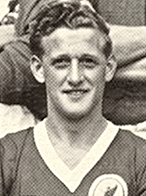
Personal
- Born
- 18 March 1942
- Place of birth
- Sesswick, Wales
- Other clubs
- Southport (1960-63), Blackburn Rovers (1963-65), Oldham Athletic (1965-70), Bangor City (1970-71), Ellesmere Port Town (1971-72)
At Liverpool
- Joined
- 22 May 1957 - Professional 13 May 1959
- Debut
- 17 October 1959
- Last appearance
- 17 October 1959
- Left the club
- 30 June 1960
Liverpool career
- League 1 app · 0 goals · 0 assists
- Win ratio 0% — W 0 · D 1 · L 0
Player profile
Blore was among Liverpool’s youngest first-team players when he appeared at Stoke City in October 1959, but his Anfield career ended after that single opportunity. He had a Liverpool connection from birth: according to Southport’s Hall of Fame profile, his mother had been evacuated from the city to North Wales during the war. He joined Liverpool’s junior ranks in May 1957 and signed professional forms two years later. There were encouraging signs before his promotion to the senior side. Playing at outside-right against Everton Reserves at Anfield on 3 October 1959, Blore helped Liverpool recover from two goals down to draw 2–2. The Liverpool Daily Post singled him out among the principal contributors to the comeback, praising the problems he caused Everton and the quality of his crossing. One of his deliveries provided Des Palmer with the headed goal that began Liverpool’s recovery. A fortnight later, Phil Taylor selected him at outside-right for the Second Division visit to Stoke. At 17 years and 213 days, Blore became Liverpool’s second-youngest competitive debutant up to that point, behind John Morrissey. He joined a forward line containing Jimmy Melia, Roger Hunt, Jimmy Harrower and Alan A’Court. Harrower scored Liverpool’s goal in a 1–1 draw, while the visitors finished with ten men after Dick White was carried off with an ankle injury five minutes from time.
Blore received no further first-team opportunity. His departure was announced in the Liverpool Echo on 4 May 1960, when the club reduced its playing staff from 38 to 28. Described as an inside-forward or winger, he was among those granted free transfers. His contract expired at the end of June and he joined Southport on 4 July, still only 18. Regular football at Haig Avenue brought out his goalscoring ability. Blore scored 55 goals in 139 Fourth Division appearances, including 20 fourth division goals in 1962/63. He also made a memorable contribution to Southport’s 1960/61 FA Cup campaign, scoring a hat-trick in a 7–2 victory over Macclesfield Town. He subsequently scored in the replay victory over Bangor City and put Southport ahead at Stockport County in the third round, although they eventually lost 3–1.
Blore's progress brought international recognition. In December 1961 he represented Wales Under-23s against Scotland, becoming Southport’s first player to win an Under-23 cap, and eventually made four appearances at that level. His performances also earned him a move to First Division Blackburn Rovers in November 1963. Opportunities were limited at Ewood Park, but he did make 11 league appearances across three seasons, rather than spending his entire stay in the reserves. A transfer to Oldham Athletic on Christmas Eve 1965 restored Blore to regular football. He remained at Boundary Park until 1970, playing more than 180 league matches and serving the club in both the Third and Fourth Divisions. He subsequently played for Bangor City and Ellesmere Port Town. Football was not his only sporting talent: the Liverpool Daily Post of 10 September 1968 identified him as the handicap prize winner at the Professional Footballers’ Golf Championship at Woolton.
Appearances per season
| Season | League | FA | LC | Europe | Other | Total |
|---|---|---|---|---|---|---|
| 1959-1960 | 1 | 0 | 0 | 0 | 0 | 1 |
| Totals | 1 | 0 | 0 | 0 | 0 | 1 |
A more detailed look at the player's appearances
| Apps | Mins | Opponent |
|---|---|---|
| 1 | 90 | All opponents |
| 1 | 90 | Stoke City |
| Total | Venue |
|---|---|
| 0 | Home |
| 1 | Away |
| Total | Competition |
|---|---|
| 1 | League |
| Total | W | D | L | Win% | Manager |
|---|---|---|---|---|---|
| 1 | 0 | 1 | 0 | 0.0% | Phil Taylor |
Related Articles
Doug Rudham and Laurie Hughes retire from football
Published in the Liverpool Echo: 4 May 4 1960.