Players - Kevin Keegan

- Birthdate: 14 February 1951
- Birthplace: Armthorpe, England
- Other clubs: Scunthorpe (1967-71), Hamburg SV (1977-80), Southampton (1980-82), Newcastle United (1982-84), Blacktown City Demons (1985)
- Signed from: Scunthorpe
- Signed for LFC: £33,000, 03.05.1971
- International debut: 15.11.1972 vs. Wales
- International caps: 63/21 (29/7 at LFC) - 05.07.1982
- Liverpool debut: 14.08.1971
- Last appearance: 25.05.1977
- Debut goal: 14.08.1971
- Last goal: 03.05.1977
- Contract expiry: 03.06.1977
- Win ratio: 54.8% W:177 D:88 L:58
- Games/goals ratio: 3.23
- Games/assists ratio: 4.42
- Honours: League Championship 1972/73, 1975/76, 1976/77; FA Cup 1974; European Cup 1977; UEFA Cup 1973, 1976; FWA Footballer of the Year 1976
- Total games/goals opposite LFC: 7 / 1
- League games / goals / assists: 230 / 68 / 51
- Total games / goals / assists: 323 / 100 / 73
Player Profile
Defeat at Derby and a controversial draw at Arsenal in the last two first division games of Keegan's debut season cost Liverpool the title. But he only had to wait another 12 months to achieve that and added a UEFA Cup winners' medal too when his early strikes in the re-arranged home leg of the final against Borussia Mönchengladbach were the platform for the club's eventual aggregate victory, the club's first in a European club competition. He also received the first of numerous international caps during that season when picked for a World Cup qualifier with Wales in Cardiff on 15 November 1972. In 1973/74 Keegan played in every single one of the 61 competitive matches Liverpool had in the League and three cup competitions, contributing 19 goals. Six of those came in the successful FA Cup run, including two crucial strikes against his hometown club Doncaster Rovers, bottom of the old Fourth Division at the time, who threatened to make one of the biggest upsets in the cup's history when they took a 2-1 interval lead at Anfield, only to be pegged back by Keegan's second-half equaliser. Ever the man for the big occasion, he produced a sensational volley past Peter Shilton in the replayed semi-final victory over Leicester City at Villa Park and then netted two goals in the one-sided Wembley showdown with Newcastle United.
The 1974/75 season started badly for Keegan, perhaps the lowest point of an illustrious career. He was sent off during a pre-season match against Kaiserslautern in West Germany and also received his marching orders four days later after clashing with Billy Bremner in the Charity Shield at Wembley. Perhaps because the traditional curtain-raiser to the season was being played at the national stadium for the first time but also because both he and Bremner took off their shirts as they left the field, both men received lengthy bans and although Keegan was allowed to play in the opening League match at Luton, he didn't play in the First Division again until October. But he quickly found his old form and played in the remaining 33 first division fixtures as the Reds finished runners-up to Derby County. With goals hard to come by that season, how crucial his absence was, especially when the team was beaten three times in four games during September. In 1976 Liverpool repeated their League and UEFA Cup 'double' of 1973 and again Keegan was prominent, only missing one first division game and scoring in both legs of the European final against Bruges. "Mighty Mouse" was voted the Football Writers' Association Footballer of the Year in 1975/76, and then gave a season's notice, announcing he was moving to West Germany. At a time when it was almost unheard of for English players to try their luck abroad, this caused some friction but nobody could doubt Keegan's commitment to the cause in his farewell season. He was the club's leading scorer in the League and contributed valuable goals as the team reached the finals of both the FA and European cups. With the Championship clinched in the penultimate League match, a historic treble triumph beckoned but Manchester United ruined that dream and it was just a question of whether the players could lift themselves for one last effort in the European Cup final only four days later. In Rome, Kevin played his heart out and ran himself and Berti Vogts into the ground. Eight minutes from time, he started a typical run from forty or so yards out, which was only ended by Vogts' foul in the penalty area. Phil Neal converted the spot-kick to seal probably the most famous triumph in the club's history.
£500,000 was a record fee for a British footbal!er and Keegan was the most expensive player in the Bundesliga. He soon stamped his authority on the Bundesliga, winning the championship in his second season at Hamburg SV and and won incredibly two consecutive European Footballer of the Year awards, after being the runner-up his last season at Liverpool. In his last season Keegan featured in the European Cup final against Nottingham Forest but lost 1-0. After staying three years in Germany the 29-year-old Keegan was on his way home. Liverpool had first option on him but he moved to Southampton for £420,000. In Keegan's second season at the Dell he was the first division's top-scorer with 26 goals in 41 games and voted Player of the Year by his fellow professionals. After two years at Southampton he was on his way to second division Newcastle for £100,000, where he stayed until his retirement in 1984, after playing 85 matches and scoring 49 goals. Eight years later Keegan became manager of Newcastle, leaving after a five-year spell after winning the first division title and finishing runners-up in the Premiership as his highlights. Keegan was one year in charge at Fulham, before taking over as England's manager in February 1999. He was England's supremo for one and a half year before being sacked after England failed miserably in Euro 2000. In May 2001, Keegan was appointed manager of Manchester City, winning the first division title and even though he never reached the heights he had hoped for with City he still tried to entertain the audience as he did as a player. Keegan wanted to retire from management and left City in the 2004/05 season. He made an unexpected return to Newcastle in January 2008, a highly popular appointment as the Geordie fans saw him as their Messiah. Only eight months later Keegan left Newcastle claiming owner Mike Ashley wasn't providing him with the financial support that he had promised.
Keegan was an incredible player, tireless in showing off his talents and his enthusiasm invariably made his teammates more determined to succeed. He was a smashing success at every club he played. Dangerous in the air despite a comparative lack of height, he had a wonderful understanding with big John Toshack during his early seasons at Anfield and his speed of thought created numerous goals for his colleagues with his intelligent runs and passing. He was the first pin-up boy Liverpool had really ever had and made the number seven shirt so famous. Kevin Keegan should rightly be remembered as one of the finest players ever to wear a Liverpool shirt.
Appearances per season
| Season | League | FA | LC | Europe | Other | Total |
|---|---|---|---|---|---|---|
| Totals | 230 | 28 | 23 | 40 | 2 | 323 |
| 1971-1972 | 35 | 3 | 1 | 3 | 0 | 42 |
| 1972-1973 | 41 | 4 | 8 | 11 | 0 | 64 |
| 1973-1974 | 42 | 9 | 6 | 4 | 0 | 61 |
| 1974-1975 | 33 | 2 | 3 | 3 | 1 | 42 |
| 1975-1976 | 41 | 2 | 3 | 11 | 0 | 57 |
| 1976-1977 | 38 | 8 | 2 | 8 | 1 | 57 |
A more detailed look at the player's appearances
| Apps | Minutes | Opponent |
|---|---|---|
| 16 | 1410 | Leeds United |
| 15 | 1350 | Tottenham |
| 14 | 1260 | West Ham United |
| 14 | 1260 | Ipswich Town |
| 13 | 1170 | Derby |
| 13 | 1170 | Leicester City |
| 13 | 1122 | Everton |
| 12 | 1080 | Newcastle United |
| 12 | 1080 | Manchester City |
| 11 | 990 | Manchester United |
| 11 | 990 | Stoke City |
| 11 | 990 | Arsenal |
| 10 | 900 | Birmingham City |
| 10 | 900 | Coventry City |
| 9 | 840 | WBA |
| 9 | 810 | Burnley |
| 9 | 810 | Wolves |
| 9 | 810 | Sheffield United |
| 8 | 720 | Middlesbrough |
| 8 | 720 | Norwich City |
| 8 | 720 | QPR |
| 7 | 630 | Southampton |
| 7 | 630 | Carlisle United |
| 6 | 540 | Chelsea |
| 6 | 540 | Crystal Palace |
| 4 | 360 | Bristol City |
| 4 | 360 | Aston Villa |
| 4 | 346 | Dyn. Dresden |
| 3 | 270 | Gladbach |
| 3 | 270 | Hull City |
| 2 | 180 | Huddersfield Town |
| 2 | 180 | Sunderland |
| 2 | 180 | Luton Town |
| 2 | 180 | Hibernian |
| 2 | 180 | Bayern Munich |
| 2 | 180 | Doncaster Rovers |
| 2 | 180 | Ferencvaros |
| 2 | 180 | Nottingham Forest |
| 2 | 180 | Zurich |
| 2 | 180 | AEK Athens |
| 2 | 180 | Barcelona |
| 2 | 180 | Crusaders |
| 2 | 180 | Trabzonspor |
| 2 | 180 | Red Star Belgrade |
| 2 | 180 | Jeunesse d'Esch |
| 2 | 180 | Real Sociedad |
| 2 | 180 | Club Brugge |
| 2 | 179 | Frankfurt |
| 1 | 90 | Oxford United |
| 1 | 90 | Strømsgodset |
| 1 | 90 | York City |
| 1 | 90 | Slask Wroclaw |
| 1 | 90 | Saint-Étienne |
| 1 | 90 | Oldham Athletic |
| 1 | 71 | Servette |
| 1 | 46 | Dynamo Berlin |
| Total | Started/substitutions |
|---|---|
| 323 | Started |
| 0 | On the bench |
| 0 | Substitute |
| 5 | Substituted |
| Total | Venue |
|---|---|
| 157 | Away |
| 157 | Home |
| 9 | Neutral |
| Total | Competition |
|---|---|
| 230 | League |
| 28 | FA Cup |
| 23 | League Cup |
| 22 | UEFA Cup |
| 12 | European Cup |
| 6 | European Cup Winners Cup |
| 2 | Charity Shield |
| Total | W | D | L | Win % | Manager |
|---|---|---|---|---|---|
| 168 | 93 | 45 | 30 | 55.4% | Bill Shankly |
| 155 | 84 | 43 | 28 | 54.2% | Bob Paisley |
Goals per season
| Season | League | FA | LC | Europe | Other | Total |
|---|---|---|---|---|---|---|
| Totals | 68 | 14 | 6 | 12 | 0 | 100 |
| 1971-1972 | 9 | 2 | 0 | 0 | 0 | 11 |
| 1972-1973 | 13 | 0 | 5 | 4 | 0 | 22 |
| 1973-1974 | 12 | 6 | 1 | 0 | 0 | 19 |
| 1974-1975 | 10 | 1 | 0 | 1 | 0 | 12 |
| 1975-1976 | 12 | 1 | 0 | 3 | 0 | 16 |
| 1976-1977 | 12 | 4 | 0 | 4 | 0 | 20 |
A more detailed look at the player's goalscoring
| Total | Opponent |
|---|---|
| 8 | Ipswich Town |
| 7 | Newcastle United |
| 6 | Leeds United |
| 5 | Coventry City |
| 5 | Leicester City |
| 5 | Tottenham |
| 4 | Carlisle United |
| 4 | West Ham United |
| 3 | Manchester City |
| 3 | Manchester United |
| 3 | Sheffield United |
| 3 | Derby |
| 3 | Stoke City |
| 3 | Wolves |
| 3 | Birmingham City |
| 2 | WBA |
| 2 | QPR |
| 2 | Doncaster Rovers |
| 2 | Crystal Palace |
| 2 | Oxford United |
| 2 | Gladbach |
| 2 | Dyn. Dresden |
| 2 | Club Brugge |
| 2 | Middlesbrough |
| 2 | Aston Villa |
| 2 | Southampton |
| 2 | Chelsea |
| 1 | Oldham Athletic |
| 1 | Nottingham Forest |
| 1 | Bristol City |
| 1 | Sunderland |
| 1 | Ferencvaros |
| 1 | Frankfurt |
| 1 | Crusaders |
| 1 | Trabzonspor |
| 1 | Saint-Étienne |
| 1 | Zurich |
| 1 | Arsenal |
| Total | Started/substitutions |
|---|---|
| 100 | Started |
| 0 | Substitute |
| Total | Competition |
|---|---|
| 68 | League |
| 14 | FA Cup |
| 7 | UEFA Cup |
| 6 | League Cup |
| 4 | European Cup |
| 1 | European Cup Winners Cup |
| Total | Goal minute period |
|---|---|
| 11 | 1-15 minutes |
| 14 | 16-30 minutes |
| 19 | 31-45 minutes |
| 20 | 46-60 minutes |
| 10 | 61-75 minutes |
| 25 | 76-90 minutes |
| 1 | 91-120 minutes |
| Total | Goal origin |
|---|---|
| 87 | Open play |
| 11 | Penalty |
| 2 | Direct freekick |
Assists per season
| Season | League | FA | LC | Europe | Other | Total |
|---|---|---|---|---|---|---|
| Totals | 51 | 6 | 4 | 11 | 1 | 73 |
| 1971-1972 | 5 | 0 | 0 | 1 | 0 | 6 |
| 1972-1973 | 13 | 1 | 0 | 5 | 0 | 19 |
| 1973-1974 | 5 | 1 | 2 | 0 | 0 | 8 |
| 1974-1975 | 5 | 0 | 1 | 0 | 0 | 6 |
| 1975-1976 | 11 | 1 | 0 | 4 | 0 | 16 |
| 1976-1977 | 12 | 3 | 1 | 1 | 1 | 18 |
A more detailed look at the player's assists
| Total | Opponent |
|---|---|
| 7 | Derby County |
| 5 | Birmingham City |
| 4 | West Ham United |
| 4 | Leicester City |
| 3 | West Bromwich Albion |
| 3 | Leeds United |
| 3 | Newcastle United |
| 3 | Sheffield United |
| 3 | Tottenham Hotspur |
| 3 | Queens Park Rangers |
| 3 | AEK Athens |
| 2 | Crystal Palace |
| 2 | Coventry City |
| 2 | Carlisle United |
| 2 | Stoke City |
| 2 | Ipswich Town |
| 2 | Chelsea |
| 2 | Southampton |
| 2 | Burnley |
| 1 | Everton |
| 1 | Wolves |
| 1 | Norwich City |
| 1 | Manchester City |
| 1 | Manchester United |
| 1 | Aston Villa |
| 1 | Middlesbrough |
| 1 | Bristol City |
| 1 | Hull City |
| 1 | Hibernian |
| 1 | Bayern Munich |
| 1 | Slask Wroclaw |
| 1 | Barcelona |
| 1 | Trabzonspor |
| 1 | Borussia Moenchengladbach |
| 1 | Real Sociedad |
| Total | Competition |
|---|---|
| 51 | League |
| 9 | UEFA Cup |
| 6 | FA Cup |
| 4 | League Cup |
| 1 | Charity Shield |
| 1 | European Cup |
| 1 | European Cup Winners Cup |
| Total | For player |
|---|---|
| 27 | John Toshack |
| 8 | Steve Heighway |
| 6 | Ray Kennedy |
| 5 | Phil Boersma |
| 5 | Peter Cormack |
| 4 | Ian Callaghan |
| 4 | Emlyn Hughes |
| 3 | Jimmy Case |
| 3 | Brian Hall |
| 2 | Terry McDermott |
| 2 | Chris Lawler |
| 1 | Larry Lloyd |
| 1 | Alun Evans |
| 1 | David Fairclough |
| 1 | Phil Thompson |
Milestone Appearances
| # | Date | Against | Stadium | Competition |
|---|---|---|---|---|
| 1 | 14.08.1971 | Nottingham Forest | Anfield | League |
| 50 | 05.09.1972 | Carlisle United | Brunton Park | League Cup |
| 100 | 17.04.1973 | Coventry City | Highfield Road | League |
| 150 | 23.02.1974 | Newcastle United | St James' Park | League |
| 200 | 15.03.1975 | Sheffield United | Anfield | League |
| 250 | 28.02.1976 | Derby | Baseball Ground | League |
| 300 | 05.02.1977 | Birmingham City | Anfield | League |
Milestone Goals
| # | Minute | Date | Against | Stadium | Competition |
|---|---|---|---|---|---|
| 1 | 12 | 14.08.1971 | Nottingham Forest | Anfield | League |
| 50 | 90 | 27.04.1974 | West Ham United | Upton Park | League |
| 100 | 15 | 03.05.1977 | Manchester United | Anfield | League |
Related Articles
Rigore!
We are pleased to welcome columnist Declan Sloan aboard at LFChistory.net. He takes a look at important penalties for Liverpool throughout the years.
Liverpool's thrilling football excites Keegan
Kevin Keegan believes Brendan Rodgers has returned the club to the attacking football played by Bill Shankly and Bob Paisley. From BBC Radio 5.
Kevin Keegan's place in Liverpool FC legend will never be forgotten
Dominic King on Kevin Keegan's legacy at Liverpool on 6th March 2010.
Gerrard and Owen show City door marked exit
The Telegraph report on Liverpool - Manchester City on 11.02.2004.
Super spireites
Match report from British Soccer Week on Liverpool - Chesterfield on 22.09.1992.
Kevin Keegan on a dustbin
Kevin Keegan waited for Shankly on a dustbin to complete his move to Liverpool.
Magnificent Keegan!
The Liverpool Echo on the FA Cup final Liverpool 3 -0 Newcastle on 4 May 1974.
Toshack and Keegan as Batman and Robin
John Toshack and Kevin Keegan were the quintessential strike pair.
King Cole on a roll
Match report from 21.11.1993 on Newcastle - Liverpool from British Soccer Week.
Liverpool reject Real Madrid’s bid for Kevin Keegan
A newspaper article from 28 June 1976 from the Daily Express.
Related Quotes
"Kevin's sheer enthusiasm, bravery, fearless attitude and desire forced him in to the team. First game of the season we beat Nottingham Forest 3-1 at home, and he was never out of the side after that."
Ray Clemence on Mighty Mouse Keegan
"If he does not want to play for Liverpool then we can forego the option. If he had been keen to come back to Liverpool then we would have thought about it."
LFC had first option on Keegan but he decided against a return to Anfield and signed for Southampton - Bob Paisley
"Kevin Keegan was signed and made an unbelievable impact. He was the first superstar that Liverpool had. Kevin was a great player for Liverpool and I've nothing but admiration for him."
Ian Callaghan’s opinion on Kevin Keegan
"The lap of honour was fantastic. I am so pleased for them. Tonight was great and tomorrow for the homecoming will be tremendous. This was the perfect ending for me. I have played my last game for Liverpool. I have no regrets. It is a fantastic way to finish. I have only stayed on for this season because the club chairman asked me to stay to help to try to win the European Cup. I have kept my side of the bargain."
Kevin Keegan after the European Cup final 1977
"Myself and Kevin Keegan worked up a good understanding and as a partnership we flourished. We seemed to hit it off from almost day one and then got better and better as time went by."
John Toshack
"The next morning, I had my picture taken by the pool with the European Cup by my side. Kevin Keegan came sporting a black eye. He had been larking about in the pool with Phil Neal who had accidentally caught him in the eye. Of course, the Press immediately linked Kevin’s eye injury with the fact that he was leaving the club. Rumours swept around Rome that either myself or Jimmy Case had given Kevin a belt. It sounds a great story, but it’s completely untrue."
Tommy Smith
"I was just as sure of Keegan as I was of Denis Law and I never had cause to think again about Denis. These two players are so much alike in number of ways. Keegan is an exciting boy all right."
Keegan and Shankly developed a close friendship during their time at Liverpool as Keegan remembers: "I always carry a picture of him, he comes into my conversation a lot. I learned a lot from him and owe the man a great deal."
Shankly could see straight away he has signed a true gem as he revealed in late August 1971.
"The self-appointed representative of the Kop came on the field to greet me. He gave me a kiss, and the smell of booze on his breath almost knocked me off my feet. He needed a shave as well as his beard was rough. The police accepted this ritual whenever there was a new player. This Kopite was a nice old fellow with no harm in him. He kissed me, then kissed the grass in front of the Kop and went back to join his mates in the crowd."
Kevin Keegan
"I'm not a Scouser and I've never pretended to be," he explained. "I've never made out to feel as passionate about, for example, derby matches as true Scousers do but at the same time I still hold the club very close to my heart. The fans are brilliant, they always supported me and even when I decided to move abroad I think they understood my reasons for doing so. Bill Shankly had gone and I just felt there was another mountain for me to climb somewhere. As it happens they didn't do too badly out of it because they went out and bought Kenny Dalglish. Having sold me for £500,000 and then paying £440,000 for Kenny. They banked £60,000 which was a great piece of business."
Kevin Keegan had his reasons for leaving Liverpool
"Toshack was a wonderful player to play alongside. His aerial ability was fantastic and I always knew that he was going to win the high balls. From then on it was just a question of me reading which way the ball was going to go and from those situations we created many chances. I always admired Tosh's honesty as a player. He was a nice approachable lad and he did a really great job for the club during his time here."
Kevin Keegan on his striking partner, John Toshack
"He was inspirational. If he told you, you were going to hell, you would look forward to the trip."
Keegan on Shankly in 2008
"With the litheness of a contortionist he twisted one way and another several times, with the ball bobbing between his feet, while Bobby Moncur hopped from one foot to another like someone jumping into the bath when the water is too hot, until he was knotted as adeptly as if a boy scout had roped him up."
Kevin Keegan's goal in a 5-0 win vs Newcastle in March 1972 was so described by Liverpool Echo
What an exciting time the 1970s were. The Kop buzzed and Keegan was the embodiment of that restless energy that cascaded down from the terraces. He chased, he harried, he gave everything. We loved him. And then he left and none of us could comprehend why. The challenge, he said. Just tell us the truth and say the money, we wept. Had we known his parting gift was going to be Kenny Dalglish we would have pushed him out the door long before.
Tony Evans from Times online on Kevin Keegan
Scrapbook

Daily Star - January 2026

Liverpool Echo - January 2026

Newcastle Chronicle - January 2026
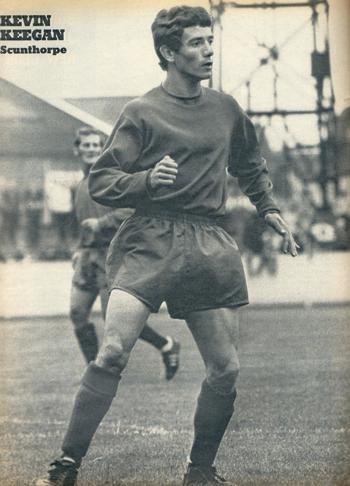
Poster of Scunthorpe's Kevin Keegan - Goal 23 May 1970
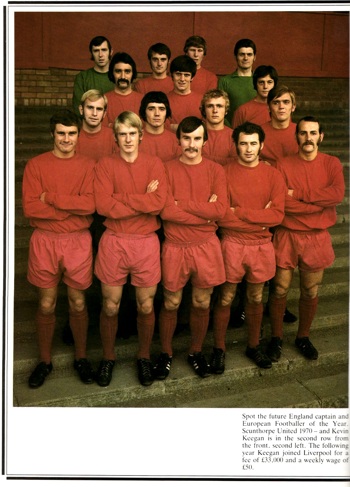
Young Keegan at Scunthorpe
Keegan for Liverpool - an article from 1 May 1971
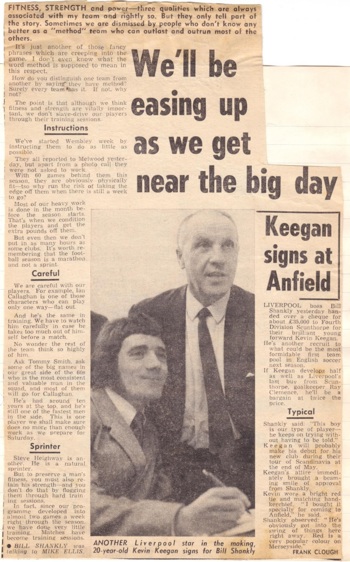
Keegan signs in at Anfield
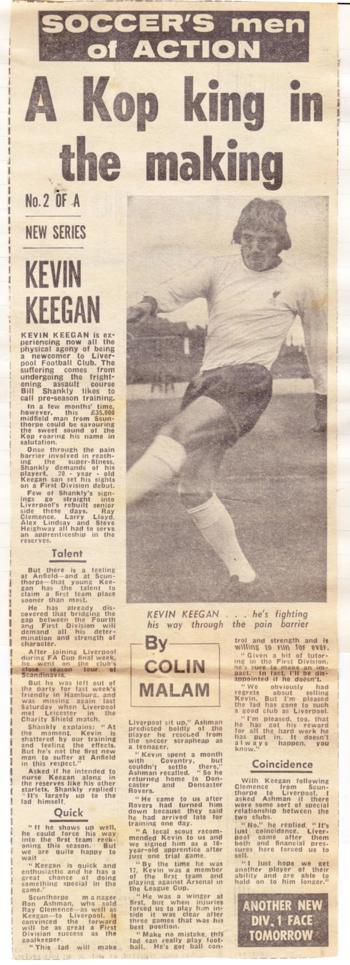
A Kop king in the making - from the summer of '71
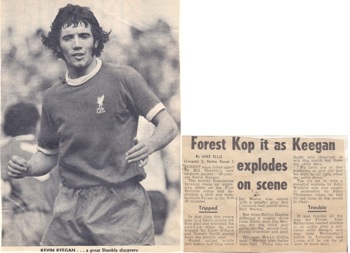
Keegan explodes on the scene on 14 August 1971
-keegan.jpg)
Something special - that's Kevin Keegan - 4 September 1971
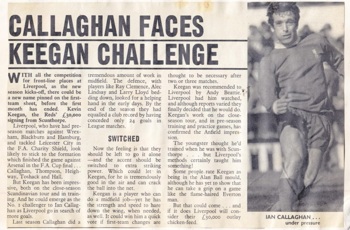
Callaghan faces Keegan challenge - 1971
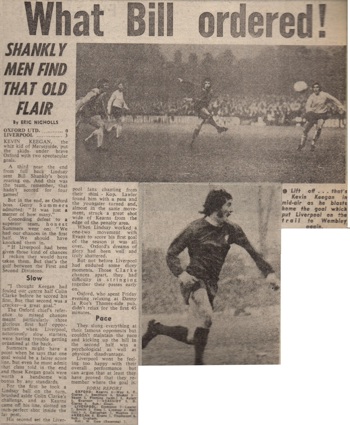
Keegan's spectacular goals vs. Oxford on 15 January 1972
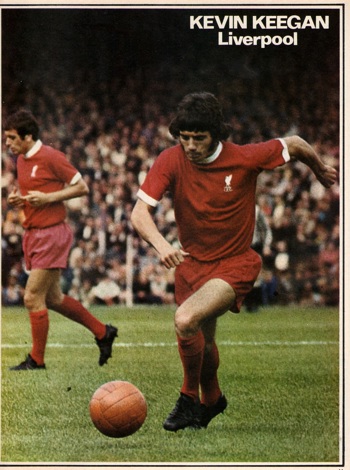
A Keegan poster from February 1972
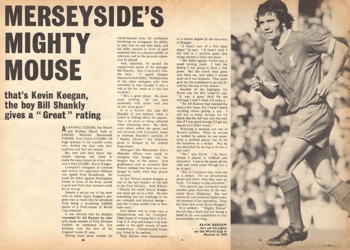
Merseyside's Mighty Mouse - March 1972
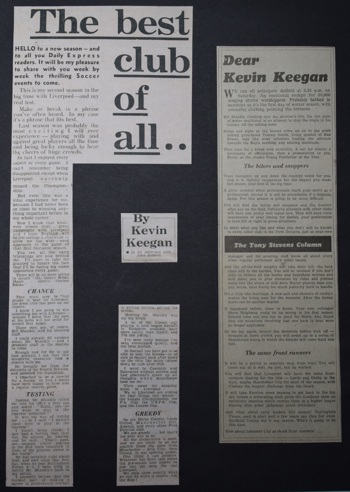
The best club of all - July 1972
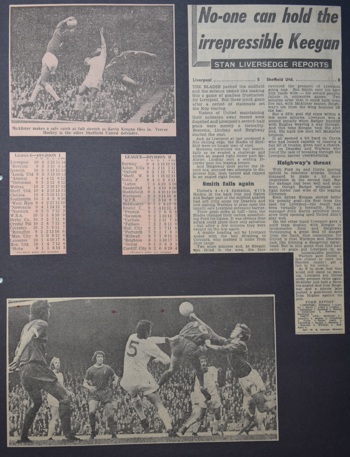
No one can hold the irrepressible Keegan! - 23 September 1972
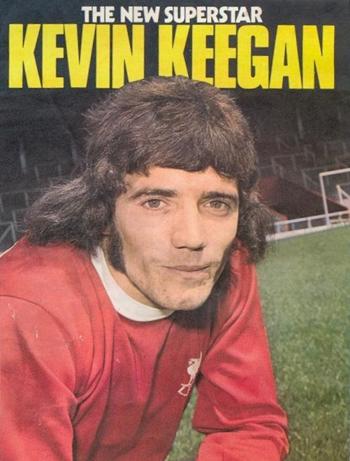
The new superstar Kevin Keegan
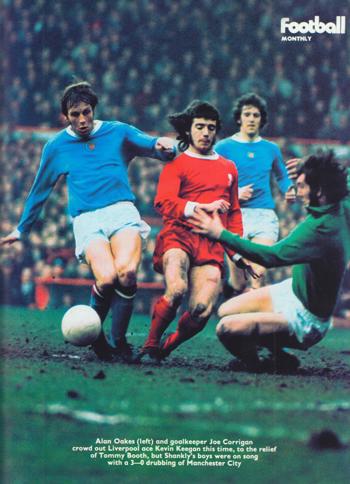
Poster of Kevin Keegan - Football Monthly May 1972
The atom bomb of Anfield!
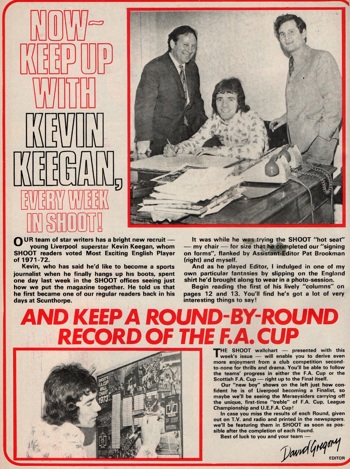
Keegan signs up for Shoot! in 1972
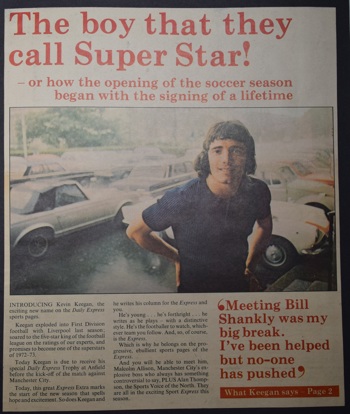
The boy that they call superstar
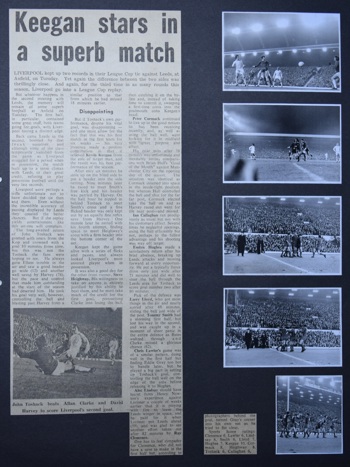
Keegan stars in a superb match - 31 October 1972
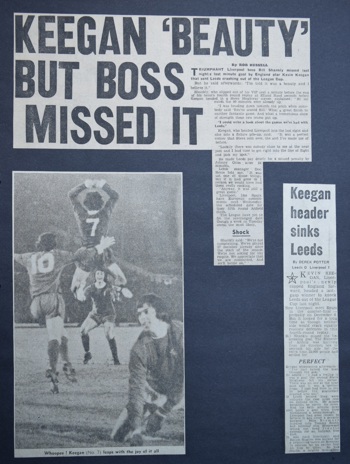
Keegan's beauty but boss missed it! - 22 November 1972
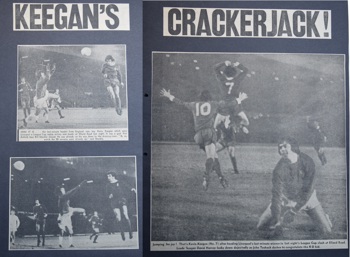
Keegan's crackerjack! - 22 November 1972
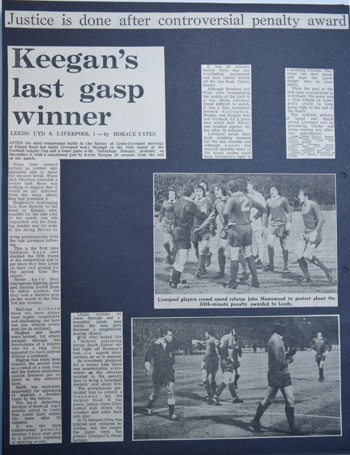
Keegan's last gasp winner - 22 November 1972
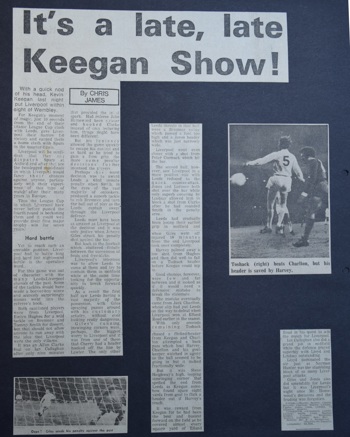
It's a late, late Keegan show - 22 November 1972
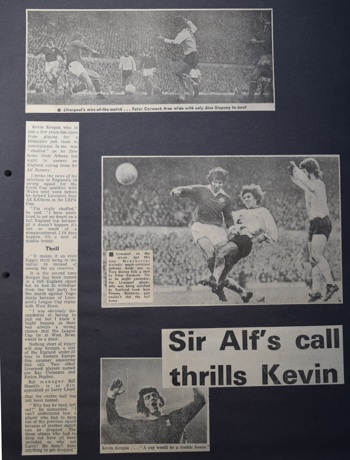
Sir Alf's call thrills Kevin - 11 November 1972
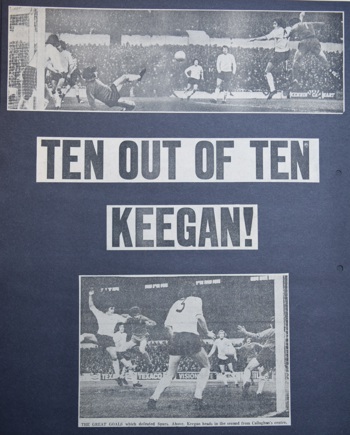
Ten out of ten Keegan! - 25 November 1972
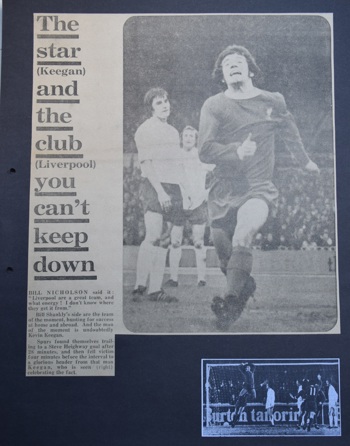
The star you can't keep down! - 25 November 1972
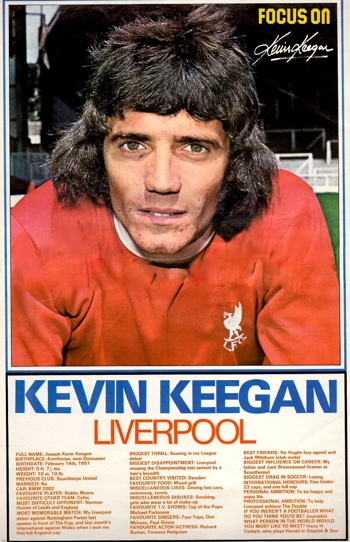
1972 - December - Shoot! Focus on Kevin Keegan
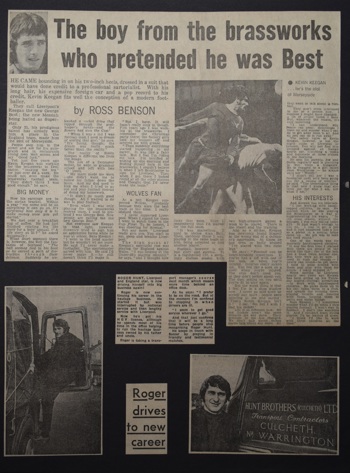
The boy from the brassworks who pretended he was Best - December 1972
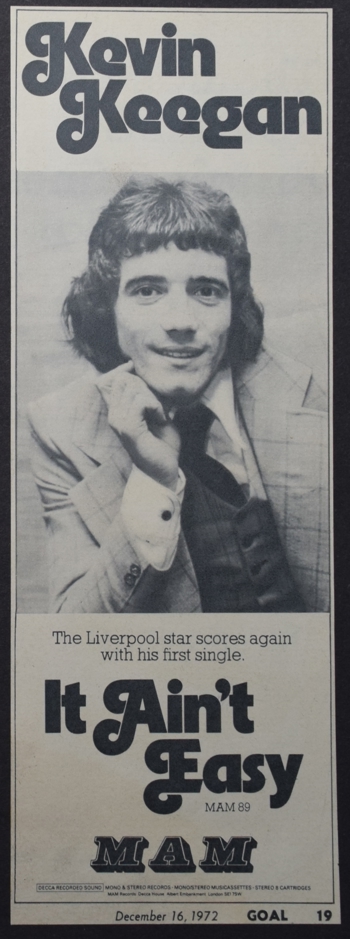
Keegan's latest single - December 1972
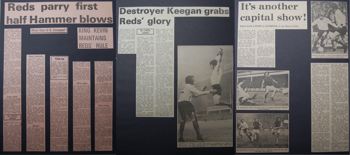
Destroyer Keegan grabs Reds' glory! - 6 January 1973
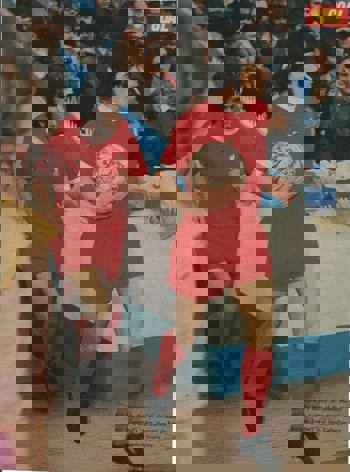
Keegan on Goal
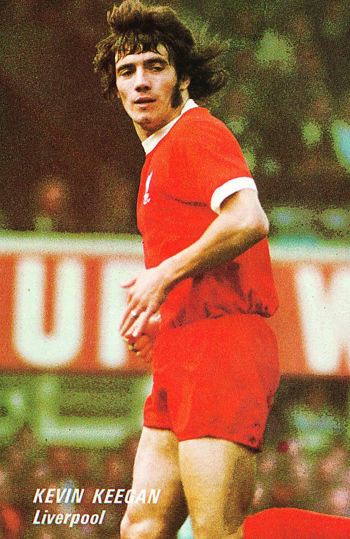
A Keegan Liverpool poster
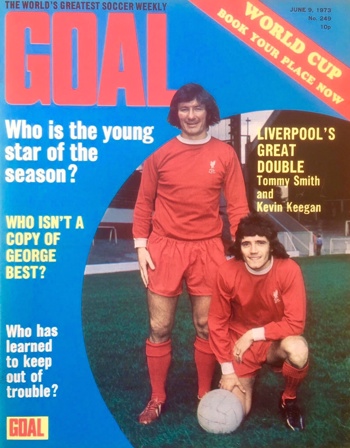
1973 - 9 June - Goal cover
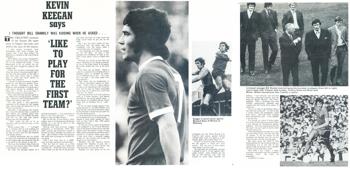
I thought Shankly was kidding me - Football Monthly 1973
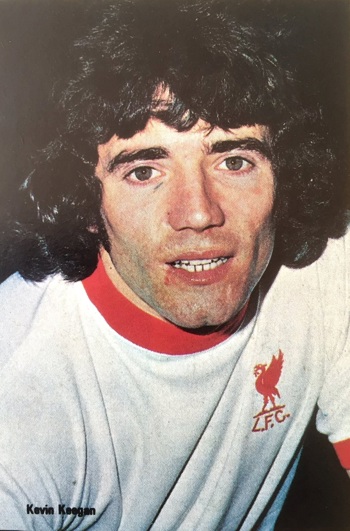
Poster in white
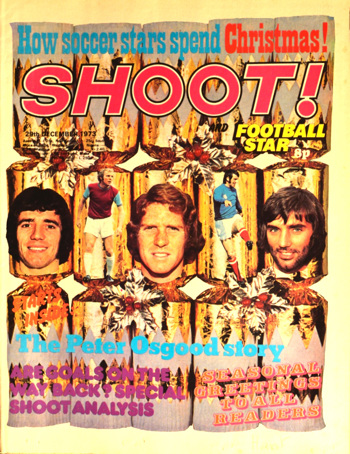
Keegan a Christmas cracker on Shoot's! cover on 29 December 1973

1974 - 2 February - Shoot!

1974 - 16 February - Shoot!

1974 - 9 March - Shoot!
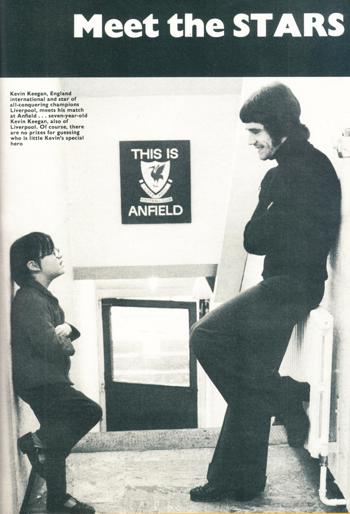
Two Kevin Keegans - Football Monthly 1974

1974 - 30 March - Shoot!
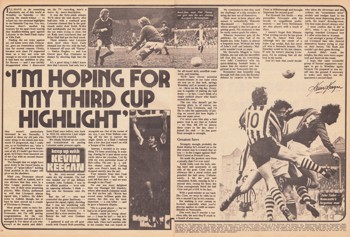
1974 - Keegan's cup
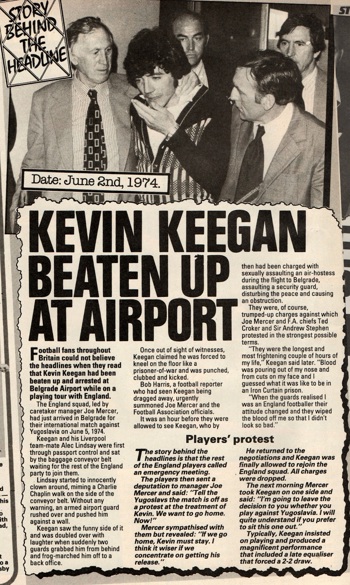
Keegan beaten up at airport in 1974
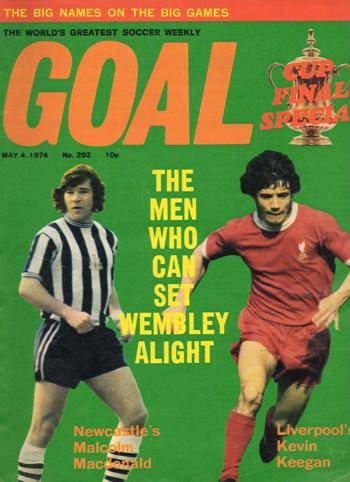
Keegan on the cover of Goal - 4 May 1974
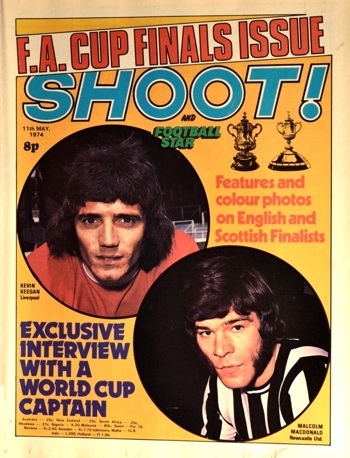
1974 - 11 May - Shoot!
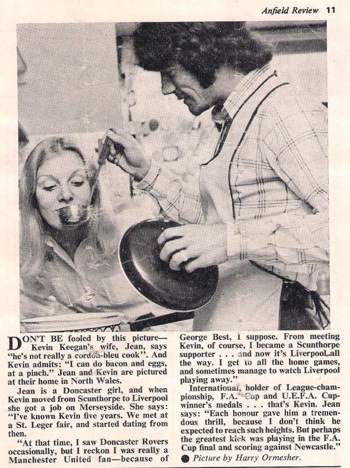
Masterchef
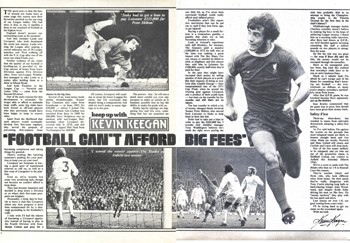
1975 - 22 March - Shoot!
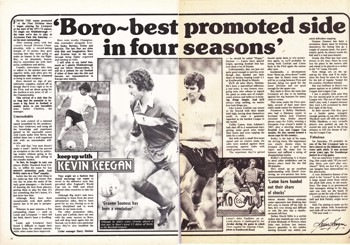
1975 - 26 April - Shoot!
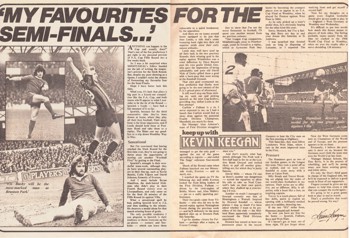
1975 - 26 April - Shoot!

1975 - 16 August - Shoot!
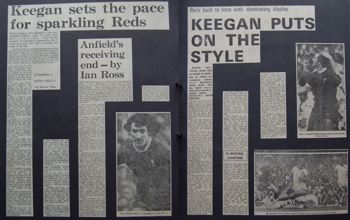
Keegan puts on the style - 20 September 1975
Onze Magazine Cover
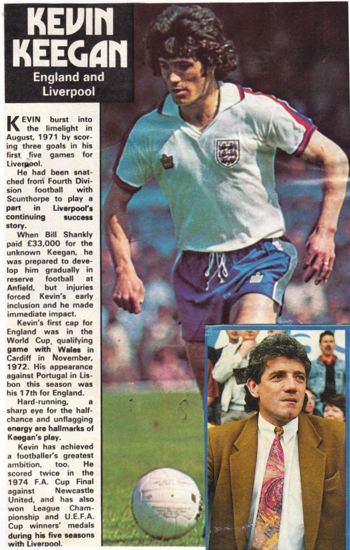
Keegan - England profile 1976
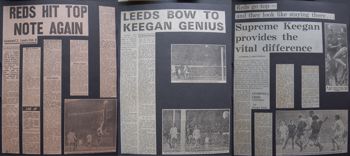
1976 - 7 February - The Liverpool Echo
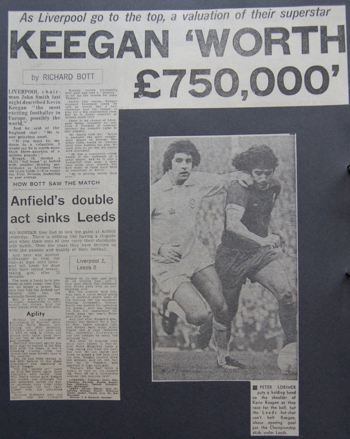
Keegan worth £750,000 - 7 February 1976
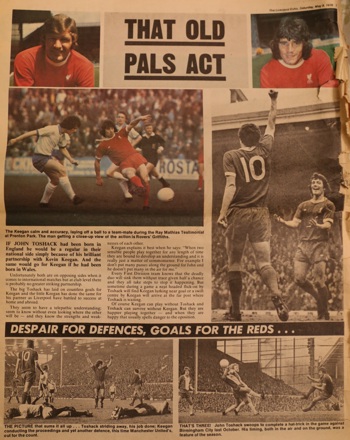
That old pals act - Keegan and Tosh 8 May 1976
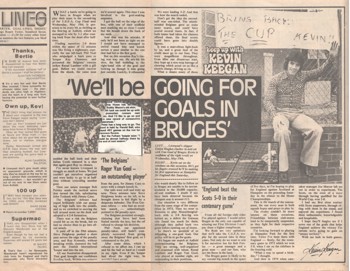
1976 - 22 May - Shoot!
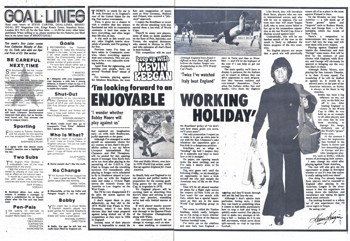
1976 - 29 May - Shoot!
.jpg)
1976 - Shoot! Annual
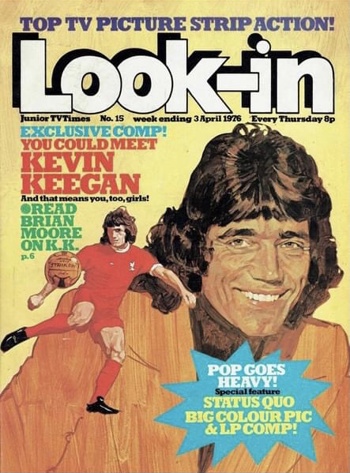
Look In cover
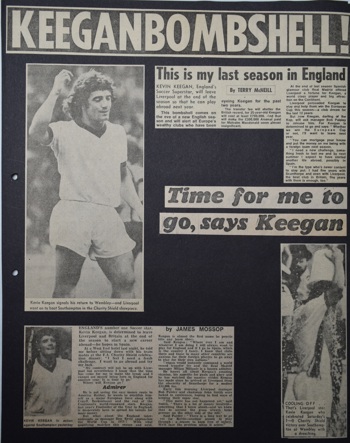
Keegan bombshell! - August 1976
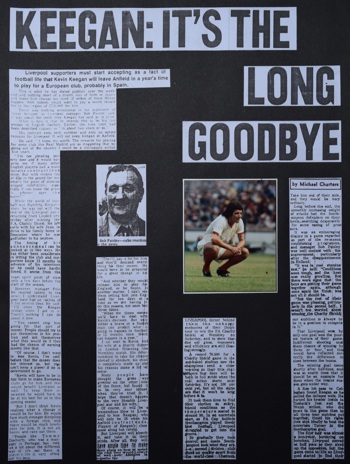
It's the long goodbye - August 1976
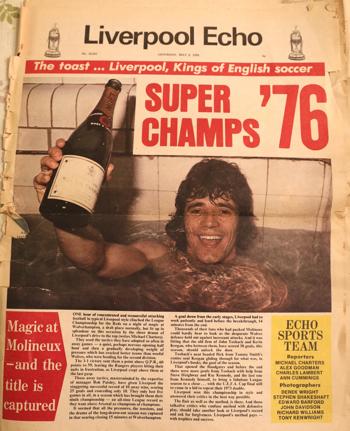
Super champs 1976!
.jpg)
1976 - Shoot! Annual
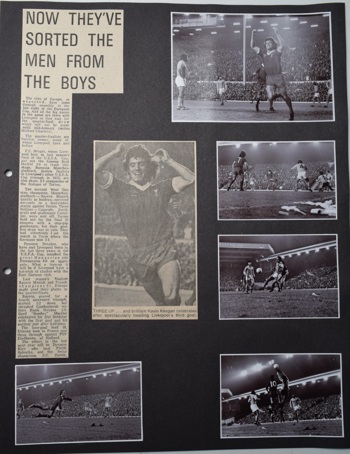
Now they have sorted out the men from the boys - 3 November 1976
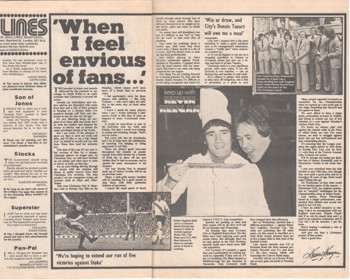
1977 - 1 January - Shoot!
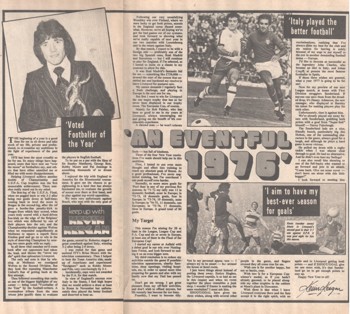
1977 - 8 January - Shoot!
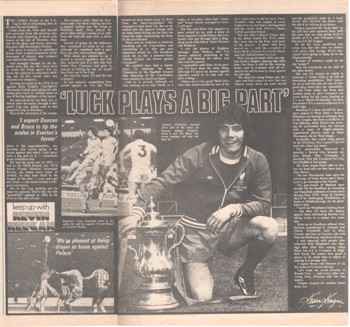
1977 - 15 January - Shoot!
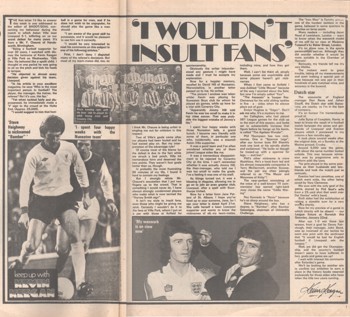
1977 - 29 January - Shoot!
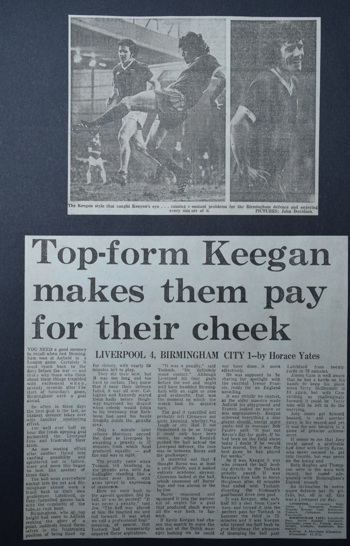
Top form Keegan makes them pay for their cheek - 5 February 1977
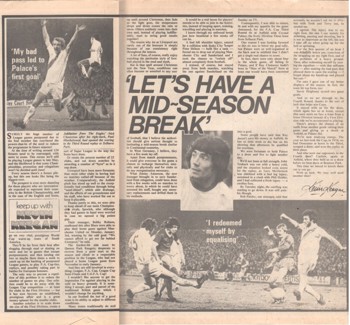
1977 - 15 February - Shoot!
.jpg)
1977 - 14 February - Shoot!
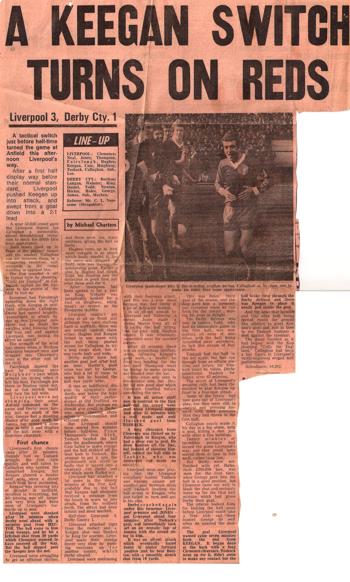
Keegan switch turns on Reds - 19 February 1977
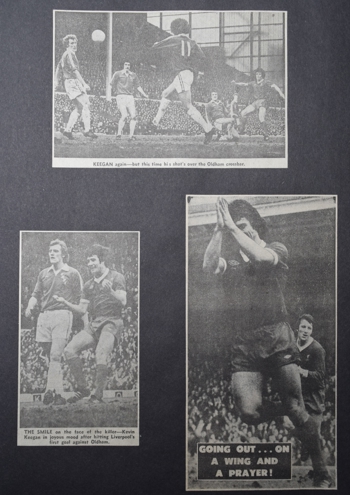
Keegan terminates Oldham - images from 26 February 1977

1977 - 26 February - Shoot!
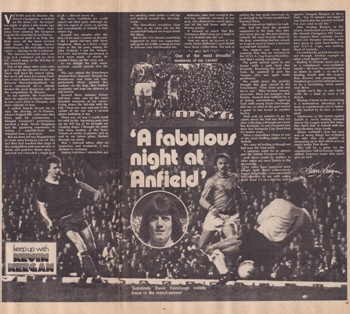
1977 - 9 April - Shoot!
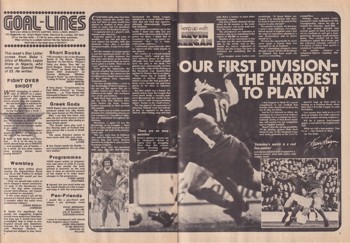
1977 - 7 May - Shoot!
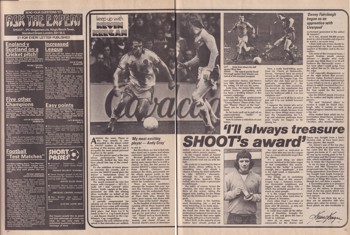
1977 - 21 May - Shoot!
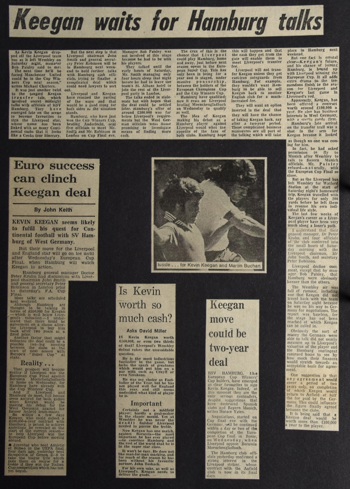
Keegan waits for Hamburg talks - May 1977
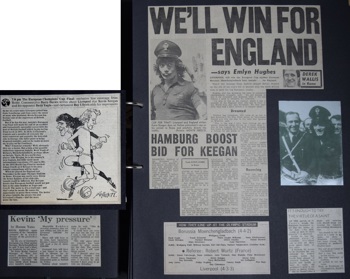
We'll win for England - May 1977
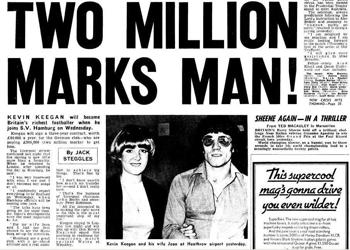
Two million marks man! - 30 May 1977
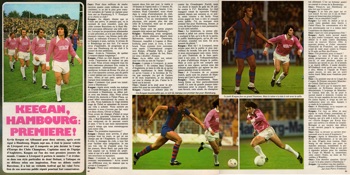
1977 - Onze - Hamburg
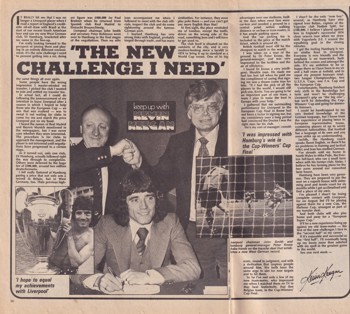
1977 - 2 July -Shoot!
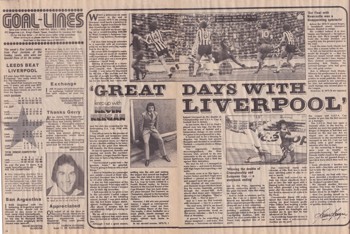
1977 - 16 July - Shoot!
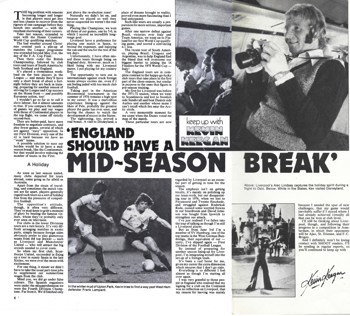
1977 - Shoot! Summer Special
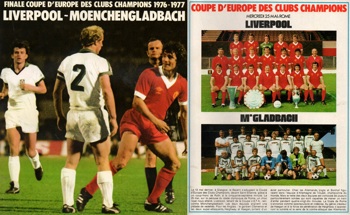
Vogts vs Keegan in the European Cup final in 1977
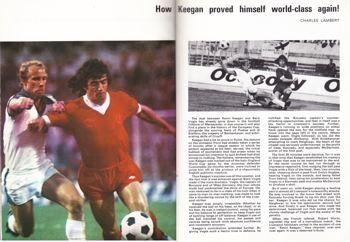
How Keegan proved himself again! - May 1977
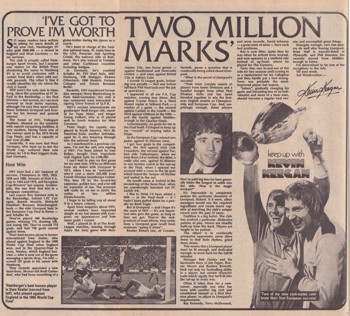
1977 - 6 August - Shoot!
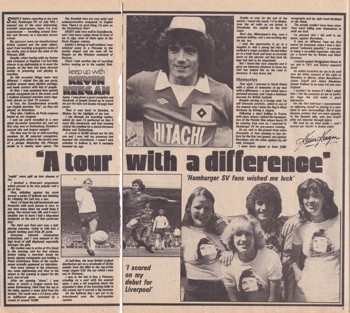
1977 - 13 August - Shoot!
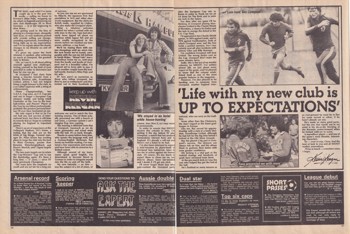
1977 - 20 August - Shoot!
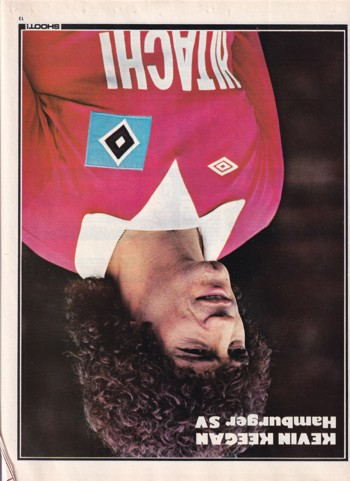
1977 - 3 September - Shoot!
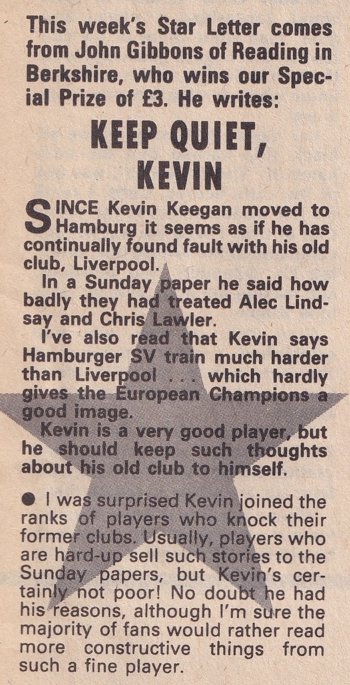
1977 - 24 September - Shoot!

Kevin Keegan on the cover of Shoot! 1972-1977
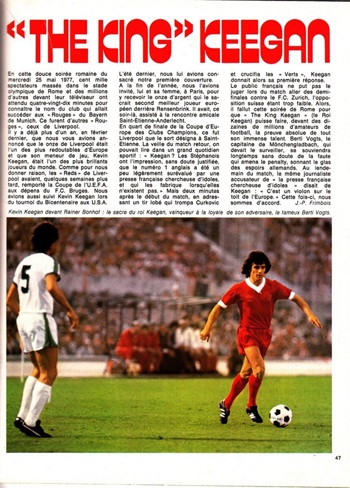
1977 - Onze
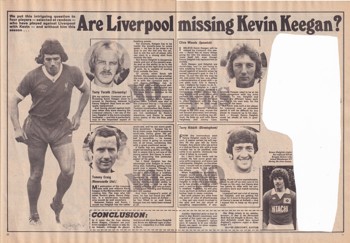
1977 - 15 October - Shoot!
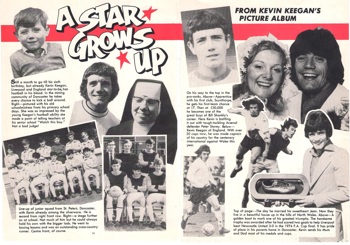
A Star grows up - Topical times 1977
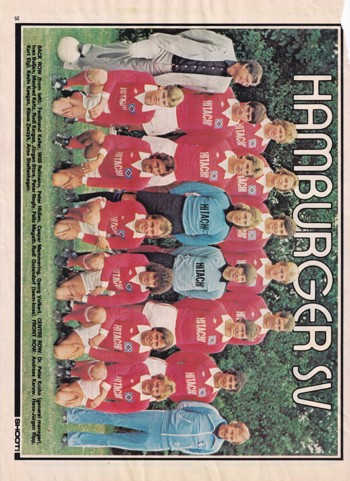
1977 - 5 November - Shoot!
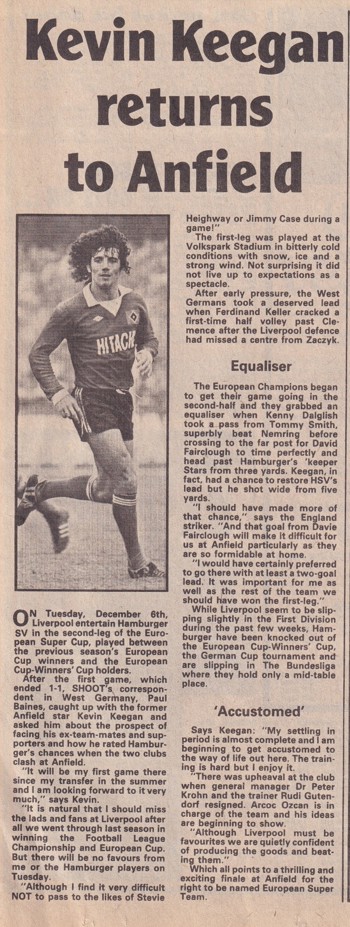
1977 - 10 December - Shoot!
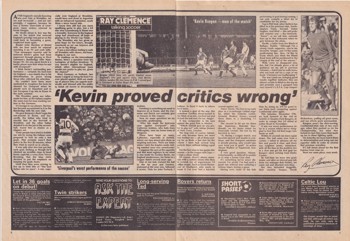
1977 - 24 December - Shoot!
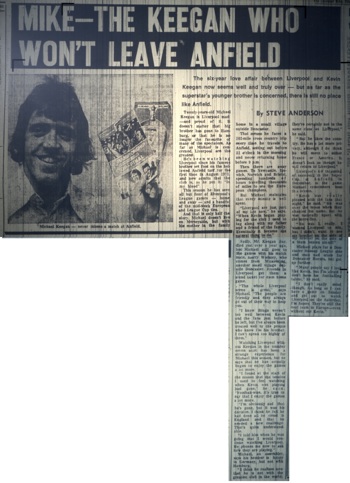
Mike the Keegan who won't leave Anfield - 16 February 1978

1978 - 29 July - Shoot!

1978 - 14 October - Shoot!

1978 - 14 October - Shoot!
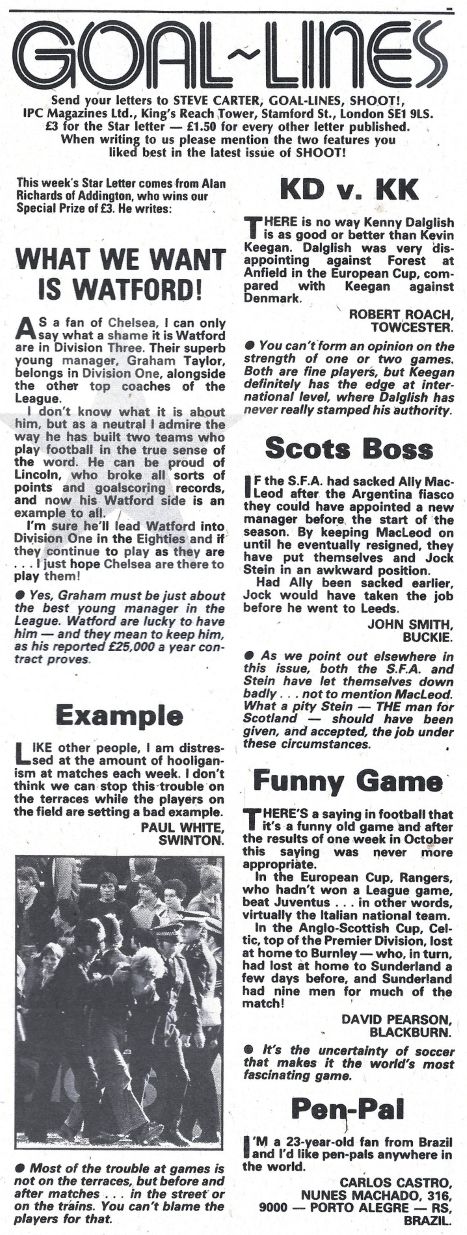
1978 - 28 October - Shoot!

1978 - 2 December - Shoot!
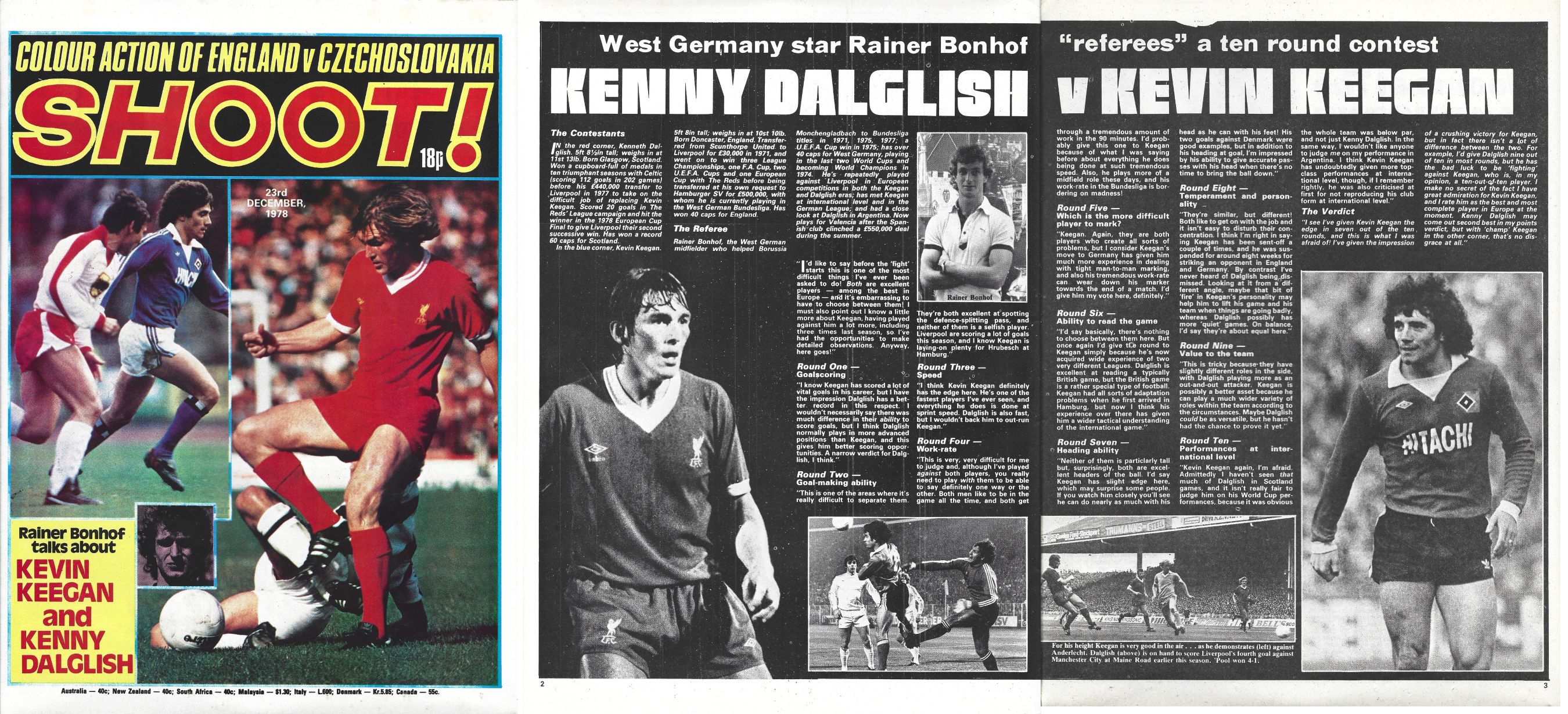
1978 - 23 December - Shoot!
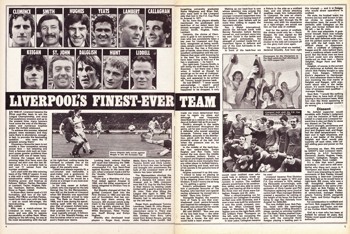
1978 - 30 December - Shoot!
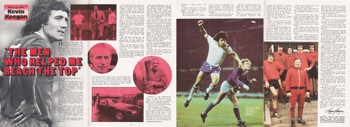
1978 - Shoot! Annual
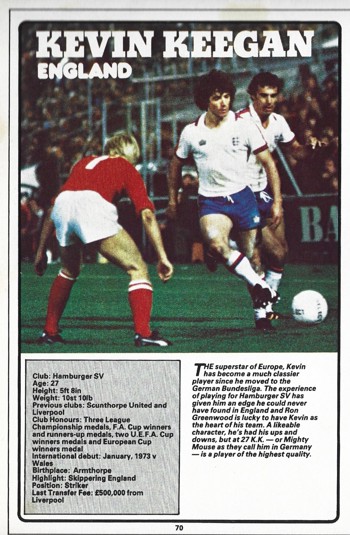
1979 - 6 January - Shoot!
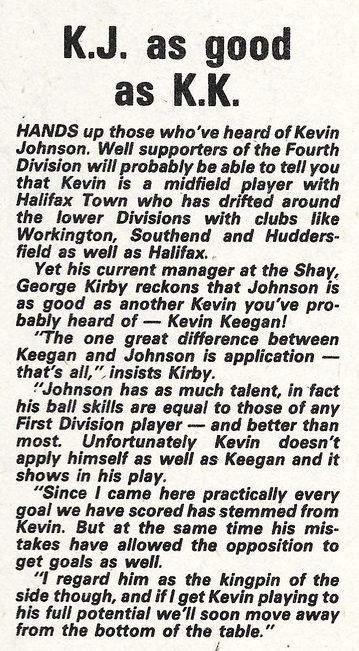
1979 - 13 January - Shoot!

1979 - 27 January - Shoot!

1979 - 17 February - Shoot!

1979 - 2 March - Shoot!
.jpg)
Soccer Monthly - March 1979
.jpg)
Soccer Monthly - March 1979
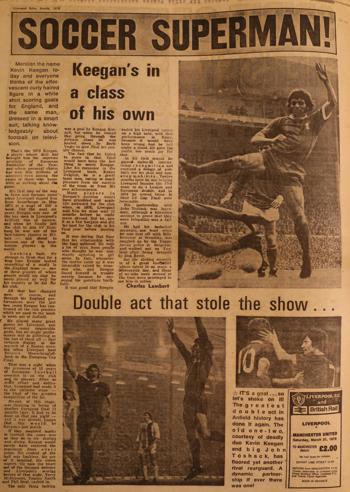
Soccer Superman! - March 1979

1979 - 18 March - Shoot!

1979 - 12 May - Shoot!

1979 - 23 June - Shoot!

1979 - 21 July - Shoot!

1979 - 26 August - Shoot!

1979 - 1 September - Shoot!

1979 - Football Monthly

1979 - Football Monthly

1980 - 2 August - Shoot!
.jpg)
1980 - 10 May - Shoot!
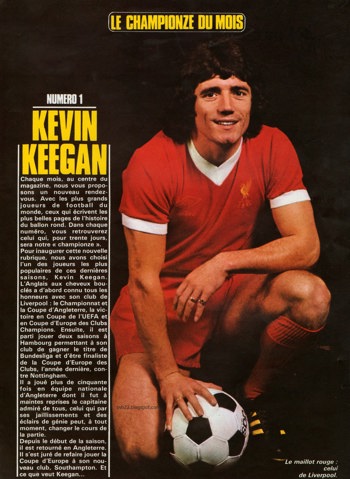
Numero 1 - from Onze
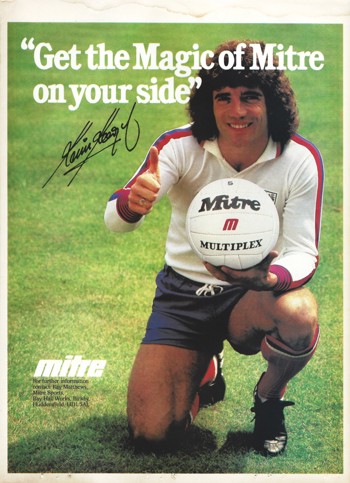
1980 - 13 September - Shoot!
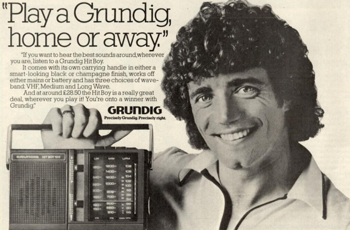
Grundig ad

1980 - 28 June - Shoot!
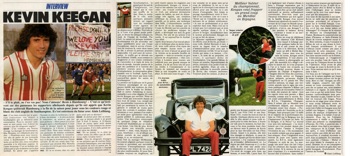
Leaving Hamburg
.jpg)
1980 - 27 December - Shoot!
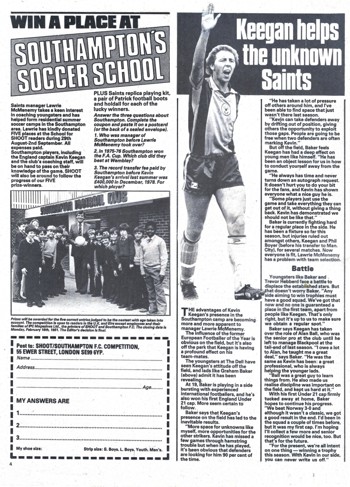
1981 - 7 February - Shoot!
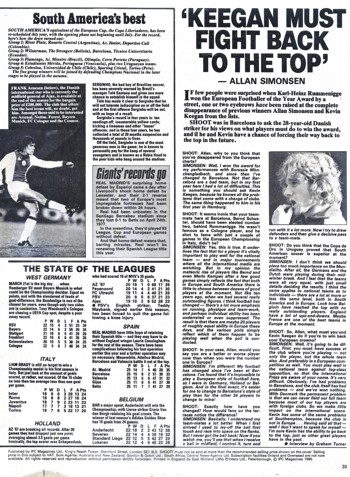
1981 - 14 March - Shoot!
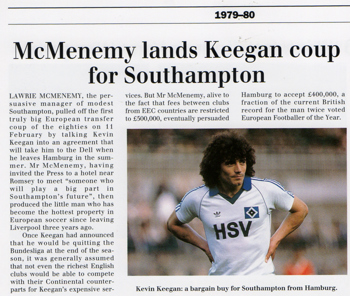
Keegan a Saint!

1982 - 20 February - Shoot!
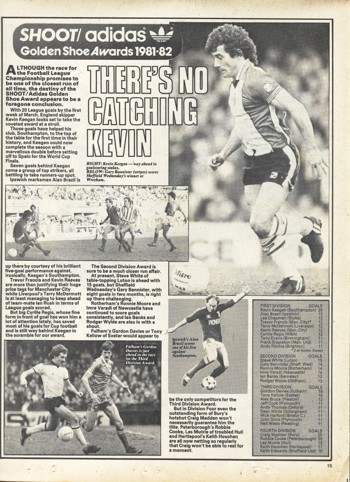
1982 - 27 March - Shoot!
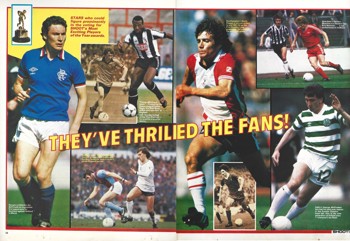
1982 - 24 April - Shoot!
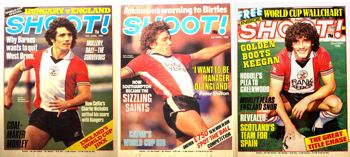
Kevin Keegan on the cover of Shoot! as a Southampton player
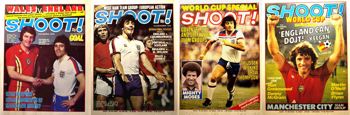
Kevin Keegan on the cover of Shoot! in England gear
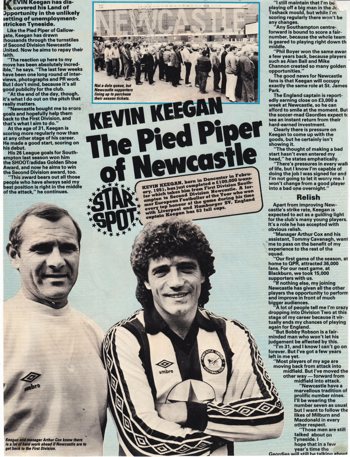
The Pied Piper of Newcastle - 1982
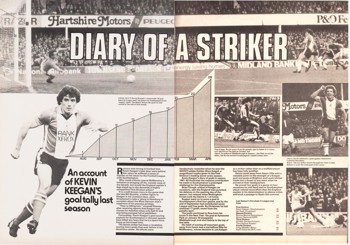
1982 - Shoot! Summer Special
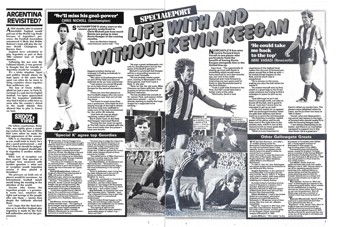
1982 - 2 October - Shoot!
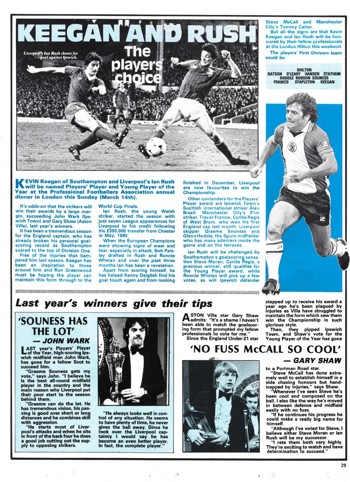
1982 - 13 November - Shoot!
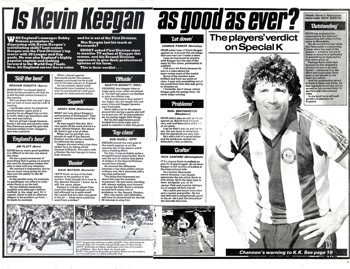
1982 - 13 November - Shoot!
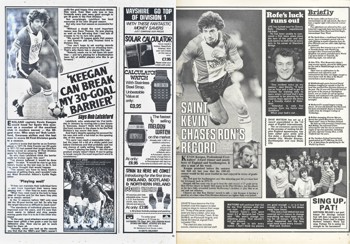
1983 - 6 March - Shoot!
.jpg)
1983 - 16 April - Shoot!
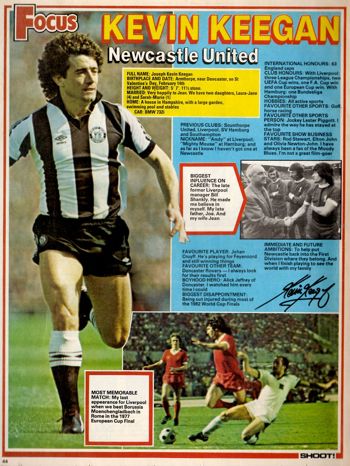
Focus on Newcastle United's Kevin Keegan
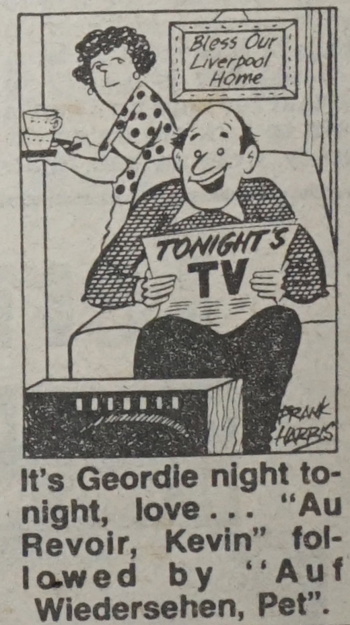
1984 - 6 January
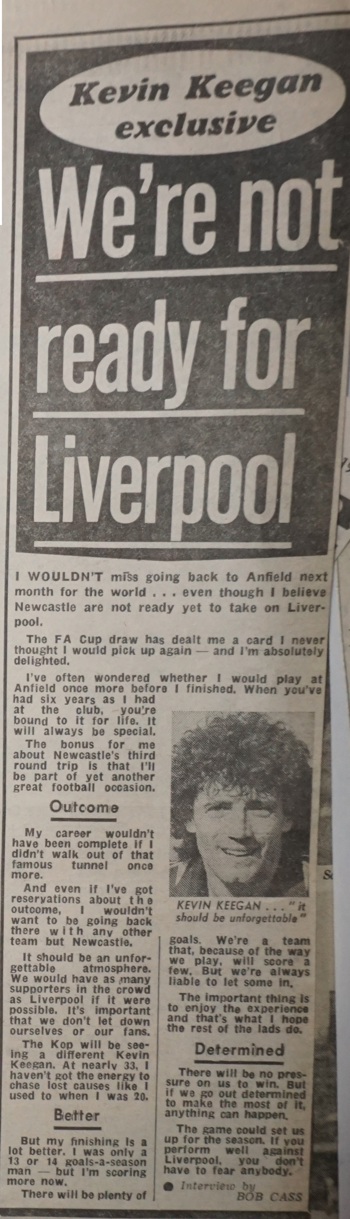
We're not ready for Liverpool - 6 January 1984
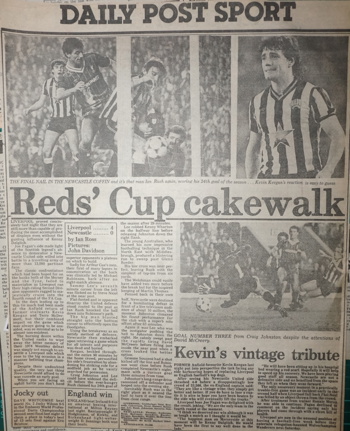
Reds cup cakewalk - 6 January 1984
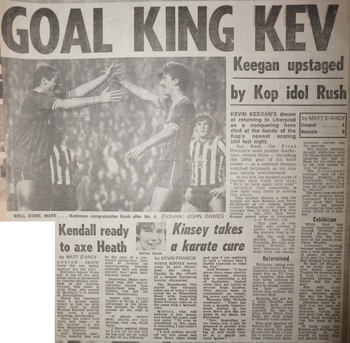
Goal king Kev - January 1984
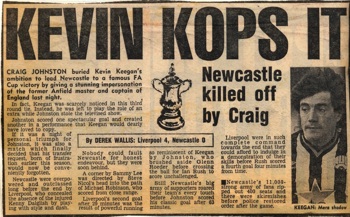
Kevin Cops It! - 6 January 1984
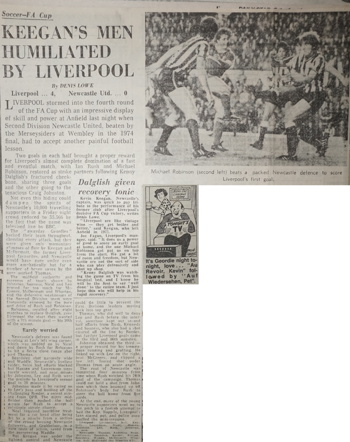
Men humiliated by Liverpool - 6 January 1984
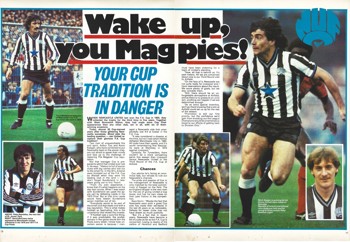
1984 - 14 January - Shoot!
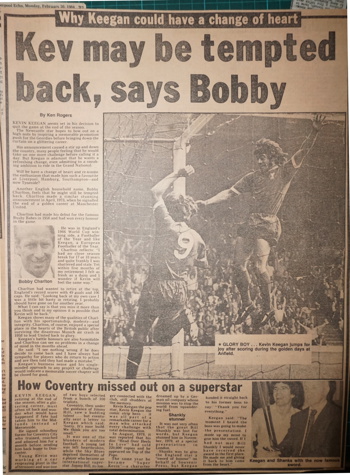
Kev may be tempted back - 20 February 1984
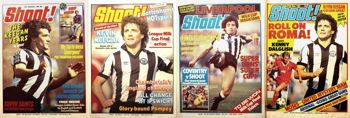
Kevin Keegan on the cover of Shoot! as a Newcastle player
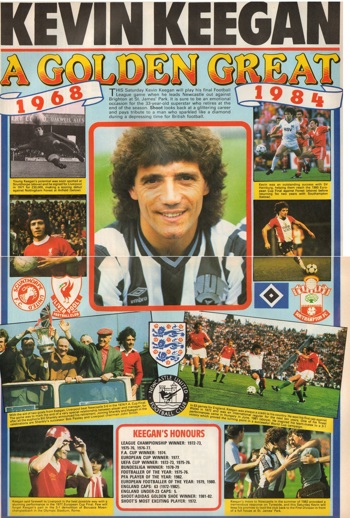
A Golden great 1968-84
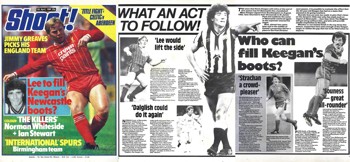
1984 - 7 April - Shoot!
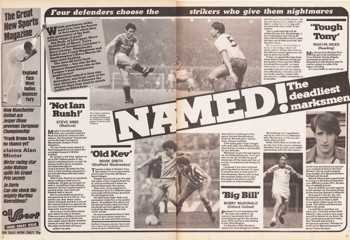
1984 - 14 April - Shoot!
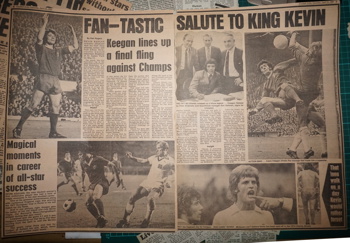
Salute to king Kevin - 17 May 1984
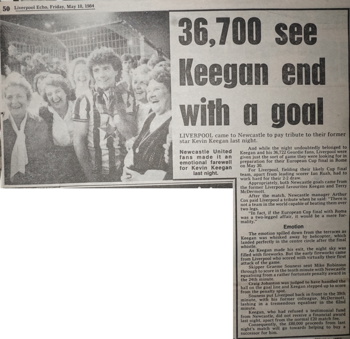
Keegan ends with goal - 17 May 1984
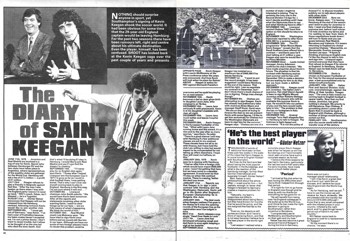
1989 - 8 March - Shoot!
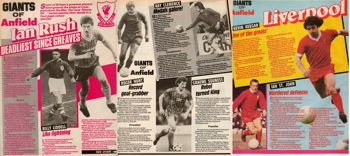
Giants of Anfield
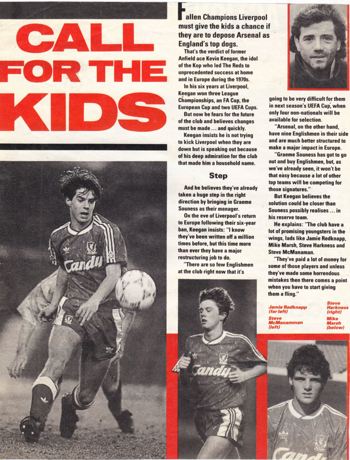
Call for the kids - August 1991
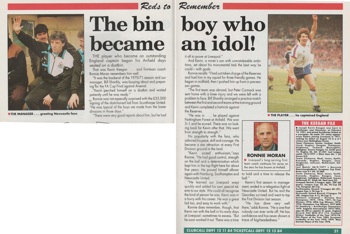
Reds to remember - Kevin Keegan
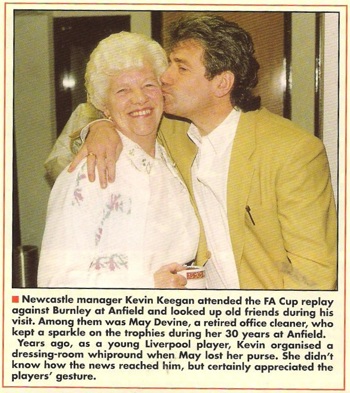
Kiss between friends - 1993
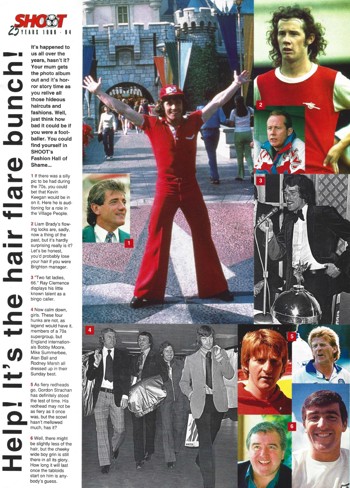
1994 - Shoot!
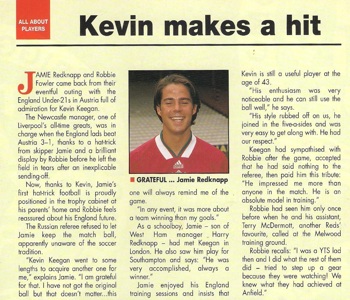
Kevin makes a hit! - 1994
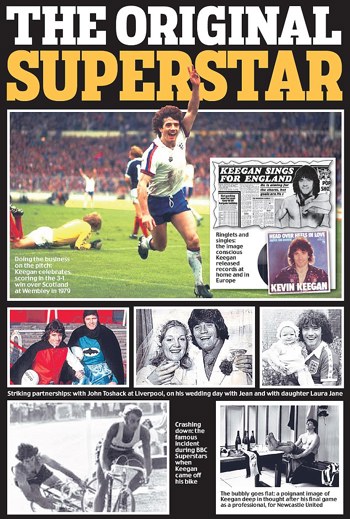
The Original Superstar
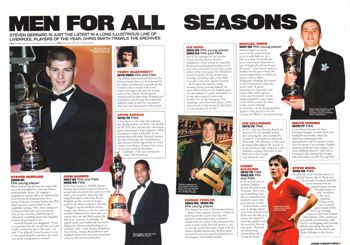
Players of the year - LFC Official Matchday Magazine
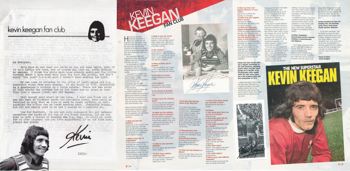
The Keegan fan club - LFC Official Matchday Magazine
Other Clubs
| Club | Season | Club rank | League apps | League goals | Total apps | Total goals |
|---|---|---|---|---|---|---|
| Scunthorpe United | 1968-1969 | England Fourth Division | 33 | 2 | 35 | 2 |
| Scunthorpe United | 1969-1970 | England Fourth Division | 46 | 6 | 54 | 9 |
| Scunthorpe United | 1970-1971 | England Fourth Division | 45 | 10 | 52 | 11 |
| Hamburg SV | 1977-1978 | Germany 1 | 25 | 6 | 33 | 12 |
| Hamburg SV | 1978-1979 | Germany 1 | 34 | 17 | 35 | 17 |
| Hamburg SV | 1979-1980 | Germany 1 | 31 | 9 | 43 | 11 |
| Southampton | 1980-1981 | England First Division | 27 | 11 | 32 | 12 |
| Southampton | 1981-1982 | England First Division | 41 | 26 | 48 | 30 |
| Newcastle United | 1982-1983 | England Second Division | 37 | 21 | 41 | 21 |
| Newcastle United | 1983-1984 | England Second Division | 41 | 27 | 44 | 28 |
| Blacktown City Demons | 1985-1986 | Australia NSL | 2 | 1 | 2 | 1 |
| Total | 362 | 136 | 419 | 154 | ||