
Billy Dunlop
Defender · Liverpool 1894–1909
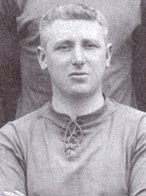
Personal
- Born
- 11 August 1874
- Place of birth
- Hurlford, Scotland
- Died
- 28 November 1941
- International
- 1/0 Debut 07.04.1906 vs. England
- Other clubs
- Hurlford, Kilmarnock, Abercorn (1893-95)
At Liverpool
- Signed from
- Abercorn
- Joined
- 11 October 1894
- Transfer fee
- £35
- Debut
- 25 March 1895
- First goal
- 16 February 1898
- Last goal
- 11 March 1905
- Last appearance
- 17 April 1909
- Contract expiry
- January 1910
Liverpool career
363
Appearances
3
Goals
- League 325 apps · 2 goals
- Win ratio 47.93% — W 174 · D 69 · L 120
- Assists not recorded before 1945–46
Honours
Player profile
Scottish-born left-back Dunlop first appeared in Liverpool's first team towards the end of the 1894/95 season and stayed at the club for no less than 15 years! Dunlop was a regular in the following season but was out of action with an ankle injury from late October to the end of February, but despite his absence Liverpool were promoted back to the First Division. Tom Wilkie and Archie Goldie, the latter incidentally born in the same suburb of Kilmarnock as Dunlop, proved to be a sound full-back pair, but Dunlop finally reclaimed his first-team place from Wilkie for the last seven matches of the 1896/97 season and became a regular in the side for the next decade and a prominent member of the squad who won Liverpool's first-ever first division title in 1901, a feat repeated five years later. In July 1911 he was appointed assistant trainer at Sunderland. Dunlop was the team's captain from 1899-1900.
According to Liverpool's match programme from 17 September 1904: "Dunlop plays a characteristic full-back game, and the familiar cry of on the Anfield ground 'Boot it, Dunlop' is fairly suggestive of his method of defence. There can be no two opinions of his ability to kick the ball from almost any position. Always keen and watchful on the field, he betrays his over-anxiety to repel the invader by his terrific lunges, and on his day, there is no more brilliant player than this same Dunlop. A better servant no club ever possessed, and though we may occasionally differ from him as to the methods he employs on the field, on one point we must all agree, that for downright single-mindedness of purpose Dunlop's tactics have never been questioned."
According to Liverpool's match programme from 17 September 1904: "Dunlop plays a characteristic full-back game, and the familiar cry of on the Anfield ground 'Boot it, Dunlop' is fairly suggestive of his method of defence. There can be no two opinions of his ability to kick the ball from almost any position. Always keen and watchful on the field, he betrays his over-anxiety to repel the invader by his terrific lunges, and on his day, there is no more brilliant player than this same Dunlop. A better servant no club ever possessed, and though we may occasionally differ from him as to the methods he employs on the field, on one point we must all agree, that for downright single-mindedness of purpose Dunlop's tactics have never been questioned."
Appearances per season
| Season | League | FA | LC | Europe | Other | Total |
|---|---|---|---|---|---|---|
| 1894-1895 | 4 | 0 | 0 | 0 | 1 | 5 |
| 1895-1896 | 13 | 0 | 0 | 0 | 0 | 13 |
| 1896-1897 | 5 | 2 | 0 | 0 | 0 | 7 |
| 1897-1898 | 20 | 5 | 0 | 0 | 0 | 25 |
| 1898-1899 | 33 | 6 | 0 | 0 | 0 | 39 |
| 1899-1900 | 34 | 4 | 0 | 0 | 0 | 38 |
| 1900-1901 | 33 | 2 | 0 | 0 | 0 | 35 |
| 1901-1902 | 33 | 3 | 0 | 0 | 0 | 36 |
| 1902-1903 | 28 | 1 | 0 | 0 | 0 | 29 |
| 1903-1904 | 21 | 1 | 0 | 0 | 0 | 22 |
| 1904-1905 | 32 | 2 | 0 | 0 | 0 | 34 |
| 1905-1906 | 31 | 5 | 0 | 0 | 1 | 37 |
| 1906-1907 | 23 | 4 | 0 | 0 | 0 | 27 |
| 1907-1908 | 2 | 0 | 0 | 0 | 0 | 2 |
| 1908-1909 | 13 | 1 | 0 | 0 | 0 | 14 |
| Totals | 325 | 36 | 0 | 0 | 2 | 363 |
A more detailed look at the player's appearances
| Apps | Mins | Opponent |
|---|---|---|
| 363 | 32,670 | All opponents |
| 21 | 1,890 | Sunderland |
| 20 | 1,800 | Blackburn Rovers |
| 19 | 1,710 | Bury |
| 18 | 1,620 | Everton |
| 18 | 1,620 | Sheffield Wednesday |
| 17 | 1,530 | Aston Villa |
| 17 | 1,530 | Nottingham Forest |
| 17 | 1,530 | Notts County |
| 17 | 1,530 | Sheffield United |
| 16 | 1,440 | Derby County |
| 16 | 1,440 | Stoke City |
| 16 | 1,440 | West Bromwich Albion |
| 15 | 1,350 | Newcastle United |
| 14 | 1,260 | Bolton Wanderers |
| 13 | 1,170 | Wolves |
| 12 | 1,080 | Manchester City |
| 12 | 1,080 | Preston North End |
| 9 | 810 | Birmingham City |
| 7 | 630 | Burnley |
| 7 | 630 | Grimsby Town |
| 7 | 630 | Manchester United |
| 7 | 630 | Middlesbrough |
| 4 | 360 | Glossop North End |
| 4 | 360 | Port Vale |
| 3 | 270 | Arsenal |
| 3 | 270 | Bradford City |
| 3 | 270 | Bristol City |
| 3 | 270 | Leicester City |
| 2 | 180 | Barnsley |
| 2 | 180 | Blackpool |
| 2 | 180 | Burton Swifts |
| 2 | 180 | Burton United |
| 2 | 180 | Burton Wanderers |
| 2 | 180 | Chesterfield |
| 2 | 180 | Doncaster Rovers |
| 2 | 180 | Gainsborough Trinity |
| 2 | 180 | Lincoln City |
| 2 | 180 | Southampton |
| 1 | 90 | Brentford |
| 1 | 90 | Chelsea |
| 1 | 90 | Corinthians |
| 1 | 90 | Crewe Alexandra |
| 1 | 90 | Hucknall St Johns |
| 1 | 90 | Loughborough |
| 1 | 90 | Oldham Athletic |
| 1 | 90 | West Ham United |
| Total | Venue |
|---|---|
| 178 | Home |
| 178 | Away |
| 7 | Neutral |
| Total | Competition |
|---|---|
| 325 | League |
| 36 | FA Cup |
| 1 | Test Match |
| 1 | Sheriff of London Charity Shield |
| Total | W | D | L | Win% | Manager |
|---|---|---|---|---|---|
| 345 | 165 | 68 | 112 | 47.8% | Tom Watson |
| 13 | 9 | 0 | 4 | 69.2% | John McKenna |
| 5 | 0 | 1 | 4 | 0.0% | William Edward Barclay |
Goals per season
| Season | League | FA | LC | Europe | Other | Total |
|---|---|---|---|---|---|---|
| 1897-1898 | 0 | 1 | 0 | 0 | 0 | 1 |
| 1903-1904 | 1 | 0 | 0 | 0 | 0 | 1 |
| 1904-1905 | 1 | 0 | 0 | 0 | 0 | 1 |
| Totals | 2 | 1 | 0 | 0 | 0 | 3 |
The player scored 3 goals in 3 different matches.
A more detailed look at the player's goals
| Total | Opponent |
|---|---|
| 1 | Doncaster Rovers |
| 1 | Manchester United |
| 1 | Sunderland |
| Total | Started/substitutions |
|---|---|
| 3 | Started |
| Total | Goal minute period |
|---|---|
| 2 | 76-90 minutes |
| Total | Goal origin |
|---|---|
| 3 | Open play |
Related Articles
One-Cap Wonders!
Owen Collins looks at the players who have gained international recognition without necessarily making the grade at the club but particularly one name on this list is a great surprise given his success.
The death of Billy Dunlop
From the Sunderland Daily Echo on 1 December 1941.
Billy Dunlop still going strong
From the Sunderland Daily Echo on 15 April 1941.
Billy the masseur
The Sunderland Daily Echo on 6 January, 1937.