Personal
- Born
-
26 May 1909
- Place of birth
-
Orbiston, Bellshill, Lanarkshire, Scotland
- Died
-
20 January 1994
- International
-
1/0 + 7/0 wartime caps/goals Debut 04.10.1933 vs. Wales
- Other clubs
-
Denny Hibernian (1927-28), Manchester City (1928-1936); Chelsea, Middlesbrough, Reading, Brentford, Bournemouth & Boscombe Athletic, Hibernian (wartime guest)
At Liverpool
- Signed from
-
Manchester City
- Joined
-
11 March 1936
- Transfer fee
-
£8,000
- Contract expiry
-
September 1945
Also played against Liverpool — view opposition record
Liverpool career
122
AppearancesApps
3
Goals
- League 115 apps · 3 goals
- Win ratio 35.25% — W 43 · D 35 · L 44
- Wartime 26 apps · 1 goal
- Assists not recorded before 1945–46
Player profile
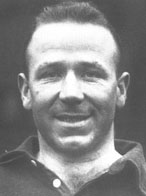
Matt Busby, along with Tiny Bradshaw and Jimmy McDougall - formed an all-Scottish half-back line that certainly ranks with the best the club has ever had in those three positions at any one time in its history. Busby started out as a youth team player at Alpine Villa where he won the u-18 Scottish Cup before moving to Denny Hibernian. He had been watched by scouts from Rangers and Celtic, but when Busby went on a trial to Rangers they found out he was a Catholic and Celtic weren’t impressed that he had been at Rangers. He moved south to Manchester City as an inside-forward in February 1928 but they moulded him into a classy half-back. Busby was relieved to make the grade: “There were only two ways for boys to go in those days: down, working in the pits, or up if you happened to be good at football.” In seven years Busby played 226 Football League games for City. His biggest disappointment was losing the FA Cup final 3-0 to Everton in 1933 but the highlight was winning the Cup a year later when Portsmouth were beaten 2-1. At 26 Matt Busby was an experienced professional when he was signed by Liverpool in March 1936 for £8,000. He almost immediately took over the right-half position from Robert Savage. Busby didn’t miss many matches over the next three seasons when Liverpool were a mediocre first division team. But like so many of his contemporaries, Busby’s league career was cut short by World War II.
Busby’s greatest strength on the field was his passing. The Liverpool Echo waxed lyrical about him in September 1936. “Busby goes far up if so inclined and when he starts his upward trend one knows his command of the ball will be such he will not be dispossessed. He is the richest and most practised passer the game has ever known. Hence he appears in a blinding light when compared with some other half-backs.” Matt Busby was appointed as coach and assistant manager to George Kay at Anfield for £10-a-week in May 1944 and was due to take his post when World War II was over. On 14 February 1945, Busby, who was at this time an instructor at the Royal Military College, asked to cancel his coaching contract at Liverpool as he'd had other offers. A few days later he accepted the manager’s position at Manchester United. Curiously, Busby continued to be registered as a Liverpool player and continued to play for them until April 1945 and was ready for action as late as September (Liverpool politely declined) as he moved closer to taking over formally at Manchester United on 1 October. Busby took a bold step but his achievements at Old Trafford were nothing short of astonishing with the birth of the “Busby Babes”, five First Division Championships and two FA Cups. He survived the Munich air crash and then a decade later masterminded the European Cup-winning team of 1968. Sir Matt Busby is rightly considered one of the best managers of all time.
Appearances per season
A more detailed look at the player's appearances
| Total |
Venue |
| 63 |
Home |
| 59 |
Away |
Goals per season
The player scored 3 goals in 3 different matches.
A more detailed look at the player's goals
| Total |
Started/substitutions |
| 3 |
Started |
Wartime Appearances / Goals
| Season |
Appearances |
Goals |
| 1939-1940 |
16 |
1 |
| 1941-1942 |
1 |
0 |
| 1943-1944 |
4 |
0 |
| 1944-1945 |
5 |
0 |
| Totals |
26 |
1 |
Related Articles
You meet a Manc and try to make him guess which two football grounds have a statue of a former Liverpool player outside