
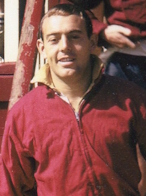
Ian St John
Midfielder · Liverpool 1961–1971
Personal
- Born
- 7 June 1938
- Place of birth
- Motherwell, Scotland
- Died
- 1 March 2021
- International
- 21/9 (14/8 at LFC) - 10.04.1965 Debut 06.05.1959 vs. West Germany
At Liverpool
- Signed from
- Motherwell
- Joined
- 2 May 1961
- Transfer fee
- £37,500
- Debut
- 19 August 1961
- First goal
- 30 August 1961
- Last goal
- 23 January 1971
- Last appearance
- 23 January 1971
- Contract expiry
- 18 May 1971
Also played against Liverpool — view opposition record
Liverpool career
- League 336 apps · 95 goals · 82 assists
- Win ratio 53.41% — W 227 · D 101 · L 97
Honours
Player profile
St John and Yeats would prove to be inspirational signings that helped an extremely settled side cruise to the second division title by eight points from Leyton Orient. "The Saint" only missed two League games, scoring 18 league goals and developing a lethal understanding with Roger Hunt. Liverpool comfortably coped with first division football, finishing eighth in their first year back in the top league and were unlucky to lose to Leicester City in the FA Cup semi-final, for whom Gordon Banks performed heroics. A year later Shankly's foresight and tactical shrewdness came to fruition. Liverpool won the First Division Championship for the first time for 17 years and St John contributed 21 league goals, the highest league total he achieved during any single season as a Liverpool player. A year later came his and the club's greatest moment. Shankly had promised Sawyer, that with St John and Yeats in the team Liverpool would win the FA Cup for the first time in the club's history. After over 70 years of trying it came true when St John's diving header towards the end of extra-time at Wembley flew past Leeds United's goalkeeper Gary Sprake and earned the Scotsman immortality on the red half of Merseyside for that one athletic moment.
St John would collect a second League championship medal in 1966 and hardly missed a game for the next three seasons. By then St John had dropped further back using his tactical nous in the middle of the park. As the 60s closed, Shankly had the difficult task of leaving out some of the players who had served him so well for most of the decade. Now 31 years old, St John became one of the 'casualties'. St John was hardly no saint and put his considerable boxing skills a few times to the test on the playing field. St John was sent off three times in the League while at Liverpool. "I had a quick temper which was a bad thing. The fact I wasn't frightened of anybody was a good thing."
Wearing the shirt of Hellenic in South Africa from February to September 1971 proved to be a joyous experience for the Scot who had been stuck in Liverpool's reserve team in the 1970/71 season. Once he returned, St John moved to Coventry after being released by Liverpool as expected. St John had agreed verbally to join Stoke but once Coventry offered him the post of assistant manager to Noel Cantwelll, he changed his mind. St John quickly returned to Merseyside to play briefly for third division Tranmere Rovers in the 1972/73 season under his former skipper Ron Yeats. St John took over as manager of his hometown club, Motherwell, in 1973 which he left four years later for a brief but fairly unhappy spell as a manager at Portsmouth. "Shanks could sell you everything. He got me a job that was the worst job in football, St John said. "He convinced me to go to Portsmouth when I was at Motherwell. I had just missed out on Leeds when Don Revie had left to go to the Emirates. I was getting the job supposedly. Jock Stein had set it up. I had a meeting and everything and then Brian Clough got it right out of the blue. In the 44 days he was there making a pig's ear of Leeds Shanks said: 'Ok, son, aye. Go to Portsmouth.' The chairman spoke to me. I would have money to spend on players, a new ground they were still waiting for. I thought, 'Maybe at Pompey I've got a chance there.' Not a penny. Nothing. I had the worst group of players you have ever seen in your life."
St John's knowledge and passion for football enabled him to break into the world of television and for several years he was a popular figure on ITV in tandem with his former international adversary Jimmy Greaves.
Appearances per season
| Season | League | FA | LC | Europe | Other | Total |
|---|---|---|---|---|---|---|
| 1961-1962 | 40 | 5 | 0 | 0 | 0 | 45 |
| 1962-1963 | 40 | 6 | 0 | 0 | 0 | 46 |
| 1963-1964 | 40 | 5 | 0 | 0 | 0 | 45 |
| 1964-1965 | 27 | 8 | 0 | 8 | 0 | 43 |
| 1965-1966 | 41 | 1 | 0 | 9 | 1 | 52 |
| 1966-1967 | 39 | 4 | 0 | 5 | 1 | 49 |
| 1967-1968 | 41 | 9 | 2 | 4 | 0 | 56 |
| 1968-1969 | 41 | 4 | 3 | 2 | 0 | 50 |
| 1969-1970 | 26 | 6 | 1 | 3 | 0 | 36 |
| 1970-1971 | 1 | 1 | 0 | 1 | 0 | 3 |
| Totals | 336 | 49 | 6 | 32 | 2 | 425 |
A more detailed look at the player's appearances
| Total | Started/substitutions |
|---|---|
| 420 | Started |
| 7 | Substituted |
| 5 | Substitute |
| 6 | On bench |
| Total | Venue |
|---|---|
| 209 | Home |
| 208 | Away |
| 8 | Neutral |
| Total | Competition |
|---|---|
| 336 | League |
| 49 | FA Cup |
| 13 | European Cup |
| 10 | European Fairs Cup |
| 9 | European Cup Winners Cup |
| 6 | League Cup |
| 2 | Charity Shield |
| Total | W | D | L | Win% | Manager |
|---|---|---|---|---|---|
| 425 | 227 | 101 | 97 | 53.4% | Bill Shankly |
Goals per season
| Season | League | FA | LC | Europe | Other | Total |
|---|---|---|---|---|---|---|
| 1961-1962 | 18 | 4 | 0 | 0 | 0 | 22 |
| 1962-1963 | 19 | 1 | 0 | 0 | 0 | 20 |
| 1963-1964 | 21 | 1 | 0 | 0 | 0 | 22 |
| 1964-1965 | 4 | 2 | 0 | 5 | 0 | 11 |
| 1965-1966 | 10 | 0 | 0 | 2 | 0 | 12 |
| 1966-1967 | 9 | 2 | 0 | 2 | 0 | 13 |
| 1967-1968 | 5 | 0 | 0 | 1 | 0 | 6 |
| 1968-1969 | 4 | 0 | 0 | 0 | 0 | 4 |
| 1969-1970 | 5 | 1 | 1 | 0 | 0 | 7 |
| 1970-1971 | 0 | 1 | 0 | 0 | 0 | 1 |
| Totals | 95 | 12 | 1 | 10 | 0 | 118 |
The player scored 118 goals in 97 different matches.
A more detailed look at the player's goals
| Total | Opponent |
|---|---|
| 6 | Aston Villa |
| 6 | Chelsea |
| 5 | Blackburn Rovers |
| 5 | Burnley |
| 5 | Manchester United |
| 5 | Sheffield United |
| 5 | West Ham United |
| 4 | Ipswich Town |
| 4 | Sheffield Wednesday |
| 3 | Arsenal |
| 3 | Blackpool |
| 3 | Fulham |
| 3 | Manchester City |
| 3 | Rotherham United |
| 3 | Stoke City |
| 3 | Sunderland |
| 3 | Tottenham Hotspur |
| 2 | Birmingham City |
| 2 | Everton |
| 2 | Knattspyrnufélag Reykjavíkur |
| 2 | Leeds United |
| 2 | Leyton Orient |
| 2 | Middlesbrough |
| 2 | Newcastle United |
| 2 | Nottingham Forest |
| 2 | Oldham Athletic |
| 2 | Petrolul Ploiesti |
| 2 | Plymouth Argyle |
| 2 | Preston North End |
| 2 | Swansea City |
| 2 | Watford |
| 2 | Wolves |
| 1 | Anderlecht |
| 1 | Bolton Wanderers |
| 1 | Brighton & Hove Albion |
| 1 | Bristol Rovers |
| 1 | Bury |
| 1 | Charlton Athletic |
| 1 | Cologne |
| 1 | Coventry City |
| 1 | Honved |
| 1 | Inter Milan |
| 1 | Leicester City |
| 1 | Northampton Town |
| 1 | Scunthorpe United |
| 1 | Southampton |
| 1 | Standard Liege |
| 1 | TSV Munich |
| 1 | Walsall |
| 1 | West Bromwich Albion |
| 1 | Wrexham |
| Total | Started/substitutions |
|---|---|
| 117 | Started |
| 1 | Substitute |
| Total | Competition |
|---|---|
| 95 | League |
| 12 | FA Cup |
| 7 | European Cup |
| 2 | European Cup Winners Cup |
| 1 | European Fairs Cup |
| 1 | League Cup |
| Total | Goal minute period |
|---|---|
| 19 | 1-15 minutes |
| 9 | 16-30 minutes |
| 25 | 31-45 minutes |
| 15 | 46-60 minutes |
| 22 | 61-75 minutes |
| 27 | 76-90 minutes |
| 1 | 91-120 minutes |
| Total | Goal origin |
|---|---|
| 118 | Open play |
| Total | Assisted by |
|---|---|
| 18 | Ian Callaghan |
| 17 | Roger Hunt |
| 11 | Alan A'Court |
| 9 | Jimmy Melia |
| 9 | Peter Thompson |
| 5 | Willie Stevenson |
| 4 | Bobby Graham |
| 3 | Gordon Milne |
| 3 | Kevin Lewis |
| 2 | Alf Arrowsmith |
| 2 | Ronnie Moran |
| 1 | Chris Lawler |
| 1 | Gerry Byrne |
| 1 | Jim Furnell |
| 1 | Ron Yeats |
| 1 | Tommy Smith |
| 1 | Tony Hateley |
Assists per season
| Season | League | FA | LC | Europe | Other | Total |
|---|---|---|---|---|---|---|
| 1961-1962 | 13 | 1 | 0 | 0 | 0 | 14 |
| 1962-1963 | 11 | 1 | 0 | 0 | 0 | 12 |
| 1963-1964 | 15 | 1 | 0 | 0 | 0 | 16 |
| 1964-1965 | 6 | 3 | 0 | 2 | 0 | 11 |
| 1965-1966 | 12 | 1 | 0 | 2 | 0 | 15 |
| 1966-1967 | 8 | 1 | 0 | 3 | 0 | 12 |
| 1967-1968 | 8 | 1 | 0 | 2 | 0 | 11 |
| 1968-1969 | 7 | 0 | 1 | 0 | 0 | 8 |
| 1969-1970 | 2 | 1 | 0 | 0 | 0 | 3 |
| 1970-1971 | 0 | 0 | 0 | 1 | 0 | 1 |
| Totals | 82 | 10 | 1 | 10 | 0 | 103 |
A more detailed look at the player's assists
| Total | Opponent |
|---|---|
| 7 | Burnley |
| 7 | Sunderland |
| 6 | Sheffield Wednesday |
| 5 | Aston Villa |
| 4 | Arsenal |
| 4 | Nottingham Forest |
| 3 | Ajax |
| 3 | Blackburn Rovers |
| 3 | Chelsea |
| 3 | Leicester City |
| 3 | Sheffield United |
| 3 | Southampton |
| 3 | Tottenham Hotspur |
| 3 | Wolves |
| 2 | Anderlecht |
| 2 | Birmingham City |
| 2 | Charlton Athletic |
| 2 | Derby County |
| 2 | Fulham |
| 2 | Huddersfield Town |
| 2 | Ipswich Town |
| 2 | Leyton Orient |
| 2 | Manchester City |
| 2 | Newcastle United |
| 2 | Standard Liege |
| 2 | Stockport County |
| 2 | Swansea City |
| 2 | TSV Munich |
| 2 | West Bromwich Albion |
| 2 | Wrexham |
| 1 | Blackpool |
| 1 | Bolton Wanderers |
| 1 | Bury |
| 1 | Coventry City |
| 1 | Dinamo Bucharest |
| 1 | Everton |
| 1 | Leeds United |
| 1 | Manchester United |
| 1 | Norwich City |
| 1 | Rotherham United |
| 1 | Stoke City |
| 1 | Walsall |
| 1 | Watford |
| 1 | West Ham United |
| Total | Competition |
|---|---|
| 82 | League |
| 10 | FA Cup |
| 5 | European Cup |
| 3 | European Fairs Cup |
| 2 | European Cup Winners Cup |
| 1 | League Cup |
| Total | For player |
|---|---|
| 52 | Roger Hunt |
| 8 | Alf Arrowsmith |
| 8 | Chris Lawler |
| 6 | Ian Callaghan |
| 5 | Jimmy Melia |
| 5 | Peter Thompson |
| 4 | Alan A'Court |
| 4 | Bobby Graham |
| 4 | Tony Hateley |
| 2 | Gordon Milne |
| 1 | Emlyn Hughes |
| 1 | Geoff Strong |
| 1 | Gordon Wallace |
| 1 | Ron Yeats |
| 1 | Tommy Smith |
Related Articles
SAS are on fire for Liverpool but are Suarez and Sturridge really perfect partners?
By SAM CUNNINGHAM published 27 March 2014 in the Daily Mail.
Ian St John - Raging Bull
LFChistory.net had the great pleasure of interviewing the Saint. I was a bit unprepared for our talk, but considering the circumstances coped pretty well.
Ian St John has mixed feelings about Shankly
"Not so long ago, I found myself standing alone behind the Kop at Liverpool's football ground, staring intently at the bronze image of Bill Shankly. Bill Shankly, for me, will always be flesh and blood, human to a fault."
The magnificent 1961/62 promotion season
John Martin remembers the fateful 1961/62 Liverpool season when the Reds got back into the top division.
The Wilderness Years by Wooltonian
Wooltonian looks at the happy period in his life following Liverpool from 1966-1972. At the same time trophyless years of Bill Shankly which were also a happy memory.
How Shankly helped St John to avoid a suspension
Chris Wood has been looking into aspects of LFC statistics for LFChistory that are often difficult to find and difficult to check... like players sent off and missed penalties etc.
The first European night at Anfield
Forty years ago Liverpool played their first European game at Anfield Road.