
Players - Graeme Souness
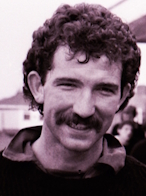
- Born:
- 6 May 1953
- Place of Birth:
- Edinburgh, Scotland
- Other Clubs:
- Tottenham Hotspur (1969-73), Montreal Olympique (loan 1972), Middlesbrough (1973-78), West Adelaide Hellas (loan 1977), Sampdoria (1984-86), Rangers (1986-90)
- Signed from:
- Middlesbrough
- Joined Liverpool:
- £352,000, 10.01.1978
- Contract Expiry:
- 12.06.1984
- Debut:
- 14 Jan 1978
- First goal:
- 25 Feb 1978
- Last goal:
- 21 Apr 1984
- Last appearance:
- 30 May 1984
- Games/goals ratio:
- 6.53
- Games/assists ratio:
- 9.21
- Win ratio:
- 59.05% W:212 D:86 L:61
- League: Apps / Goals / Assists:
- 247 / 38 / 27
- All Competitions: Apps / Goals / Assists:
- 359 / 55 / 39
- Honours:
- Player: League Championship 1978/79, 1979/80, 1981/82, 1982/83, 1983/84; League Cup 1981, 1982, 1983, 1984; European Cup 1978, 1981, 1984. Manager: FA Cup 1992
- International debut:
- 30.10.1974 vs. East Germany
- International caps:
- 54/4 (37/2 at LFC) - 08.06.1986
- Also played against Liverpool:
- Opposition profile
Player Profile
Graeme Souness was a true midfield maestro who is certain to finish on everyone’s greatest Liverpool XI-list. Souness attracted attention for his part in Tottenham's youth team great run in the FA Cup. There were four finals in total and he scored in the first and fourth, but was sent off in the third. When he was 17, he knocked on manager Bill Nicholson’s door and demanded a fair chance in the first team. He didn’t agree, Souness stormed out and went back home to Scotland. Souness played ten games in the North American Soccer League for Montreal Olympique before Tottenham sold him to Middlesbrough in 1973 for £30,000. The only game Souness played for Tottenham’s first team was a European match against Icelandic club, Keflavík.
When Jack Charlton took over at ‘Boro soon after Souness joined, he learned from his fellow coaches that the fiery Scot liked the nightlife a bit too much. Charlton reminded him that he could be a very successful football player or his career could be over in just one year if he wasn’t careful. Souness took notice of these wise words... for the time being. In 1978, Souness went off the tracks again and broke the club’s disciplinary code. “I am fed up, disenchanted with the game. I feel like a good holiday away from it all,” Souness groaned. He had still left a strong impression on Middlesbrough fans as one of the best players to serve the club in the post-war years. Following a week’s suspension imposed by Boro he got a call telling him to go to a hotel in Leeds to talk to a certain club. To Souness’ delight, the European champions were the party interested. The sum Liverpool paid for him was £352,000 which was at that time a transfer record between English clubs, £2,000 more than Manchester United paid for Leeds’ Joe Jordan a week earlier.
“That first day at Anfield, 10 January 1978, was a revelation," he revealed in his autobiography. "It seems a long time now but I remember how normal and ordinary it all was, no prima donnas, no superstars. I made only one error on that first morning, I asked Tommy Smith if I could borrow his hairdryer and he turned to Phil Neal and said pointedly: ‘Everyone is allowed one mistake.’ I took my own in the future.” Souness’ first goal for his new club was voted BBC’s Goal of the Month, the recipients of his thunderbolt were Manchester United. Souness was in and out of the side, but the end of the season was sweet. Souness’ pass released Dalglish to score the winning goal in the European Cup final. His debut season was a dream come true. “The nearest I had been to European competition before was watching the Eurovision Song Contest so it was a dream come true when I won a European Champions’ medal within four months.” Souness was the driving force in midfield for Liverpool and controlled the play with Terry McDermott when Liverpool won the title in 1979 and 1980. Souness led by example and netted a hat-trick against CSKA Sofia in the quarter-finals on their way to yet another European triumph. The trophies kept on coming and Souness’ genius was for everyone to see. During Christmas 1981 Liverpool lost 3-1 to Manchester City and the team was in twelfth place. Bob Paisley felt that he needed to make a serious adjustment to the team. He promoted Souness to captain in place of Phil Thompson, but at the cost of the players’ friendship.
The 1983/84 season turned out to be Souness’ last with the Reds, winning the League title for the third year in a row. Souness said his goodbyes to Liverpool in style by securing the League Cup against Everton with a great shot outside the penalty area and came second in the PFA’s Player of the Year voting. The club reached their fourth European Cup final by winning every away-leg. In the second-leg of the semi-final with Dinamo Bucharest, Souness was attacked verbally and physically by Rumanian players, incensed that he had broken the jaw of one of their colleagues in the first meeting at Anfield two weeks previously. He responded, as he usually did when the odds were stacked against him, with a performance of great discipline. The European Cup final turned out to be Souness’ farewell Liverpool appearance and he left on a high. Souness’ performance on that memorable night in the Italian capital undoubtedly helped secure his move to Sampdoria shortly afterwards. He received a warm welcome in Italy as he recollects. “Goodness knows what the other people on the aeroplane must have thought when we touched down for it was like a carnival time with what seemed to be thousands of people on the tarmac. There were flowers for my wife, kisses and hugs from old ladies and a Sampdoria shirt with a number eleven on the back was thrust into my hands.” He helped the club win the Italian Cup and scored in the final. After two successful years in Italy, he returned to his homeland to become player-manager at Glasgow Rangers and immediately set about the task of ensuring that they would become the club to beat in Scotland. “Forget Souness”, were Joe Fagan’s words as Liverpool came together in the 1984/85 season, emphasising the important role he had played in that team. Bruce Grobbelaar, Sammy Lee and Ronnie Whelan all acclaim Souness, not Dalglish, as the best-ever player they played with at Liverpool. As a player Souness had many remarkable years of success with numerous trophies and unforgettable performances. Souness deserves to be remembered as one of the greatest players ever to wear the famous red shirt.
Appearances per season
| Season | League | FA | LC | Europe | Other | Total |
|---|---|---|---|---|---|---|
| 1977-1978 | 15 | 0 | 0 | 3 | 0 | 18 |
| 1978-1979 | 41 | 7 | 1 | 4 | 0 | 53 |
| 1979-1980 | 41 | 8 | 7 | 2 | 1 | 59 |
| 1980-1981 | 37 | 1 | 8 | 8 | 1 | 55 |
| 1981-1982 | 35 | 3 | 9 | 6 | 1 | 54 |
| 1982-1983 | 41 | 3 | 8 | 6 | 1 | 59 |
| 1983-1984 | 37 | 2 | 12 | 9 | 1 | 61 |
| Totals | 247 | 24 | 45 | 38 | 5 | 359 |
A more detailed look at the player's appearances
| Total | Started/substitutions |
|---|---|
| 357 | Started |
| 6 | Substituted |
| 2 | Substitute |
| 0 | On bench |
| Total | Venue |
|---|---|
| 172 | Home |
| 168 | Away |
| 19 | Neutral |
| Total | Competition |
|---|---|
| 247 | League |
| 45 | League Cup |
| 36 | European Cup |
| 24 | FA Cup |
| 4 | Charity Shield |
| 2 | European Super Cup |
| 1 | World Club Championship |
| Total | W | D | L | Win% | Manager |
|---|---|---|---|---|---|
| 298 | 176 | 68 | 54 | 59.1% | Bob Paisley |
| 61 | 36 | 18 | 7 | 59.0% | Joe Fagan |
Goals per season
| Season | League | FA | LC | Europe | Other | Total |
|---|---|---|---|---|---|---|
| 1977-1978 | 2 | 0 | 0 | 0 | 0 | 2 |
| 1978-1979 | 8 | 1 | 0 | 0 | 0 | 9 |
| 1979-1980 | 1 | 1 | 0 | 0 | 0 | 2 |
| 1980-1981 | 6 | 0 | 1 | 6 | 0 | 13 |
| 1981-1982 | 5 | 0 | 1 | 0 | 0 | 6 |
| 1982-1983 | 9 | 0 | 2 | 0 | 0 | 11 |
| 1983-1984 | 7 | 0 | 5 | 0 | 0 | 12 |
| Totals | 38 | 2 | 9 | 6 | 0 | 55 |
A more detailed look at the player's goals
| Total | Opponent |
|---|---|
| 5 | Manchester City |
| 4 | Birmingham City |
| 4 | West Ham United |
| 3 | CSKA Sofia |
| 3 | Oulu Palloseura |
| 3 | West Bromwich Albion |
| 2 | Arsenal |
| 2 | Brentford |
| 2 | Brighton & Hove Albion |
| 2 | Burnley |
| 2 | Coventry City |
| 2 | Everton |
| 2 | Ipswich Town |
| 2 | Luton Town |
| 2 | Notts County |
| 2 | Southampton |
| 2 | Stoke City |
| 2 | Sunderland |
| 1 | Barnsley |
| 1 | Fulham |
| 1 | Grimsby Town |
| 1 | Leeds United |
| 1 | Manchester United |
| 1 | Middlesbrough |
| 1 | Norwich City |
| 1 | Nottingham Forest |
| 1 | Portsmouth |
| Total | Started/substitutions |
|---|---|
| 55 | Started |
| Total | Competition |
|---|---|
| 38 | League |
| 9 | League Cup |
| 6 | European Cup |
| 2 | FA Cup |
| Total | Goal minute period |
|---|---|
| 5 | 1-15 minutes |
| 11 | 16-30 minutes |
| 10 | 31-45 minutes |
| 12 | 46-60 minutes |
| 7 | 61-75 minutes |
| 9 | 76-90 minutes |
| 1 | 91-120 minutes |
| Total | Assisted by |
|---|---|
| 11 | Kenny Dalglish |
| 9 | Terry McDermott |
| 3 | Sammy Lee |
| 2 | David Hodgson |
| 2 | Ray Kennedy |
| 2 | Steve Heighway |
| 1 | Craig Johnston |
| 1 | Ian Rush |
| 1 | Jimmy Case |
| 1 | Mark Lawrenson |
| 1 | Phil Neal |
| 1 | Phil Thompson |
| 1 | Steve Nicol |
Assists per season
| Season | League | FA | LC | Europe | Other | Total |
|---|---|---|---|---|---|---|
| 1977-1978 | 3 | 0 | 0 | 1 | 0 | 4 |
| 1978-1979 | 6 | 0 | 0 | 0 | 0 | 6 |
| 1979-1980 | 4 | 0 | 0 | 0 | 0 | 4 |
| 1980-1981 | 5 | 0 | 1 | 0 | 0 | 6 |
| 1981-1982 | 4 | 2 | 1 | 1 | 0 | 8 |
| 1982-1983 | 4 | 1 | 2 | 0 | 0 | 7 |
| 1983-1984 | 1 | 0 | 1 | 2 | 0 | 4 |
| Totals | 27 | 3 | 5 | 4 | 0 | 39 |
A more detailed look at the player's assists
| Total | Opponent |
|---|---|
| 3 | Wolves |
| 2 | Arsenal |
| 2 | Derby County |
| 2 | Ipswich Town |
| 2 | Leeds United |
| 2 | Luton Town |
| 2 | Southampton |
| 2 | Swansea City |
| 1 | Aston Villa |
| 1 | Birmingham City |
| 1 | Blackburn Rovers |
| 1 | Bolton Wanderers |
| 1 | Brighton & Hove Albion |
| 1 | Bristol City |
| 1 | Club Brugge |
| 1 | Coventry City |
| 1 | Dinamo Bucharest |
| 1 | Manchester City |
| 1 | Middlesbrough |
| 1 | Norwich City |
| 1 | Notts County |
| 1 | Odense Boldklub |
| 1 | Oulu Palloseura |
| 1 | Queens Park Rangers |
| 1 | Rotherham United |
| 1 | Sheffield Wednesday |
| 1 | Sunderland |
| 1 | Swindon Town |
| 1 | Tottenham Hotspur |
| 1 | West Ham United |
| Total | Competition |
|---|---|
| 27 | League |
| 5 | League Cup |
| 4 | European Cup |
| 3 | FA Cup |
| Total | For player |
|---|---|
| 7 | Ian Rush |
| 6 | Kenny Dalglish |
| 4 | Ray Kennedy |
| 3 | Mark Lawrenson |
| 3 | Sammy Lee |
| 3 | Terry McDermott |
| 2 | Craig Johnston |
| 2 | David Fairclough |
| 1 | Alan Hansen |
| 1 | Alan Kennedy |
| 1 | Colin Irwin |
| 1 | David Hodgson |
| 1 | David Johnson |
| 1 | Jimmy Case |
| 1 | Phil Neal |
| 1 | Steve Heighway |
| 1 | Steve Nicol |