
Billy Liddell
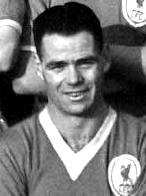
- Born:
- 10 January 1922
- Place of Birth:
- Townhill, Scotland
- Died:
- 3 July 2001
- Other Clubs:
- Lochgelly Violet (1937-38); Chelsea, Linfield, Cambridge Town, Toronto Scottish, Dunfermline (wartime guest), Hearts (wartime guest)
- Signed from:
- Lochgelly Violet
- Joined Liverpool:
- £200, 27 July 1938 - Professional 17.04.1939
- Contract Expiry:
- 1961
- Debut:
- 05 Jan 1946
- First goal:
- 05 Jan 1946
- Last goal:
- 05 Mar 1960
- Last appearance:
- 31 Aug 1960
- Games/goals ratio:
- 2.34
- Minutes/goal:
- 211
- Games/assists ratio:
- 4.05
- Win ratio:
- 41.57% W:222 D:134 L:178
- Wartime: Apps / Goals:
- 154 / 83
- League: Apps / Goals / Assists:
- 492 / 215 / 120
- All Competitions: Apps / Goals / Assists:
- 534 / 228 / 132
- Trophies:
- 1
- International debut:
- 15.05.1946 vs. Switzerland
- International caps:
- 29/8 - 08.10.1955
Honours
- League Championship
- 1946-47
Player Profile
William Beveridge Liddell started his career with local teams Kingseat Juveniles and Lochgelly Violet. Billy came first to Liverpool in July 1938 and nine months later signed a professional contract. Had it not been for a certain Sir Matt Busby, Liverpool's former captain and later Manchester United's manager, Billy might never have been a Liverpool player. Busby found out that representatives of Manchester City had been to see Billy's parents with a view to getting their son to join the club. After learning that Billy had turned down the invitation to go to City, Busby rang Liverpool manager George Kay and suggested that "this Liddell lad might be worth an enquiry"; and indeed he was ... and how! Before Liddell went to Liverpool, he was hired as an accountant at Simon Jude & West in Liverpool. His parents had it put into the contract that Billy would be allowed to continue his studies because they wanted him to have something to fall back on if things didn't work out. Liddell trained full-time in pre-season, but trained only twice-a-week as the season started, the only Liverpool player who held two jobs. But, he had hardly settled when World War II broke out, so Liddell had to wait six years to make his formal debut. Billy enlisted in the RAF and was sent to a training camp in Cambridge and later on to Manitoba in Canada.
Billy finally played his first game for Liverpool and scored his first goal on New Years' Day 1940, beating Crewe 7-3. He was said to have given a "most promising display, his ball control and sense of positioning being features." Liddell made his amateur international debut against England at Wembley on 18 April 1942, four years before making his official debut for Liverpool! His teammates were among others Bill Shankly and Matt Busby, but it was the young Billy that captured everyone's imagination. "Maestro Liddell. Ten minutes was sufficient for this boy to play himself into these critical, hard-beating Hampden hearts," said a press reporter. "He took the equalizer with a lovely timed header. But it was the way he had in the second goal which put him in the Maestro class. Liddell did the spadework and Dodds did the finishing for what must be one of the greatest goals Hampden has ever seen. The outstripping of the defence, the quick pass with the "wrong" foot, and then Dodds' glorious first-timer. What a goal!" Scotland ran out 5-4 winners. Liddell made 152 appearances in wartime football for Liverpool and scored 82 goals. As early as 1940 a press headline read: "Liddell is war's best find."
Liverpool's future talisman played his first official game for the club in the FA Cup against Chester at Anfield on 5 January 1946. Liddell scored one goal in a 2-0 win. The League competition started in the autumn, but he missed pre-season because he was still in the air-force. Liverpool had already played two games when Liddell made his League debut in a 7-4 win over Chelsea. He scored two goals, the first of which came straight from a corner kick in front of the Kop in the third minute. Despite the 24-year-old left-winger had never turned out in the League previously for Liverpool, he was already viewed as a key player for the side evident by "Bee" Edwards' report for the Liverpool Daily Post. "Liddell like Fagan is still not his fittest, and I believe this condition led Chelsea to their great chance in the later stages. Liddell means so much to his side." In the first post-war season, Billy scored seven goals in 35 games and Liverpool celebrated their fifth League title. But Liverpool couldn't match their triumph despite Liddell's brilliance. Billy twice represented Great Britain against Europe, in 1947 and then in 1955 when Liverpool was playing in the Second Division, which goes to show how highly-rated he was. Only Billy and Sir Stanley Matthews managed to be chosen to play both these games. Billy was disappointed to miss out on the FA Cup after being kicked from pillar to post in the 1950 final defeat against Arsenal. Liddell was especially painfully fouled by the Arsenal right-half, a fellow Scotsman, Alex Forbes. "I couldn't put my jacket on the next day," Liddell recalled. Nobody could have blamed him for abandoning ship when after promising seasons that always ended up in mid-table Liverpool were relegated in 1954. Liddell had established himself as Liverpool's greatest star, the club's top-scorer four seasons out of eight in the top-flight, but there was only so much one man could do.
Liddell had a number of admirers but felt at home at Liverpool. He was moved up front and made captain in the 1955/56 season. Goals came easy to him and he scored 115 in five seasons in the Second Division. All careers must come to an end, even Billy Liddell's! He retired 39 years of age when the Shankly revolution was about to start. Shankly did enjoy the powers of his compatriot on occasion and certainly wished that Liddell had been twenty years younger. "Liddell was some player... He had everything," Shankly enthused. "He was fast, powerful, shot with either foot and his headers were like blasts from a gun. On top of all that he was as hard as granite. What a player! He was so strong – and he took a nineteen-inch collar shirt!" It was no coincidence that Liverpool became to be known as "Liddellpool". Ian Callaghan considers Billy, Kenny Dalglish and Steven Gerrard as Liverpool Football Club's finest and there's no reason to argue with Cally. "Billy was my idol when I was at school and it was fantastic to take over from him," Callaghan said. "I had so much respect for him. Great man - He was a god in Liverpool. I took over from him on the wing and he finished playing not long after that. When I went to my first professional football match it was Liverpool. When Billy got the ball the anticipation from the crowd was just huge. What is he going to do with it? Is he going to shoot from 30 yards or take it past people? He was wonderful. Billy played with a heavy ball on the heavy pitches. The way he used to kick the ball, wow! He was so strong."
On 31 August 1960 Liddell made his last-ever appearance for Liverpool in a 1-0 defeat to Southampton in the Second Division. No other player had made more appearances for the club than King Billy, a total of 534 eclipsing Elisha Scott's total of 468. Three weeks later Liddell's testimonial took place against an International XI which included several greats such as Bert Trautmann (Manchester City), Sir Stanley Matthews (Blackpool), Nat Lofthouse (Bolton) and Sir Thomas Finney (Preston North End's legend). Liverpool won 4-2 with Liddell scoring for the opposition and netting £6,000 for which he bought a house. On the eve of his testimonial, Billy revealed once more his affection for his club and the city it was based in. "It has often been said that there is no sentiment in football, but I believe that my career, at least, has proved that wrong. Every Scot is proud of his heritage, but I am equally proud to know that in the city of my adoption I am accepted as a fellow-Liverpudlian. It hardly seems 22 years since I was being warned about the "terrible" city which has meant so much to me. I cannot recall who said that a city is not just bricks and mortar and fine buildings, it is the people in it, but it expresses what I think. I would like to take the opportunity of thanking the much-maligned Liverpool supporters for the encouragement they have given to me. I have always been happy at Anfield for I know we have the staunchest bunch of supporters in the land."
"What can you say about him? Liverpool have had some good club players, but I think he is the finest in their history. Look at him today. I used to do a bit of running around, but he does a lot more than I ever did," said Donald Mackinlay, Liverpool's captain from the 1920s, in 1955. He added poignantly: "Matthews is a great entertainer, but for me that Liddell man is “It”. He is one of the greatest club men ever to have played football.”
Appearances per season
| Season | League | FA | LC | Europe | Other | Total |
|---|---|---|---|---|---|---|
| 1939-1940 | 0 | 0 | 0 | 0 | 0 | 0 |
| 1945-1946 | 0 | 2 | 0 | 0 | 0 | 2 |
| 1946-1947 | 34 | 6 | 0 | 0 | 0 | 40 |
| 1947-1948 | 37 | 2 | 0 | 0 | 0 | 39 |
| 1948-1949 | 38 | 4 | 0 | 0 | 0 | 42 |
| 1949-1950 | 41 | 7 | 0 | 0 | 0 | 48 |
| 1950-1951 | 35 | 1 | 0 | 0 | 0 | 36 |
| 1951-1952 | 40 | 3 | 0 | 0 | 0 | 43 |
| 1952-1953 | 39 | 1 | 0 | 0 | 0 | 40 |
| 1953-1954 | 36 | 1 | 0 | 0 | 0 | 37 |
| 1954-1955 | 40 | 4 | 0 | 0 | 0 | 44 |
| 1955-1956 | 39 | 5 | 0 | 0 | 0 | 44 |
| 1956-1957 | 41 | 1 | 0 | 0 | 0 | 42 |
| 1957-1958 | 35 | 5 | 0 | 0 | 0 | 40 |
| 1958-1959 | 19 | 0 | 0 | 0 | 0 | 19 |
| 1959-1960 | 17 | 0 | 0 | 0 | 0 | 17 |
| 1960-1961 | 1 | 0 | 0 | 0 | 0 | 1 |
| Totals | 492 | 42 | 0 | 0 | 0 | 534 |
A more detailed look at the player's appearances
| Total | Started/substitutions |
|---|---|
| 534 | Started |
| 0 | Substituted |
| 0 | Substitute |
| 0 | On bench |
| Total | Venue |
|---|---|
| 269 | Home |
| 260 | Away |
| 5 | Neutral |
| Total | W | D | L | Win% | Manager |
|---|---|---|---|---|---|
| 214 | 76 | 57 | 81 | 35.5% | Don Welsh |
| 194 | 86 | 47 | 61 | 44.3% | George Kay |
| 107 | 52 | 24 | 31 | 48.6% | Phil Taylor |
| 12 | 4 | 4 | 4 | 33.3% | Bill Shankly |
| 7 | 4 | 2 | 1 | 57.1% | Caretaker Manager |
Goals per season
| Season | League | FA | LC | Europe | Other | Total |
|---|---|---|---|---|---|---|
| 1945-1946 | 0 | 1 | 0 | 0 | 0 | 1 |
| 1946-1947 | 7 | 1 | 0 | 0 | 0 | 8 |
| 1947-1948 | 10 | 1 | 0 | 0 | 0 | 11 |
| 1948-1949 | 8 | 1 | 0 | 0 | 0 | 9 |
| 1949-1950 | 17 | 2 | 0 | 0 | 0 | 19 |
| 1950-1951 | 15 | 0 | 0 | 0 | 0 | 15 |
| 1951-1952 | 19 | 0 | 0 | 0 | 0 | 19 |
| 1952-1953 | 13 | 0 | 0 | 0 | 0 | 13 |
| 1953-1954 | 7 | 0 | 0 | 0 | 0 | 7 |
| 1954-1955 | 30 | 1 | 0 | 0 | 0 | 31 |
| 1955-1956 | 27 | 5 | 0 | 0 | 0 | 32 |
| 1956-1957 | 21 | 0 | 0 | 0 | 0 | 21 |
| 1957-1958 | 22 | 1 | 0 | 0 | 0 | 23 |
| 1958-1959 | 14 | 0 | 0 | 0 | 0 | 14 |
| 1959-1960 | 5 | 0 | 0 | 0 | 0 | 5 |
| Totals | 215 | 13 | 0 | 0 | 0 | 228 |
The player scored 228 goals in 185 different matches.
A more detailed look at the player's goals
| Total | Opponent |
|---|---|
| 13 | Fulham |
| 13 | Middlesbrough |
| 12 | Blackburn Rovers |
| 10 | Sunderland |
| 9 | Stoke City |
| 8 | Sheffield United |
| 7 | Huddersfield Town |
| 7 | Nottingham Forest |
| 6 | Charlton Athletic |
| 6 | Chelsea |
| 6 | Derby County |
| 6 | Grimsby Town |
| 6 | Tottenham Hotspur |
| 5 | Barnsley |
| 5 | Birmingham City |
| 5 | Bristol City |
| 5 | Ipswich Town |
| 5 | Leicester City |
| 5 | Lincoln City |
| 5 | Rotherham United |
| 5 | West Ham United |
| 4 | Arsenal |
| 4 | Bury |
| 4 | Notts County |
| 4 | Portsmouth |
| 4 | Preston North End |
| 4 | Scunthorpe United |
| 4 | Sheffield Wednesday |
| 3 | Aston Villa |
| 3 | Bolton Wanderers |
| 3 | Burnley |
| 3 | Everton |
| 3 | Hull City |
| 3 | Leeds United |
| 3 | Manchester City |
| 3 | Manchester United |
| 3 | Newcastle United |
| 3 | Port Vale |
| 3 | West Bromwich Albion |
| 2 | Accrington Stanley |
| 2 | Bristol Rovers |
| 2 | Doncaster Rovers |
| 2 | Swansea City |
| 2 | Wolves |
| 1 | Blackpool |
| 1 | Brighton & Hove Albion |
| 1 | Cardiff City |
| 1 | Chester City |
| 1 | Leyton Orient |
| 1 | Luton Town |
| 1 | Northampton Town |
| 1 | Walsall |
| Total | Started/substitutions |
|---|---|
| 228 | Started |
| Total | Goal minute period |
|---|---|
| 36 | 1-15 minutes |
| 35 | 16-30 minutes |
| 36 | 31-45 minutes |
| 39 | 46-60 minutes |
| 38 | 61-75 minutes |
| 38 | 76-90 minutes |
| Total | Goal origin |
|---|---|
| 189 | Open play |
| 34 | Penalty |
| 3 | Free kick |
| 2 | Directly from corner |
| Total | Assisted by |
|---|---|
| 14 | Alan A'Court |
| 11 | Jimmy Payne |
| 10 | Brian Jackson |
| 8 | Jimmy Melia |
| 7 | Eric Anderson |
| 6 | Albert Stubbins |
| 5 | Kevin Baron |
| 5 | Phil Taylor |
| 4 | Alan Arnell |
| 4 | Bob Paisley |
| 4 | Jimmy Harrower |
| 3 | Bobby Murdoch |
| 3 | Cyril Done |
| 3 | Jack Balmer |
| 3 | John Evans |
| 3 | Ray Lambert |
| 3 | Ronnie Moran |
| 3 | Sammy Smyth |
| 2 | Bob Priday |
| 2 | Jack Smith |
| 2 | Johnny Morrissey |
| 1 | Barry Wilkinson |
| 1 | Bill Jones |
| 1 | Billy Watkinson |
| 1 | Bryan Williams |
| 1 | Eddie Spicer |
| 1 | Fred Morris |
| 1 | Geoff Twentyman |
| 1 | Harry Eastham |
| 1 | John Molyneux |
| 1 | Johnny Wheeler |
| 1 | Laurie Hughes |
| 1 | Roy Saunders |
| 1 | Tommy Younger |
| 1 | Tony McNamara |
| 1 | Tony Rowley |
Assists per season
| Season | League | FA | LC | Europe | Other | Total |
|---|---|---|---|---|---|---|
| 1945-1946 | 0 | 1 | 0 | 0 | 0 | 1 |
| 1946-1947 | 11 | 5 | 0 | 0 | 0 | 16 |
| 1947-1948 | 7 | 0 | 0 | 0 | 0 | 7 |
| 1948-1949 | 7 | 1 | 0 | 0 | 0 | 8 |
| 1949-1950 | 14 | 0 | 0 | 0 | 0 | 14 |
| 1950-1951 | 12 | 0 | 0 | 0 | 0 | 12 |
| 1951-1952 | 8 | 2 | 0 | 0 | 0 | 10 |
| 1952-1953 | 10 | 0 | 0 | 0 | 0 | 10 |
| 1953-1954 | 10 | 0 | 0 | 0 | 0 | 10 |
| 1954-1955 | 9 | 2 | 0 | 0 | 0 | 11 |
| 1955-1956 | 10 | 1 | 0 | 0 | 0 | 11 |
| 1956-1957 | 13 | 0 | 0 | 0 | 0 | 13 |
| 1957-1958 | 5 | 0 | 0 | 0 | 0 | 5 |
| 1958-1959 | 2 | 0 | 0 | 0 | 0 | 2 |
| 1959-1960 | 2 | 0 | 0 | 0 | 0 | 2 |
| Totals | 120 | 12 | 0 | 0 | 0 | 132 |
A more detailed look at the player's assists
| Total | Opponent |
|---|---|
| 10 | Middlesbrough |
| 8 | Sunderland |
| 7 | Derby County |
| 6 | Bristol Rovers |
| 6 | Manchester City |
| 6 | Portsmouth |
| 5 | Birmingham City |
| 5 | Preston North End |
| 4 | Aston Villa |
| 4 | Charlton Athletic |
| 4 | Everton |
| 4 | Newcastle United |
| 4 | Rotherham United |
| 3 | Arsenal |
| 3 | Bristol City |
| 3 | Burnley |
| 3 | Bury |
| 3 | Grimsby Town |
| 3 | Hull City |
| 3 | Ipswich Town |
| 3 | Nottingham Forest |
| 3 | Stoke City |
| 3 | Swansea City |
| 2 | Barnsley |
| 2 | Blackburn Rovers |
| 2 | Bolton Wanderers |
| 2 | Fulham |
| 2 | Huddersfield Town |
| 2 | Lincoln City |
| 2 | Port Vale |
| 2 | Sheffield Wednesday |
| 1 | Blackpool |
| 1 | Chelsea |
| 1 | Chester City |
| 1 | Doncaster Rovers |
| 1 | Leeds United |
| 1 | Luton Town |
| 1 | Manchester United |
| 1 | Scunthorpe United |
| 1 | Sheffield United |
| 1 | Walsall |
| 1 | West Ham United |
| 1 | Wolves |
| 1 | Workington |
| Total | For player |
|---|---|
| 15 | Albert Stubbins |
| 13 | Jack Balmer |
| 11 | John Evans |
| 10 | Cyril Done |
| 10 | Jimmy Payne |
| 9 | Alan A'Court |
| 7 | Kevin Baron |
| 7 | Tony Rowley |
| 6 | Jack Smith |
| 6 | Louis Bimpson |
| 5 | Alan Arnell |
| 5 | Willie Fagan |
| 4 | Bill Jones |
| 4 | Jimmy Melia |
| 4 | Ken Brierley |
| 3 | Eric Anderson |
| 2 | Berry Nieuwenhuys |
| 2 | Brian Jackson |
| 2 | Johnny Wheeler |
| 1 | Alex South |
| 1 | Bob Paisley |
| 1 | Bob Priday |
| 1 | Bobby Murdoch |
| 1 | Bryan Williams |
| 1 | Dave Hickson |
| 1 | Phil Taylor |
Wartime Appearances / Goals
| Season | Appearances | Goals |
|---|---|---|
| 1939-1940 | 16 | 9 |
| 1940-1941 | 37 | 12 |
| 1941-1942 | 36 | 22 |
| 1942-1943 | 15 | 5 |
| 1943-1944 | 6 | 4 |
| 1944-1945 | 15 | 13 |
| 1945-1946 | 29 | 18 |
| Totals | 154 | 83 |
Related Articles
Liddell blasts Everton out of the cup
January 29, 1955. The Liverpool Football Echo
The Untold Story of Billy Howard - Part 2
Last week we introduced you to Billy Howard, an ardent Kopite who also had the pleasure and privilege to be on Liverpool Football Club's books. We hope you will enjoy reading this article as much as we enjoyed interviewing this gentleman.
The Untold Story of Billy Howard
Greats like Billy Howard have gone by unnoticed, since they never really made an impact on Liverpool FC's first team, but have given so much to the community of Liverpool, working with the local kids and helping them develop through football.
Explosive, hard, loyal – the name’s Liddell
Daily Mail article on Billy Liddell from 12 December 1957
Billy Liddell, emperor of Merseyside
From Daily Mirror on 24 December, 1957.
King Billy Has Already Put The Great Into Britain
Article by Tony Barrett published on LFC.tv on 3rd July 2011.
Liddell and Paisley make their League debut
Liverpool's game vs Chelsea on 7th of September 1946 was remarkable for various reasons.
Billy wins his only League title in 1947
Billy won his only championship with Liverpool in quite unusual circumstances after a spectacular finish to the 1946-47 season.
A fantastic 4-0 cup win vs. Everton
Liverpool's win over Everton in the fourth round of the FA Cup on 29th January 1955 turned out to be one of their most surprising and most satisfying wins ever vs. their blue neighbours.
Are Liverpool right to leave out Liddell?
David Jack talks to a puzzled player in 1958.
Rena Liddell - Sister of Liverpool legend Billy
LFChistory's exclusive interview with Rena Liddell, Billy's sister.
Cally's Heroes
Ian Callaghan talks to BBC Radio Merseyside's John Keith about his hero, the Flying Scotsman Billy Liddell.
My Liddell legend
by Ken Rogers of "The Liverpool Echo" - 8 January 1998
Liverpool dive but to come up again
Liverpool Echo on 1 May 1954.
My football life by Billy Liddell
Liverpool Echo on 2 November 1951.
The wonder left wingers of Liverpool
John Martin talks about his favourite players on the left hand side of Liverpool throughout his years supporting the Reds.
Legendary Liverpool winger in the old tradition
Brian Glanville on 5 July, 2001 in the Guardian.
Liddell's two goal comeback
Liverpool Daily Post report on Liverpool 4 - 2 Bristol City on 26 August 1959.
Liverpool win At Fulham as Liddell dropped
By Steven Horton at theanfielders.com.
Billy Liddell in his own words
Sir Matt Busby was the one who recommended Billy Liddell to Liverpool.
Liverpool life in the 2nd division
John Martin followed the team's fortunes when the team got relegated in 1954.
It's a Liverpool - Arsenal final
The Liverpool Football Echo on 25 March 1950.
The finest Liverpool v Everton of all time
The Liverpool Daily Post on 27 March 1950.
A week in the life of Billy Liddell by Wooltonian
An article by Wooltonian based on My Soccer Story, the autobiography of Billy Liddell.
Billy Liddell - The Original Exocet Missile
Wooltonian remembers the foundation on which Liddellpool was built, the Liverpool legend Billy Liddell.
Spurs have the bark, but Liddell hat-trick carries the bite
Match report on Tottenham - Liverpool from the Liverpool Echo on 01.12.1951.
Melia shines in seven goal thriller
Match report from Liverpool - Nottm Forest from the Liverpool Echo on 17.12.1955.
Liddell puts league leaders Fulham on the spot
Match report on Liverpool - Fulham from the Liverpool Echo on 18.09.1954.
Four goals in four minutes at Ewood
Match report on Blackburn - Liverpool from the Liverpool Echo on 22nd February 1958.
Unique programmes: Two Legends Arrive
The first post-war season of 1946-47 saw Liverpool being crowned as Champions of England. Their second home match pitted them against Chelsea.