
Ian Callaghan
Right-winger · Liverpool 1959–1978
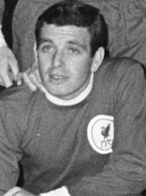
Personal
- Born
- 10 April 1942
- Place of birth
- Toxteth, Liverpool, England
- International
- 4/0 - 12.10.1977 Debut 26.06.1966 vs. Finland
- Other clubs
- Fort Lauderdale Strikers (loan 1978), Swansea City (1978-81), Canberra City (loan 1979), Cork United (1981), Crewe Alexandra (1981-82)
At Liverpool
- Positions
- Right-winger, Midfielder
- Signed from
- Local
- Joined
- 1957 - Professional 28 March 1960
- Debut
- 16 April 1960
- First goal
- 4 November 1961
- Last goal
- 15 March 1978
- Last appearance
- 29 March 1978
- Left the club
- 14 September 1978
Liverpool career
- League 640 apps · 49 goals · 97 assists
- Win ratio 52.98% — W 454 · D 217 · L 186
Honours
Individual honours
- FWA Footballer of the Year
- 1974
Player profile
When Billy Liddell was retiring he was asked if Liverpool had in their ranks a worthy successor. Liddell didn’t harbour any doubts: “There is a 17-year-old called Ian Callaghan who looks like taking over from me. I played with him twice, watched his progress and I believe he’ll be a credit to his club, the game and his country,” he stated at the time. Callaghan played his first game only six days after his eighteenth birthday replacing his boyhood hero Liddell. Liverpool beat Bristol Rovers 4-0 but Callaghan’s performance captured the imagination. When the final whistle went 27,000 spectators gave him a standing ovation along with both sets of players as well as the referee! The headline in the Daily Post read: “A Callaghan debut to remember.” In the Daily Express Graham Fisher wrote: “For Liverpool right-winger Ian Callaghan, a veteran of four Central League games, he just ended the most accomplished League debut I’ve had the pleasure to witness.”
Shankly did not though want to rely on such a young man so soon and bought Kevin Lewis before the start of the 1960/61 season. Lewis scored 22 goals in 36 games and Callaghan had to bide his time. Liverpool got promoted in 1961/62 and from November that season he was finally a regular and stayed that way for the next 15 years! During the first part of his career, Callaghan played on the right wing with Peter Thompson on the left. They were a dangerous duo and created a number of goals for Roger Hunt and Ian St John. Callaghan only stood 5 ft. 7 in. (170 cm.), but he was blessed with great speed. “I used to take the full-back on and get to the byline. That was my strength.” When Dixie Dean was asked if he could have repeated his record of scoring 60 League goals in one season in modern football he answered: “If I could play between Ian Callaghan and Peter Thompson I’d still get my 60 goals a season.”
No one can forget when Callaghan created St John’s winning goal in the FA Cup final 1965. The game stood at 1-1 in extra-time after goals from Roger Hunt and Billy Bremner. Callaghan crossed from the right and St John headed into the net. Liverpool’s first FA Cup trophy win is Callaghan’s favourite memory: “First has to be Wembley ‘65 and Liverpool lifting the FA Cup for the first time. It was also my first appearance at the stadium and I had a hand, or rather a foot, in the winning goal.” This historic FA Cup win came between two Championships in 1964 and 1966. This was the golden age of Bill Shankly’s 60’s side. “Ian Callaghan is everything good that a man can be. No praise is too high for him,” Shankly said. “He is a model professional, and a model human being. If there were 11 Callaghans at Anfield there would never be any need to put up a team sheet. You could stake your life on Ian. Words cannot do justice to the amount he has contributed to the game. Ian Callaghan will go down as one of the game’s truly great players.”
In the 1970/71 season, Callaghan underwent a knee operation and Brian Hall took his place on the right wing. When Callaghan returned Shankly moved him to the centre of midfield prolonging his Liverpool career by seven years. Callaghan’s great reading of the game and incredible work rate made him ideal for this position. Callaghan set a new record of appearances for Liverpool on 15 August 1972 breaking Billy Liddell’s long-standing club record of 534. Three championship medals; in 1973, 1976 and 1977, followed. Callaghan played in four FA Cup finals, winning in 1965 and 1974, but finished on the losing side in 1971 and 1977. He won the UEFA Cup twice; in 1973 and 1976. In 1977 Liverpool won the European Cup for the first time after beating Borussia Mönchengladbach 3-1 in Rome and celebrated their second European win in 1978. Callaghan had lost his place to Graeme Souness but he was on the bench in the Wembley final. That was to be the last time his name appeared on Liverpool’s team sheet. He had gone through the whole of his Liverpool career without being sent off or even booked when the referee took his name down in Callaghan’s penultimate game for Liverpool in March 1978. In September 1978, after 19 seasons with Liverpool, Callaghan called it a day at the club having enjoyed the summer in the States on loan at Fort Lauderdale. On his return, Callaghan signed for John Toshack’s Swansea where he played with Tommy Smith. In 1981 Callaghan was going to retire following a short spell in Ireland but was persuaded by his old mate, Alan A’ Court, who was assistant manager at Crewe, to share his experience in the game. Callaghan stayed five months there before he did his Achilles tendon and retired two months short of his fortieth birthday.
Ian Callaghan boasts without a doubt one of the most remarkable careers of any player in Europe past or present. He was the epitome of the professional footballer and is a gentleman off the field. He is the club’s record appearance holder with 857 games and was the first Liverpool player to be voted Footballer of the Year, in 1974. Strangely enough, he only played four times for his country. He was part of the World Cup-winning team in 1966, playing one game, but incredibly 11 years passed from his second to his third cap. On 10 June 2009, Ian Callaghan was finally presented with a World Cup winners’ medal at a special ceremony in London nearly 43 years after the event. When Liverpool won the European Cup for the first time in 1977 Callaghan was the only player who had also played Liverpool’s first European game in 1964. Charles Lambert, an Echo reporter, gave Callaghan this praise. “As great a Liverpool institution as the Mersey Ferries.” All things considered, it is highly unlikely that Ian Callaghan’s record of games played for Liverpool will ever be broken.
Appearances per season
| Season | League | FA | LC | Europe | Other | Total |
|---|---|---|---|---|---|---|
| 1959-1960 | 4 | 0 | 0 | 0 | 0 | 4 |
| 1960-1961 | 3 | 0 | 2 | 0 | 0 | 5 |
| 1961-1962 | 23 | 5 | 0 | 0 | 0 | 28 |
| 1962-1963 | 37 | 6 | 0 | 0 | 0 | 43 |
| 1963-1964 | 42 | 5 | 0 | 0 | 0 | 47 |
| 1964-1965 | 37 | 8 | 0 | 9 | 1 | 55 |
| 1965-1966 | 42 | 1 | 0 | 9 | 1 | 53 |
| 1966-1967 | 40 | 4 | 0 | 5 | 1 | 50 |
| 1967-1968 | 41 | 9 | 2 | 6 | 0 | 58 |
| 1968-1969 | 42 | 4 | 3 | 2 | 0 | 51 |
| 1969-1970 | 41 | 6 | 2 | 4 | 0 | 53 |
| 1970-1971 | 23 | 5 | 1 | 5 | 0 | 34 |
| 1971-1972 | 41 | 3 | 3 | 4 | 1 | 52 |
| 1972-1973 | 42 | 4 | 8 | 12 | 0 | 66 |
| 1973-1974 | 42 | 9 | 6 | 4 | 0 | 61 |
| 1974-1975 | 41 | 2 | 3 | 4 | 1 | 51 |
| 1975-1976 | 40 | 2 | 3 | 12 | 0 | 57 |
| 1976-1977 | 33 | 5 | 2 | 7 | 1 | 48 |
| 1977-1978 | 26 | 1 | 7 | 6 | 1 | 41 |
| 1978-1979 | 0 | 0 | 0 | 0 | 0 | 0 |
| Totals | 640 | 79 | 42 | 89 | 7 | 857 |
A more detailed look at the player's appearances
| Total | Started/substitutions |
|---|---|
| 850 | Started |
| 7 | Substituted |
| 7 | Substitute |
| 13 | On bench |
| Total | Venue |
|---|---|
| 419 | Home |
| 418 | Away |
| 20 | Neutral |
| Total | Competition |
|---|---|
| 640 | League |
| 79 | FA Cup |
| 42 | League Cup |
| 30 | European Cup |
| 24 | UEFA Cup |
| 17 | European Cup Winners Cup |
| 17 | European Fairs Cup |
| 7 | Charity Shield |
| 1 | European Super Cup |
| Total | W | D | L | Win% | Manager |
|---|---|---|---|---|---|
| 661 | 352 | 165 | 144 | 53.2% | Bill Shankly |
| 196 | 102 | 52 | 42 | 52.0% | Bob Paisley |
Goals per season
| Season | League | FA | LC | Europe | Other | Total |
|---|---|---|---|---|---|---|
| 1961-1962 | 1 | 0 | 0 | 0 | 0 | 1 |
| 1962-1963 | 2 | 0 | 0 | 0 | 0 | 2 |
| 1963-1964 | 8 | 0 | 0 | 0 | 0 | 8 |
| 1964-1965 | 6 | 1 | 0 | 1 | 0 | 8 |
| 1965-1966 | 5 | 0 | 0 | 0 | 0 | 5 |
| 1966-1967 | 3 | 0 | 0 | 1 | 0 | 4 |
| 1967-1968 | 3 | 0 | 1 | 3 | 0 | 7 |
| 1968-1969 | 8 | 1 | 1 | 0 | 0 | 10 |
| 1969-1970 | 3 | 0 | 0 | 2 | 0 | 5 |
| 1971-1972 | 2 | 0 | 0 | 0 | 0 | 2 |
| 1972-1973 | 3 | 0 | 1 | 0 | 0 | 4 |
| 1973-1974 | 0 | 0 | 3 | 0 | 0 | 3 |
| 1974-1975 | 1 | 0 | 0 | 1 | 0 | 2 |
| 1975-1976 | 3 | 0 | 0 | 1 | 0 | 4 |
| 1976-1977 | 1 | 0 | 1 | 0 | 0 | 2 |
| 1977-1978 | 0 | 0 | 0 | 1 | 0 | 1 |
| Totals | 49 | 2 | 7 | 10 | 0 | 68 |
The player scored 68 goals in 61 different matches.
A more detailed look at the player's goals
| Total | Opponent |
|---|---|
| 5 | Aston Villa |
| 4 | Fulham |
| 3 | Birmingham City |
| 3 | Bolton Wanderers |
| 3 | Hull City |
| 3 | Leicester City |
| 3 | Stoke City |
| 3 | TSV Munich |
| 2 | Arsenal |
| 2 | Chelsea |
| 2 | Coventry City |
| 2 | Dundalk |
| 2 | Everton |
| 2 | Leeds United |
| 2 | Newcastle United |
| 2 | Sheffield United |
| 2 | Southampton |
| 2 | West Ham United |
| 1 | Benfica |
| 1 | Blackburn Rovers |
| 1 | Blackpool |
| 1 | Burnley |
| 1 | Crystal Palace |
| 1 | Doncaster Rovers |
| 1 | Inter Milan |
| 1 | Ipswich Town |
| 1 | Manchester City |
| 1 | Manchester United |
| 1 | Middlesbrough |
| 1 | Northampton Town |
| 1 | Petrolul Ploiesti |
| 1 | Preston North End |
| 1 | Real Sociedad |
| 1 | Sheffield Wednesday |
| 1 | Strømsgodset |
| 1 | Sunderland |
| 1 | Tottenham Hotspur |
| 1 | West Bromwich Albion |
| 1 | Wolves |
| Total | Started/substitutions |
|---|---|
| 67 | Started |
| 1 | Substitute |
| Total | Competition |
|---|---|
| 49 | League |
| 7 | League Cup |
| 5 | European Fairs Cup |
| 3 | European Cup |
| 2 | FA Cup |
| 1 | European Cup Winners Cup |
| 1 | UEFA Cup |
| Total | Goal minute period |
|---|---|
| 9 | 1-15 minutes |
| 8 | 16-30 minutes |
| 7 | 31-45 minutes |
| 12 | 46-60 minutes |
| 15 | 61-75 minutes |
| 17 | 76-90 minutes |
| Total | Goal origin |
|---|---|
| 68 | Open play |
| Total | Assisted by |
|---|---|
| 9 | Peter Thompson |
| 6 | Ian St John |
| 6 | Roger Hunt |
| 4 | Kevin Keegan |
| 3 | Emlyn Hughes |
| 3 | Tommy Smith |
| 2 | Chris Lawler |
| 2 | Jimmy Melia |
| 2 | Steve Heighway |
| 2 | Willie Stevenson |
| 1 | Alan A'Court |
| 1 | Alun Evans |
| 1 | Bobby Graham |
| 1 | Brian Hall |
| 1 | Geoff Strong |
| 1 | Gerry Byrne |
| 1 | Gordon Milne |
| 1 | Jimmy Case |
| 1 | Tony Hateley |
Assists per season
| Season | League | FA | LC | Europe | Other | Total |
|---|---|---|---|---|---|---|
| 1959-1960 | 1 | 0 | 0 | 0 | 0 | 1 |
| 1961-1962 | 4 | 1 | 0 | 0 | 0 | 5 |
| 1962-1963 | 5 | 0 | 0 | 0 | 0 | 5 |
| 1963-1964 | 9 | 0 | 0 | 0 | 0 | 9 |
| 1964-1965 | 10 | 1 | 0 | 4 | 0 | 15 |
| 1965-1966 | 11 | 0 | 0 | 2 | 0 | 13 |
| 1966-1967 | 7 | 0 | 0 | 0 | 0 | 7 |
| 1967-1968 | 8 | 4 | 1 | 1 | 0 | 14 |
| 1968-1969 | 8 | 0 | 3 | 0 | 0 | 11 |
| 1969-1970 | 11 | 4 | 0 | 2 | 0 | 17 |
| 1970-1971 | 2 | 0 | 0 | 1 | 0 | 3 |
| 1971-1972 | 4 | 0 | 1 | 1 | 0 | 6 |
| 1972-1973 | 5 | 0 | 0 | 0 | 0 | 5 |
| 1973-1974 | 3 | 3 | 1 | 0 | 0 | 7 |
| 1974-1975 | 3 | 0 | 1 | 0 | 0 | 4 |
| 1975-1976 | 1 | 0 | 0 | 1 | 0 | 2 |
| 1976-1977 | 3 | 0 | 0 | 1 | 0 | 4 |
| 1977-1978 | 2 | 0 | 1 | 0 | 0 | 3 |
| Totals | 97 | 13 | 8 | 13 | 0 | 131 |
A more detailed look at the player's assists
| Total | Opponent |
|---|---|
| 7 | Sheffield Wednesday |
| 6 | Ipswich Town |
| 6 | Newcastle United |
| 6 | Wolves |
| 5 | Arsenal |
| 5 | Chelsea |
| 5 | Coventry City |
| 5 | Everton |
| 5 | Manchester City |
| 5 | Manchester United |
| 4 | Leeds United |
| 4 | Tottenham Hotspur |
| 4 | West Ham United |
| 3 | Blackpool |
| 3 | Burnley |
| 3 | Fulham |
| 3 | Stoke City |
| 3 | Sunderland |
| 3 | West Bromwich Albion |
| 2 | Aston Villa |
| 2 | Bolton Wanderers |
| 2 | Bristol City |
| 2 | Derby County |
| 2 | Doncaster Rovers |
| 2 | Dundalk |
| 2 | Hibernian |
| 2 | Knattspyrnufélag Reykjavíkur |
| 2 | Leicester City |
| 2 | Leyton Orient |
| 2 | Sheffield United |
| 2 | Walsall |
| 1 | Birmingham City |
| 1 | Blackburn Rovers |
| 1 | Bournemouth |
| 1 | Brighton & Hove Albion |
| 1 | Bristol Rovers |
| 1 | Celtic |
| 1 | Cologne |
| 1 | Crystal Palace |
| 1 | Huddersfield Town |
| 1 | Hull City |
| 1 | Inter Milan |
| 1 | Malmo |
| 1 | Northampton Town |
| 1 | Norwich City |
| 1 | Nottingham Forest |
| 1 | Plymouth Argyle |
| 1 | Queens Park Rangers |
| 1 | Servette |
| 1 | Standard Liege |
| 1 | Swansea City |
| 1 | Trabzonspor |
| 1 | Wrexham |
| Total | Competition |
|---|---|
| 97 | League |
| 13 | FA Cup |
| 8 | League Cup |
| 5 | European Cup |
| 4 | European Fairs Cup |
| 3 | European Cup Winners Cup |
| 1 | UEFA Cup |
| Total | For player |
|---|---|
| 25 | Roger Hunt |
| 18 | Ian St John |
| 11 | Bobby Graham |
| 7 | John Toshack |
| 6 | Peter Thompson |
| 6 | Tony Hateley |
| 5 | Chris Lawler |
| 5 | Geoff Strong |
| 5 | Kevin Keegan |
| 5 | Steve Heighway |
| 4 | Alun Evans |
| 4 | Ron Yeats |
| 3 | Emlyn Hughes |
| 3 | Gordon Wallace |
| 2 | Brian Hall |
| 2 | Gordon Milne |
| 2 | Kevin Lewis |
| 2 | Peter Cormack |
| 2 | Ray Kennedy |
| 2 | Willie Stevenson |
| 1 | Alan A'Court |
| 1 | Alan Waddle |
| 1 | Alec Lindsay |
| 1 | Alf Arrowsmith |
| 1 | Dave Hickson |
| 1 | David Fairclough |
| 1 | David Johnson |
| 1 | Gerry Byrne |
| 1 | Jack Whitham |
| 1 | Kenny Dalglish |
| 1 | Phil Boersma |
| 1 | Phil Chisnall |
Related Articles
The Untold Story of Billy Howard - Part 2
Last week we introduced you to Billy Howard, an ardent Kopite who also had the pleasure and privilege to be on Liverpool Football Club's books. We hope you will enjoy reading this article as much as we enjoyed interviewing this gentleman.
Ian Callaghan – still going strong
Published in the Sunday Express on 23 December 1979.
LFC's greatest ever servant
Liverpool Football Club honoured Ian Callaghan with a special one-hour television show, exactly 50 years to the day the former Reds star made his LFC debut.
Cally's Heroes
Ian Callaghan talks to BBC Radio Merseyside's John Keith about his hero, the Flying Scotsman Billy Liddell.
Gerry Byrne - The toughest of them all!
"The Crunch" was tough as nails and shares a special place in Liverpool supporters' hearts. An exclusive interview by LFChistory.net.
Talklfc's Kevin captures Callaghan's essence
Talklfc's Kevin captures Callaghan's essence in response to LFChistory's exclusive interview with Cally.
Ian Callaghan - The Marathon man
Ian Callaghan is literally synonymous with Liverpool's history. LFChistory.net interviewed this fantastic legend.
Liverpool secure Shankly's first title!
A press article from Liverpool Echo and Daily Express on the 18th of April 1964.
Ian, at 17, has a dream of a debut
The Sunday Express report on Liverpool - Bristol Rovers on 16.04.1960.
Liverpool new boys star turns
News Chronicle and Daily Dispatch report on Liverpool - Rotherham United on 18.04.1960.
The first European night at Anfield
Forty years ago Liverpool played their first European game at Anfield Road.
European debut in Iceland
Forty years ago today Liverpool played their first European game in Iceland of all places.
A debut to remember
Ian Callaghan's debut for Liverpool was memorable for many reasons.